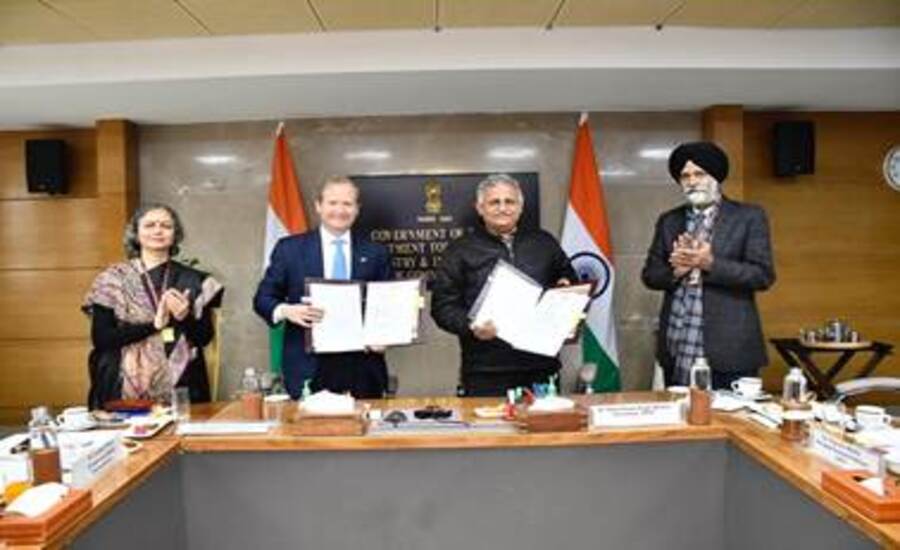
New Delhi: India has formally joined the BRICS Centre for Industrial Competencies (BCIC) to strengthen support for manufacturing firms and Micro, Small and Medium Enterprises (MSMEs) across BRICS nations. The India-BRICS centre for industrial competencies partnership aims to integrate Indian industry into a global framework of knowledge, innovation and collaboration through shared expertise and technology exchange.
As India deepens its engagement with international partners, participation in the BCIC underscores its focus on expanding industrial competitiveness, productivity and MSME capacities.
What Is the BRICS Centre for Industrial Competencies (BCIC)?
The BRICS Centre for Industrial Competencies (BCIC) is a newly established platform launched under the auspices of the United Nations Industrial Development Organization (UNIDO). It was created with the support of BRICS Plus countries — nations within and associated with Brazil, Russia, India, China, and South Africa — to help industries modernize, innovate and grow sustainably in a rapidly changing industrial environment.
Read also: Explained: India’s BRICS 2026 Logo, Theme, Strategic Priorities and Vision Under Jaishankar
The BCIC functions as a multilateral network, promoting collaboration between national industrial support centres, knowledge institutions, and private sector partners. It focuses on future-ready manufacturing technologies, digital innovation, and the integration of SMEs into global value chains.
Importance of India-BRICS Centre for Industrial Competencies Partnership
India’s decision to join the BCIC reflects its rising role in global industrial development and economic cooperation. Through this partnership:
- The National Productivity Council (NPC) has been designated as India’s focal centre for BCIC activities. NPC will lead India’s contributions, particularly in enhancing productivity and introducing advanced manufacturing practices.
- India will gain access to shared technology platforms and training networks designed to support manufacturers and MSMEs in scaling up production and adopting digital solutions.
This involvement is expected to sharpen India’s competitive edge in industrial innovation and support MSMEs — a key driver of jobs and economic growth domestically.
Key Objectives of the BCIC
The BRICS Centre for Industrial Competencies is building an ecosystem with several main goals:
Fostering Innovation & Technology Exchange
The BCIC connects experts, firms, and institutions across BRICS Plus countries to accelerate the adoption of Industry 4.0 technologies such as automation, smart manufacturing, AI, and advanced logistics systems.
Supporting MSMEs and Manufacturers
Small and medium enterprises are being integrated into global industrial networks, giving them access to resources, skills development and international markets that were previously hard to reach.
Encouraging Sustainable Industrial Growth
The Centre emphasizes environmentally sustainable practices and digital adoption — helping member countries pursue green and responsible industrial transformation in line with global development goals.
How Does BRICS Centre for Industrial Competencies Works
Hosted under the framework of UNIDO, the BCIC operates as a one-stop hub where industrial stakeholders can:
- Exchange best practices in industrial modernization.
- Build partnerships for joint research and development.
- Access training and capacity building in emerging technologies.
- Promote exports and global competitiveness for manufacturing and MSMEs.
This approach ensures smaller enterprises are not left behind in the technological transition of global manufacturing.
International Support and Strategic Backing
Key BRICS nations have voiced strong support for the BCIC:
- Russia and China played large roles in mobilizing resources and expertise to establish the Centre.
- Representatives from Brazil and South Africa emphasized cooperation in emerging industries such as AI, bio-industry and innovation ecosystems.
- UNIDO leadership highlighted that the Canada-wide population and economic footprint represented by BRICS Plus offers enormous potential for industrial collaboration and shared growth.
By pooling strengths, member nations aim to balance global industrial competitiveness and support inclusive economic development.
What India Stands to Gain
India’s MSME and manufacturing sectors are poised to benefit significantly:
- Increased engagement with cutting-edge technology and international industrial platforms.
- Enhanced productivity through capacity building and innovation transfer.
- Greater global market access for Indian products and services.
Participation in the BCIC aligns with India’s broader focus on industrial reforms and strengthening its position in global value chains.
Challenges and the Road Ahead
While the BCIC holds promise, implementation will require close cooperation across member states and alignment of national industrial policies. Success will depend on:
- Efficient cross-border collaboration.
- Equitable access to resources for smaller enterprises.
- Continued investment in digital skills and green manufacturing solutions.
Effective coordination between national centres, international partners, and the private sector will be key to realizing the Centre’s full potential.
Conclusion
India’s participation in the BRICS Centre for Industrial Competencies marks an important milestone in its industrial and MSME development journey. By joining a global network that promotes technology exchange, innovation, and shared growth, India is placing itself at the forefront of future-focused manufacturing cooperation. The outcomes of this engagement could shape the next era of industrial competitiveness not just within BRICS nations, but across developing markets globally.