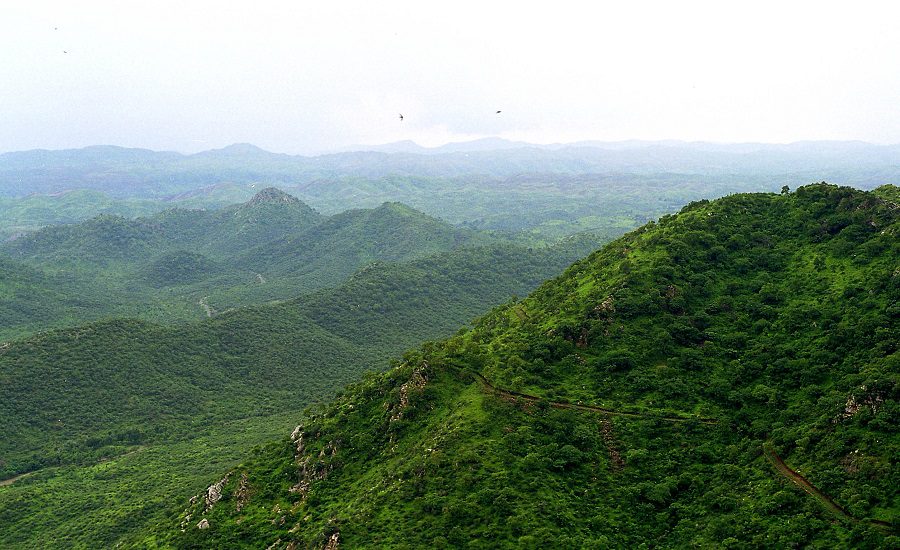
Mangar Bani and Bhondsi have been identified as high-risk zones for invasive plant species and are likely to be among the first sites where Haryana will roll out pilot removal and restoration projects under a proposed Aravali invasive species management strategy.
The draft policy sets an ambitious target of reducing invasive plant cover by 50% in such priority zones within five years and restoring at least 500 acres of native Aravali ecosystems by the sixth year.
Restoration Aimed at Biodiversity Recovery and Wildlife Habitat
The policy estimates that sustained removal of invasive species will enable the recovery of native vegetation such as Acacia nilotica and improve habitat conditions for wildlife, including leopards and sambar. It also anticipates reduced human-wildlife conflict through better habitat quality and emphasises community participation to prevent reinfestation.
Invasive Species Already Dominate Large Forest Areas
The proposal comes amid mounting evidence of invasive pressure on Haryana’s forests. Invasive plant species currently dominate around 12.5% of the state’s forest area, covering more than 201 square kilometres.
Lantana camara is the most aggressive invader, infesting nearly 89 sq km of reserved forests. Other major invasive species include Saccharum spontaneum (31 sq km), Ageratum houstonianum (11.6 sq km), and Leucaena leucocephala (8.5 sq km).
Shift from Sporadic Drives to Continuous Monitoring
A central pillar of the strategy is long-term monitoring, replacing sporadic removal drives with continuous ecological tracking. The draft recommends establishing permanent monitoring plots in high-risk areas such as Mangar Bani and Bhondsi.
Progress would be assessed using phyto-sociological surveys, camera traps, and remote sensing to track invasive spread and evaluate control measures.
Adaptive Management Backed by Field Evidence
Conservator of Forests (South Haryana) Subhash Yadav said the strategy is designed to institutionalise continuous monitoring and refine interventions based on field evidence.
He said the plan promotes adaptive management, with control measures periodically updated based on monitoring results and emerging scientific research. Implementation will begin once compensatory afforestation funds linked to the Nicobar case are received.
Visible Impact Across Gurgaon–Faridabad Aravali Belt
Experts have repeatedly flagged the Aravalis in Gurgaon and Faridabad as areas where invasive impacts are clearly visible. Lantana has steadily spread across the belt and is now seen on both sides of the Gurgaon–Faridabad highway, including the Mangar stretch.
Scientific Collaborations and Data Systems Proposed
To strengthen scientific support, the draft proposes collaborations with institutions such as the Wildlife Institute of India and the Centre for Ecology Development and Research to study invasive species ecology and genetics.
It also recommends creating a regional invasive species database aligned with the Indian Alien Flora Information System to standardise reporting and track occurrences across the Aravali landscape.
Community Participation as a Core Pillar
Community involvement is positioned as a core element of the strategy. The policy recommends engaging local residents in removal and restoration work while providing training and employment opportunities in nursery management and ecological monitoring.
A dedicated task force comprising the Haryana Forest Department, Municipal Corporation of Gurgaon, NGOs, and research institutions is proposed to coordinate planning, implementation, monitoring, and outreach.
Schools, Citizens and Conflict Mitigation
Schools and citizen groups would be included in awareness programmes to build long-term stewardship of Aravali ecosystems.
The draft links invasive-driven habitat degradation to human-wildlife conflict, including leopard encounters in fringe areas. It recommends habitat improvement, community education, and compensation mechanisms as part of conflict mitigation.
Integration with Forest and Wildlife Plans
To ensure invasive control is not treated as a standalone effort, the policy calls for integration into forest working plans, wildlife sanctuary and national park management plans, and Tiger Conservation Plans, noting that parts of the Aravali landscape fall within leopard corridors.
Phased Rollout Over Seven Years
- Year 1: Baseline surveys, invasive mapping, hotspot prioritisation, task force formation
- Years 2–3: Pilot removal in Mangar Bani and Bhondsi, testing integrated control methods, nursery setup, reforestation
- Years 4–6: Scale-up across the Aravalli region and degraded wildlife corridors
- Year 7 onward: Long-term monitoring, data-driven updates, and reinfestation prevention
Long-Term Ecological Resilience the Goal
The draft concludes that Haryana’s Aravali landscape—widely regarded as a biodiversity hotspot—requires a sustained, science-based, and community-driven response to control invasive species, restore native ecosystems, and strengthen long-term ecological resilience.