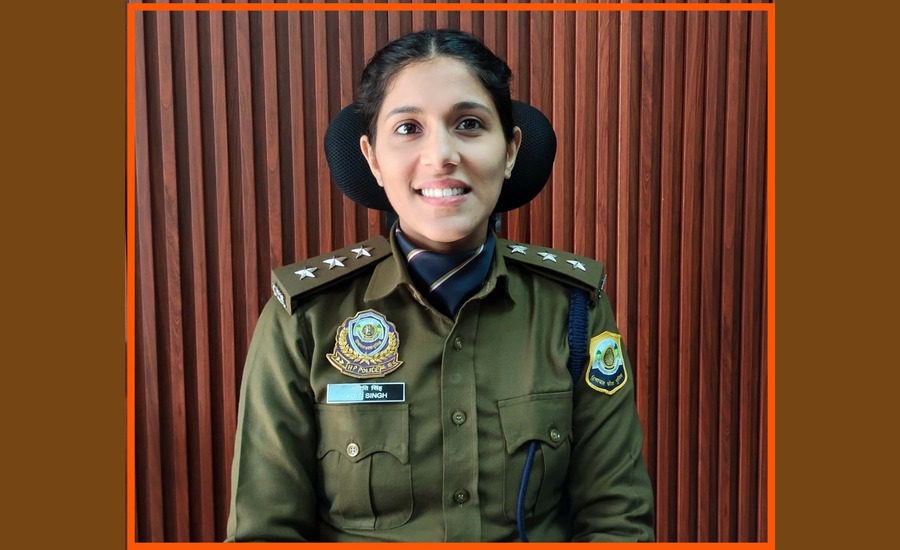
Dharamshala/Chandigarh: In a rare and significant administrative directive, the Himachal Pradesh Director General of Police (DGP) Ashok Tewari has ordered that the duties of IPS officer Aditi Singh at the State Vigilance & Anti‑Corruption Bureau (SV&ACB), Northern Range, Dharamshala be monitored and handled by her subordinate during her frequent absences.
The move comes after Singh, a 2021‑batch Indian Police Service officer, reportedly took 25 days of leave between January 8 and February 22, adversely affecting the bureau’s functioning, according to the official order.
Subordinate Officer Given Charge to Maintain Continuity
The DGP’s order, issued on Monday, directs Additional Superintendent of Police (ASP) Braham Dass Bhatia, a Himachal Pradesh Police Service (HPSS) officer junior in hierarchy to Singh, to oversee her responsibilities whenever she is on leave or absent from headquarters, until further notice.
The directive further states that even when Singh is present, ASP Bhatia will remain associated with her to ensure continuity of work and prevent administrative disruption.
Breakdown of Leave Taken by Aditi Singh
According to the DGP’s order, Singh’s leave record over recent months included:
- January 8‑11: Two days of casual leave and two days of sick leave
- January 12: One day of casual leave
- January 16‑19: Three days of casual leave and one day of sick leave
- February 8‑22: Thirteen days of earned leave and two days of sick leave
In addition, Singh attended a Mid‑Career Interaction program for civil services officers from December 8 to December 10, 2025, at the Dr. R.S. Tolia Uttarakhand Academy of Administration in Nainital, which kept her away from headquarters for over a week.
Impact on Office Functioning Cited as Reason for Action
The DGP’s order highlighted that Singh’s repeated absences were “adversely affecting the functioning of the office” of the SP, SV&ACB, Northern Range, Dharamshala, prompting the decision to have her subordinate step in for administrative oversight.
This step has triggered public and bureaucratic interest due to its uncommon nature — assigning a junior officer to supervise key responsibilities usually handled by a senior IPS officer. The development has been reported widely across state news outlets.