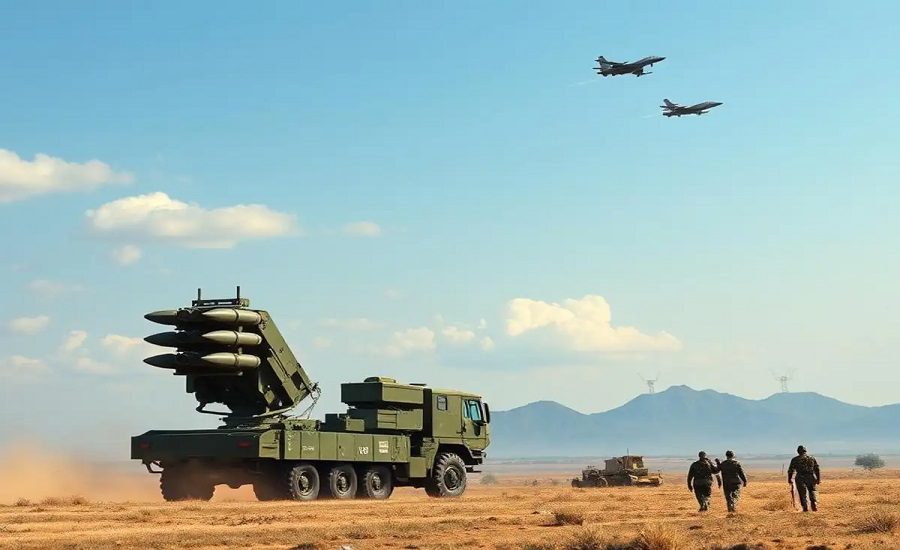
New Delhi: In a significant push toward defence self-reliance, India is preparing to deploy its first fully indigenous, multilayered Integrated Air Defence Weapon System (IADWS) to protect the Delhi National Capital Region (NCR) from hostile aerial threats.
This includes missiles, drones, UAVs, and fast-moving hostile aircraft. The development marks a turning point in India’s journey toward advanced air defence autonomy at a time when global aerial threats are faster, smarter, and more unpredictable.
Background of Integrated Air Defence Weapon System
For decades, India has relied on a mix of imported systems—like the Russian S-400 and considerations for the US-made NASAMS-II—to create a protective aerial shield around critical national assets. However, recent geo-strategic tensions, including attempted cross-border missile targeting during Pakistan’s Operation Sindoor in May 2025, have accelerated India’s resolve to deploy a homegrown defence grid.
The Ministry of Defence (MoD) has fast-tracked the project, aiming to provide a fortified, self-sustaining air defence umbrella over Delhi, similar to international models that safeguard cities like Washington D.C. and key European capitals.
What is Integrated Air Defence Weapon System
The Integrated Air Defence Weapon System will combine multiple indigenous missile platforms developed by the Defence Research and Development Organisation (DRDO).
These include:
1**. Quick Reaction Surface-to-Air Missile (QRSAM):** Designed for rapid engagement of short-range airborne threats, the QRSAM is capable of detecting and destroying aircraft or UAVs in motion.
2. Very Short Range Air Defence Systems (VSHORADS): These man-portable, short-range missiles form the innermost protective ring, useful against low-flying drones and helicopters.
3. Medium-Range Surface-to-Air Systems: Built by DRDO as part of India’s layered defence approach, these systems provide wider coverage and interception at greater altitudes.
4. Command, Control & Networking Infrastructure: DRDO, along with multiple production partners, will deliver advanced sensor fusion, radar networking, and real-time command-control architecture to ensure seamless threat detection and interception.
Why the NASAMS-II Deal Was Shelved
India had earlier explored acquiring the US-made National Advanced Surface-to-Air Missile System-II (NASAMS-II)—the same weapon grid that protects Washington D.C. However, despite negotiations, New Delhi decided not to move forward with the American system.
According to defence sources, India preferred to invest in indigenous research, develop strategic autonomy, and reduce reliance on foreign suppliers after witnessing disruptions in global defence supply chains.
Strategic Significance of Integrated Air Defence Weapon System for National Security
Protection of Critical Infrastructure: The IADWS will safeguard vital defence, political, and administrative installations across Delhi NCR—including strategic command centres, government buildings, and critical national assets.
Strengthening the Indian Air Force’s Role: The Indian Air Force (IAF) will be responsible for operational deployment and real-time threat response.
The new system strengthens IAF’s ability to neutralize emerging threats like:
- Stealth drones
- Loitering munitions
- Hypersonic glide vehicles (in future upgrades)
- Low-flying cruise missiles
Integrated Air Defence Weapon System : Boosting Make-in-India Defence Ecosystem
The deployment of IADWS marks a significant milestone for the Make in India initiative in defence manufacturing. It will:
- Reduce import dependency
- Create high-end technological jobs
- Encourage private sector defence partnerships
- Enhance India’s global image as an emerging defence producer
Current Status of Indigenous Missile Programs
DRDO has made rapid progress in recent years with a series of successful trials of:
- QRSAM
- Medium Range Surface-to-Air Missile (MRSAM)
- VSHORADS
- Long Range SAM (under Project Kusha)
The new IADWS will synergize these technologies into a unified defence shield.
Additionally, India is completing the induction of two remaining squadrons of the S-400 Sudarshan systems, further strengthening long-range defensive capabilities.