New Delhi: The Ministry of Power today announced the release of Version 0.3 of the India Energy Stack (IES) Architecture and Strategy documents, marking a significant milestone in India’s journey toward a digital public infrastructure for the power sector. The update highlights ongoing efforts to standardize and digitize the nation’s energy ecosystem, enabling enhanced transparency, efficiency, and coordination across stakeholders.
The India Energy Stack initiative aims to create a common digital framework that facilitates secure data exchange and seamless interaction among utilities, system operators, market participants, innovators, and consumers using shared standards and protocols. The overarching goal is to build a flexible, future-ready energy system that can adapt to emerging technologies and evolving consumer needs.
Key Features of Version 0.3
The updated Version 0.3 documents reflect careful design, testing, and refinement of the IES framework. The development follows a phased approach, including ecosystem consultation, pilot implementations, and eventual national rollout. Key highlights include:
Enhanced Consumer and Prosumer Participation: Consumers gain greater control and access to improved energy services, allowing them to compare offerings, participate in demand response programs, and engage in electric vehicle (EV) charging schemes.
Prosumers’ Benefits: Individuals and organizations producing electricity can monetize surplus energy, verify transactions, and actively participate in energy markets.
Consent-Based Data Sharing: Ensures secure, interoperable digital services while enabling trusted measurement, verification, and settlement at scale.
Market Efficiency and Transparency: Standardized digital protocols facilitate better coordination among energy providers, operators, and regulators.
Stakeholder Engagement and Review Meeting
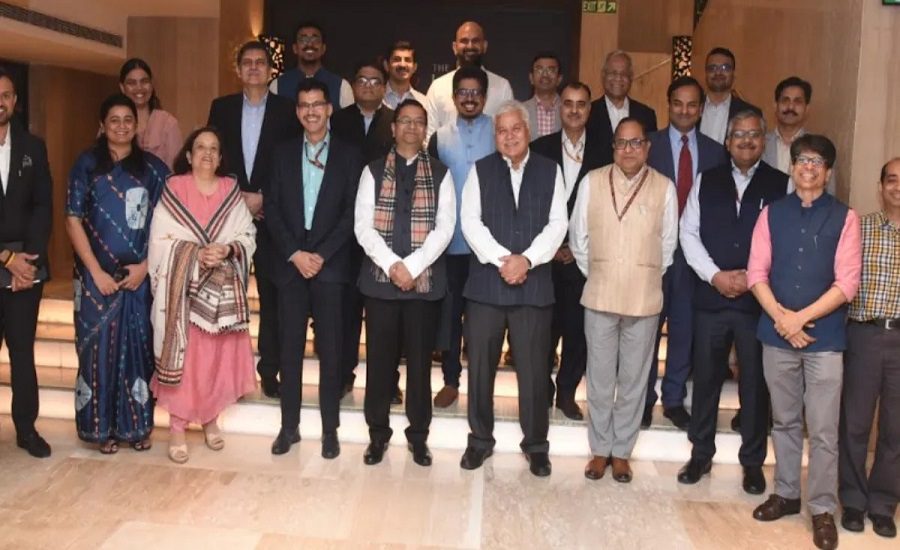
The Version 0.3 documents were reviewed in a high-profile meeting attended by senior leaders and experts from India’s energy, technology, and policy sectors:
- Dr. Ram Sewak Sharma – Chairman, IES Taskforce; Former Director General, UIDAI; Former CEO, National Health Authority; Former Chairman, TRAI
- Mr Pradeep Kumar Pujari – Vice Chair, Distinguished Fellow, FSR Global; Former Chairman, CERC; Former Secretary, Power
- Mr Pramod Verma – Co-founder, FIDE; Former Chief Architect, Aadhaar
- Mr Abhishek Ranjan – CEO, BRPL
- Mr. Vikram Gandotra – President-Elect, IEEMA
- Mr Vikram Dhaka – Representative, MNRE
- Mr Swetha Ravi Kumar – Executive Director, FSR Global
- Dr. Rahul Tongia – Senior Fellow, CSEP
- Mr. Reji Pillai – President, ISGF
- Mr Pranav Tayal – Director, Ministry of Power
The discussions centered on ecosystem collaboration, technical feasibility, and the roadmap for national rollout.
REC Limited: Driving the IES Initiative
The India Energy Stack is steered by REC Limited, acting as the Nodal Agency, in close coordination with the Ministry of Power and supported by FSR Global as the Knowledge Partner. The project is expected to be completed by July 2026.
About REC Limited
REC Limited, a ‘Maharatna’ company under the Ministry of Power, serves as a Non-Banking Finance Company (NBFC), Public Financial Institution (PFI), and Infrastructure Financing Company (IFC). The company finances power and non-power infrastructure projects across India, including generation, transmission, distribution, renewable energy, EVs, battery storage, green hydrogen, and green ammonia projects.
REC has played a pivotal role in flagship government schemes such as:
- Pradhan Mantri Sahaj Bijli Har Ghar Yojana (SAUBHAGAYA)
- Deen Dayal Upadhyaya Gram Jyoti Yojana (DDUGJY)
- National Electricity Fund (NEF) Scheme
- Revamped Distribution Sector Scheme (RDSS)
- PM Surya Ghar Muft Bijli Yojana
The company’s efforts have contributed to 100% village electrification, improved household access to electricity, and strengthening last-mile distribution systems.
Future Outlook
The India Energy Stack initiative represents a transformative step in the digital modernization of India’s energy sector. By empowering consumers and prosumers, enabling interoperable services, and creating a trusted data ecosystem, IES aims to build a more resilient, efficient, and transparent energy system for the country.
Read also: Union Budget Push: PFC Acquires 52.63% Government Stake in REC, Making It a Subsidiary