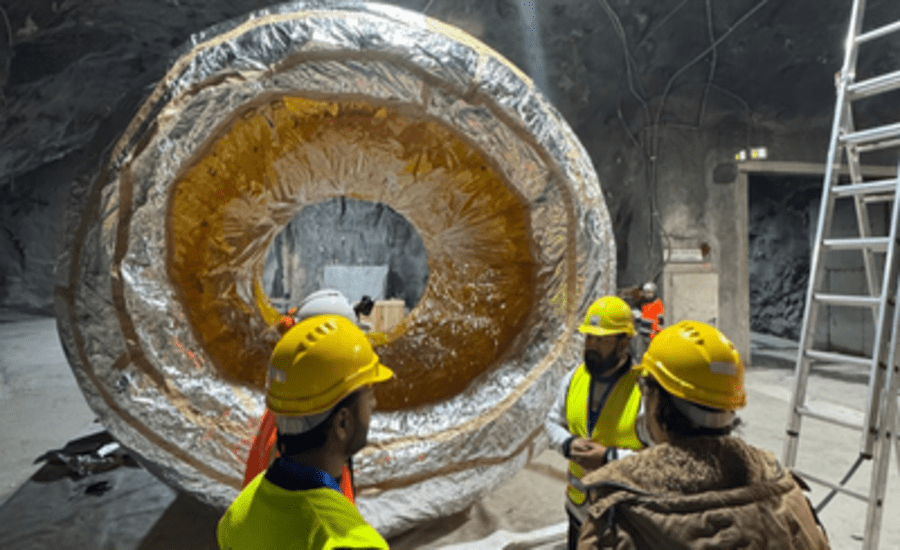
New Delhi: India’s inflatable orbit habitat project, AntarikshHAB, is set to make history following the successful completion of crucial safety and validation trials in Switzerland.
The Bengaluru-based space technology startup Akashlabdhi is now preparing for a planned orbital demonstration in July, marking a major milestone for India’s private space sector and next-generation space habitation innovations.
India Inflatable Orbit Habitat: A New Chapter in India’s Space Ambitions
India’s private space ecosystem is rapidly evolving, and Akashlabdhi has emerged as a key innovator.
The startup, incubated at the prestigious Indian Institute of Science in Bengaluru, is leading development of AntarikshHAB, India’s first inflatable orbit habitat module.
Unlike traditional rigid modules, this inflatable habitat will launch compactly and expand once in space, offering significantly larger usable living space for future human missions.
Inflatable habitats can dramatically cut costs and increase internal volume compared to conventional space station modules — a critical advancement for long-duration missions and deep space exploration.
What Is AntarikshHAB?
AntarikshHAB is built on innovative inflatable space habitat technology, allowing high volume-to-mass efficiency — meaning more livable space can be packed into a smaller launch payload. The first orbital mission will deploy a 70 cubic metre habitat, while future versions are designed to expand up to 300 cubic metres, rivaling or exceeding many rigid space structures.
This modular flexibility aligns with global trends in space architecture seen in earlier experimental platforms like Bigelow Aerospace’s expandable habitats — though India’s effort is unique in its launch strategy and integration with emerging space-ecosystem partners.
Swiss Trials: A Crucial Validation Step
Before entering orbit, AntarikshHAB underwent a series of critical safety and performance tests in Switzerland at the Versuchsstollen Hagerbach underground laboratory. These tests simulate extreme space-like conditions, including radiation shielding, pressure stability, structural integrity, and thermal effects — conditions difficult to reproduce on the surface.
The testing was supported through partnerships and institutional grants involving the European Space Agency (ESA), Amberg Group, and other European research bodies. This international collaboration helped Akashlabdhi progress its technology to Technology Readiness Level 6 (TRL-6) — meaning the system has been validated in relevant environments.
Preparing for Orbital Demonstration
Akashlabdhi has now announced plans for an orbital flight test in July 2026, with the inflatable habitat deployed aboard a launch vehicle provided by Spanish space company PLD Space. This mission is more than a simple demonstration — it will also test controlled de-orbit and atmospheric re-entry, gathering data on material performance, degradation, and survivability.
These sustainability metrics are critical as space traffic increases and global space agencies emphasise responsible end-of-life planning for spacecraft — including reducing debris and ensuring safe burn-up on re-entry.
India Inflatable Orbit Habitat: Collaborative Expertise Driving Innovation
The international nature of the AntarikshHAB project highlights India’s growing integration into global space research ecosystems:
- Indian partners: IISc Bengaluru, Indian Institutes of Technology (IIT) Roorkee and Delhi — contributing to materials, systems engineering, and human-centric designs.
- Swiss collaborators: Federal Swiss institutions including ETH Zurich, EMPA, and the Paul Scherrer Institute — assisting in materials science, radiation studies, and validation methodologies.
- European support: Grants and structural assistance linked to ESA programmes ensured critical infrastructure and deep-environment testing were possible.
This blend of expertise helps ensure the inflatable habitat meets strict safety standards while advancing cutting-edge orbital infrastructure technologies.
What is the Importance of India Inflatable Orbit Habitat
The progress of AntarikshHAB reflects the growing role of private space enterprises in India’s national space objectives. Although agencies like ISRO continue to lead major missions, startups are increasingly contributing next-generation technologies that support human habitation, long-duration missions, and potential lunar or Martian outposts.
If the July launch succeeds, Akashlabdhi’s inflatable orbit habitat will place India among the select group of nations and organisations developing expandable space modules — a technology considered key to future space exploration and commercial orbital infrastructure.