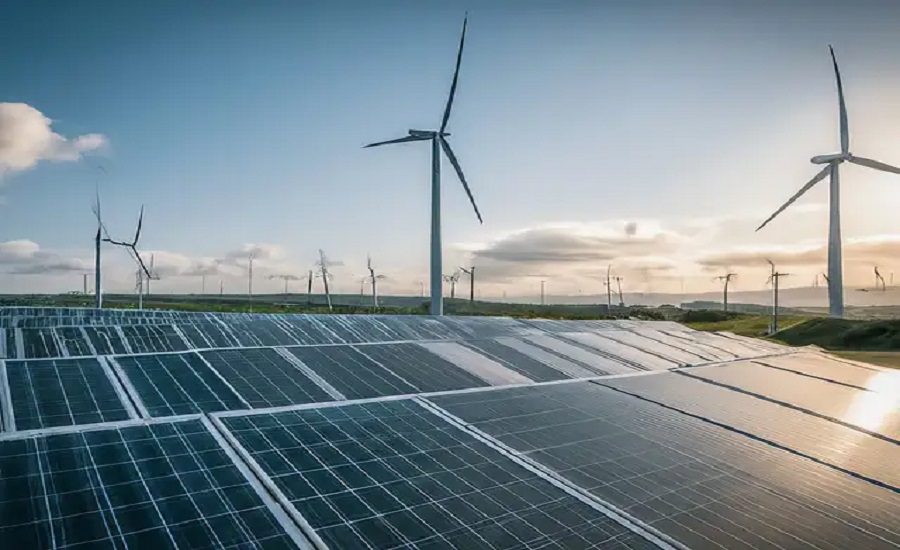
New Delhi: India’s installed energy capacity has witnessed remarkable growth over the past five years, rising by nearly 36% from 375 GW in December 2020 to almost 510 GW by December 2025. This expansion has been driven primarily by the country’s focus on new and renewable energy sources, including solar, wind, bioenergy, and small hydro power.
Renewable Energy Leads the Expansion
According to the Ministry of New and Renewable Energy, renewable capacity saw a dramatic rise of 122% over the five-year period, increasing from 91.1 GW in 2020 to 203.6 GW in 2025, a net addition of 112 GW. With the inclusion of large hydro and nuclear power, non-fossil fuel sources now account for 263 GW, representing 51.6% of India’s total installed capacity.
Read also: NLC India Renewables and PTC India Form Joint Venture to Develop 2,000 MW Renewable Energy Projects
Fossil Fuel Capacity Shows Marginal Growth
While renewables have expanded rapidly, fossil fuel-based power — comprising coal, lignite, gas, and diesel — grew modestly by 5.6% during the same period. This demonstrates a clear shift in India’s energy mix toward cleaner, greener energy sources, in line with national and international sustainability goals.
Record Green Energy Additions in 2025
The ministry highlighted that 2025 marked India’s highest-ever annual addition of renewable capacity, with 44.5 GW installed by November 30, driven largely by solar projects. Solar power capacity alone increased by 35 GW, reaching 132.9 GW, while wind energy added 5.8 GW. Large hydro projects expanded from 45.8 GW to 50.4 GW, and nuclear capacity rose slightly from 6.8 GW in 2020 to 8.8 GW in 2025.
Officials confirmed that all installed capacities are grid-connected and generation-ready, with transmission infrastructure planned and implemented to support the phased capacity additions.
Nuclear Sector Set for Expansion
The passage of the Sustainable Harnessing and Advancement of Nuclear Energy for Transforming India Bill, 2025, now allows private players to enter India’s previously restricted nuclear energy sector. Experts expect this legislative move to accelerate nuclear capacity expansion and contribute to India’s long-term energy security and low-carbon growth trajectory.
India’s Path Towards a Cleaner Energy Future
The substantial growth in renewable energy capacity, coupled with supportive policies for nuclear expansion, reflects India’s commitment to a sustainable energy transition. By 2025, over half of the country’s power generation capacity comes from non-fossil sources, positioning India as a global leader in clean energy adoption and carbon reduction efforts.
This energy transformation is expected to strengthen grid stability, reduce dependency on fossil fuels, and meet the growing electricity demand of India’s economy, while aligning with the government’s vision of a carbon-neutral and sustainable energy future.
Read also: SJVN Limited Signs Major Contract for 200 MW Solar Power Project at GIPCL Renewable Energy Park