New Delhi: In a major defence move, India has approved the procurement of 1,000 Rafael SPICE air-to-surface missiles from Israel — a strategic acquisition aimed at boosting the Indian Air Force’s (IAF) precision strike and standoff capabilities amid evolving regional security dynamics.
The decision comes as part of a broader US$8.7 billion defence procurement package approved by the Defence Acquisition Council (DAC) chaired by Defence Minister Rajnath Singh, reflecting India’s intensified focus on modernising its military arsenal with advanced precision-guided weaponry.
What is Rafael SPICE Missile?
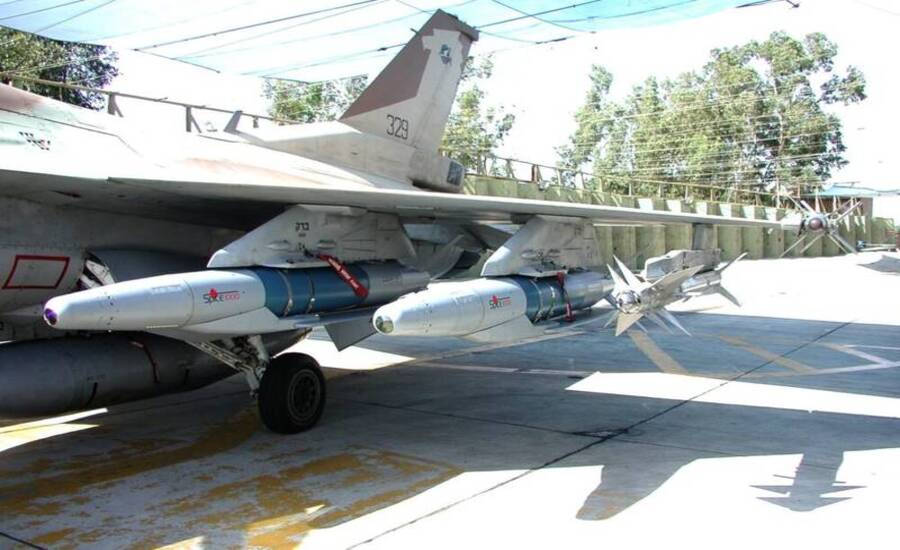
The SPICE (Smart, Precise Impact, Cost-Effective) system is a family of precision-guided air-to-surface munitions developed by Rafael Advanced Defense Systems of Israel.
Read also: Inside the Indian Army’s ‘Bhairav’ Force: How 100,000 Drone Warriors Are Transforming Modern Warfare
These glide kits transform conventional bombs into autonomous smart weapons with high accuracy and extended strike reach.
What are the Features of Rafael SPICE Missile Deal
Autonomous guidance: Uses electro-optical and inertial navigation systems, enabling GPS-independent targeting.
High precision: Capable of achieving a three-metre circular error probable (CEP).
Standoff range: Enhances Indian fighter aircraft’s capability to strike targets from 100–125 km away, reducing risk to pilots and platforms.
This capability will allow the IAF to conduct deep strikes while remaining outside the effective engagement envelopes of hostile air defence systems.
What is the Importance of Rafael SPICE Missile Deal
The procurement decision aligns with India’s need to strengthen its aerial deterrence posture amid ongoing regional tensions, particularly along the India-Pakistan border and with China’s expanding military footprint.
Recent military confrontations and the evolving threat landscape have underscored the importance of precision standoff strike capabilities that reduce exposure to enemy air defence systems through longer strike ranges and autonomous targeting technologies.
Enhancing Strategic Deterrence
The SPICE missiles are expected to augment India’s deep-strike and deterrence capabilities by enabling strikes against high-value targets — including command nodes, hardened facilities, and key military infrastructure — without requiring aircraft to penetrate dense air defences.
This development sends a strong strategic message to regional adversaries about India’s advancing aerial modernization and commitment to maintaining a credible defensive and offensive deterrent.
Wider Defence Acquisitions and Israel-India Industrial Ties
The SPICE deal represents just one component of a much larger procurement package that includes air-to-air missiles, loitering munitions, advanced radars, and networked defence systems aimed at transforming India’s joint warfare capabilities.
The consignment also highlights the enduring defence partnership between India and Israel, with India historically emerging as one of the largest export customers for Israeli defence equipment, accounting for a significant portion of Israel’s defence exports between 2020 and 2024.
Beyond purchases, both countries are reportedly exploring cooperation on joint production and technology transfer for systems such as Air LORA ballistic missiles and ICE BREAKER cruise missiles under “Make in India” initiatives.
What is the Impact of Rafael SPICE Missile Deal
Integration of the SPICE-1000 kits onto platforms like the Sukhoi Su-30MKI and other multirole aircraft will extend the IAF’s reach significantly beyond traditional artillery and direct strike weapons, enabling safer, higher-impact missions in contested zones.
Reduced Pilot Risk and Enhanced Lethality
By allowing pilots to launch from greater distances while relying on autonomous guidance systems, SPICE increases mission success probabilities with minimal aircraft exposure to surface-to-air threats.
This technological leap reinforces India’s drive toward a networked and multi-domain defence posture, blending precision strike, electronic warfare resilience, and integrated command systems.