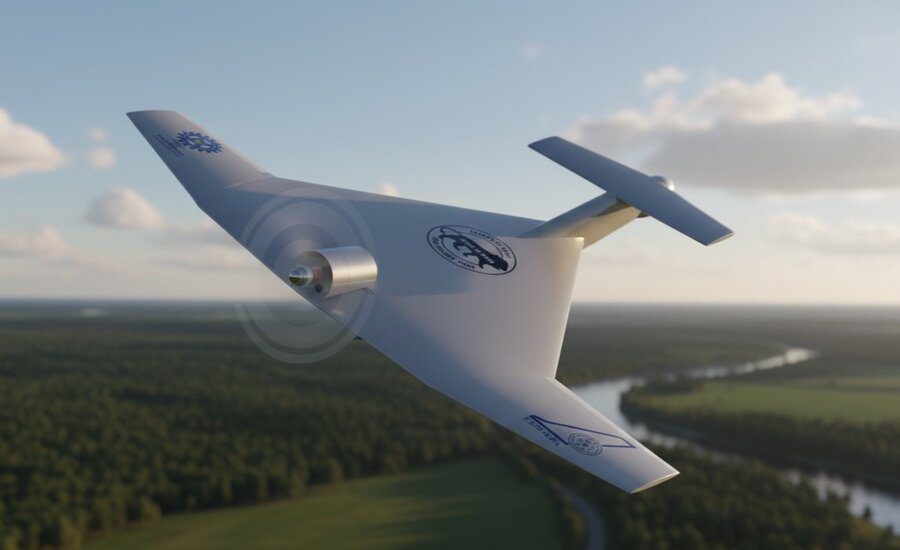
New Delhi: The Indian Army evaluates THONS versatile loitering munition as part of its ongoing effort to strengthen modern battlefield capabilities and precision strike systems. With rapid changes in warfare and increasing use of drones and autonomous weapons globally, the Army is studying new technologies that can deliver accurate strikes while minimizing risks to soldiers.
Loitering munitions — often called “kamikaze drones” — can hover over a target area, identify threats, and strike with high precision when required. The evaluation of the THONS system reflects India’s push toward advanced and indigenous defense technologies to enhance operational effectiveness along sensitive borders.
Details of THONS Loitering Munition Procurement
The Indian Army is currently evaluating the THONS versatile loitering munition, a new drone-based precision strike system designed for modern combat environments.
Loitering munitions combine the features of surveillance drones and guided missiles. They can hover over a battlefield for a period of time, locate a target, and then attack by crashing into it with an explosive payload. This capability allows soldiers to strike enemy positions quickly without deploying manned aircraft or artillery.
The THONS system is designed to be flexible, portable, and adaptable for multiple missions, making it useful for infantry units, special forces, and tactical operations in complex terrain.
What Are Loitering Munitions?
Loitering munitions are a relatively new class of weapons that have become highly important in modern warfare.
Unlike traditional missiles that follow a fixed trajectory, these systems can stay airborne over a target zone until the right moment to strike. Once a target is confirmed, the drone dives directly onto the objective and detonates.
Key characteristics include:
- Real-time surveillance and targeting
- Precision strike capability
- Ability to cancel or redirect attacks
- Reduced collateral damage
- Lower risk for soldiers
Because of these advantages, loitering munitions are widely used in recent conflicts around the world and are increasingly being adopted by many armed forces.
Why Do India Need THONS Loitering Munition
Modern conflicts such as the Russia-Ukraine war and regional security challenges have shown the critical importance of drones and autonomous weapons.
Military planners are focusing on systems that can:
- Quickly detect hidden enemy targets
- Strike with precision in mountainous or urban terrain
- Operate with minimal logistical support
- Provide real-time intelligence to commanders
Loitering munitions meet all these requirements. They also allow small units to carry their own precision strike capability, which was earlier available only through large artillery or air power.
India’s Push for Indigenous Drone Weapons
India has been actively investing in indigenous drone technologies under the “Atmanirbhar Bharat” (self-reliant India) initiative.
Several loitering munition systems are already being developed and inducted into the armed forces. One example is the Nagastra-1, an indigenous loitering munition designed to identify and destroy targets with high accuracy while reducing collateral damage.
The development and testing of systems like THONS reflect India’s effort to:
- Reduce dependence on foreign defense systems
- Strengthen domestic defense manufacturing
- Equip troops with next-generation battlefield technologies
Strategic Benefits for the Indian Army
If successfully adopted, systems like THONS could provide multiple advantages to the Indian Army.
1. Precision Targeting
The system can precisely strike enemy bunkers, vehicles, or infiltration groups without heavy artillery support.
2. Increased Soldier Safety
Troops can engage targets from a safe distance, reducing direct exposure to enemy fire.
3. Real-Time Intelligence
Operators receive live video feeds, enabling better battlefield awareness.
4. Rapid Response
Loitering munitions allow immediate engagement of time-sensitive targets. These capabilities are particularly useful in high-altitude areas and complex border regions, where traditional weapons may face operational limitations.
Strengthening India’s Future Battlefield Capabilities
The evaluation of the THONS loitering munition highlights how the Indian Army is adapting to technology-driven warfare.
Drones, artificial intelligence, and autonomous systems are increasingly shaping military strategies worldwide. By testing and integrating such systems, India aims to maintain a strong technological edge in defense preparedness.
Experts believe that the next decade will see greater integration of drones, loitering munitions, and network-centric warfare systems across all branches of the armed forces.