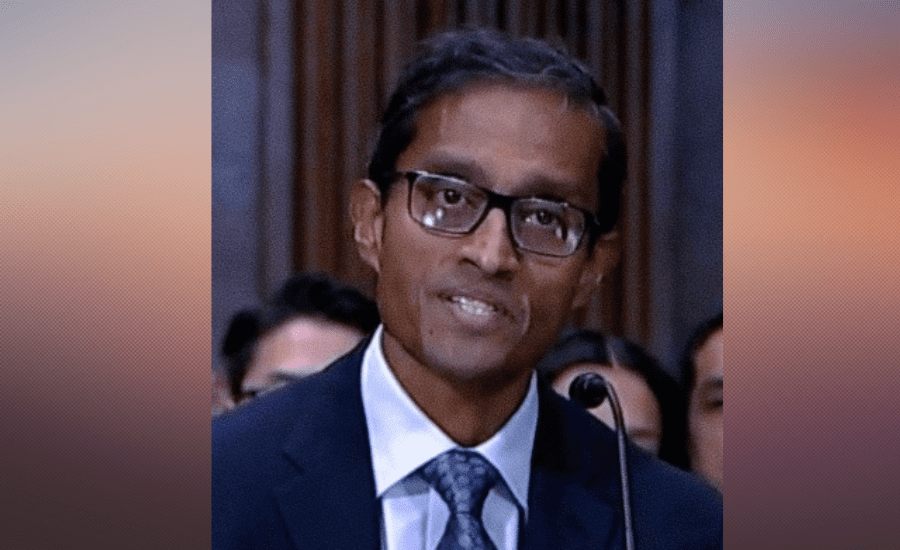
Washington: A federal judge of Indian descent, Arun Srinivas Subramanian, has issued a high-profile judicial order blocking the Trump administration’s attempt to halt more than $10 billion in federal funding to key social programs across several U.S. states — a ruling that has sparked national debate and political backlash.
With profound implications for American social policy and governance, the case highlights the intersection of judicial authority, federal spending oversight, and political polarization ahead of the 2026 midterm elections.
Background: The Federal Funding Freeze
In early January 2026, the U.S. The Department of Health and Human Services (HHS) announced that it would freeze federal funds earmarked for childcare, family assistance, and social services in several Democrat-led states.
The move was tied to alleged fraud in state-operated daycare and assistance programs, according to HHS officials.
These federal grants are part of programs such as:
- Child Care and Development Fund (CCDF)
- Temporary Assistance for Needy Families (TANF)
- Social Services Block Grants (SSBG)
Collectively, these programs serve low-income families, childcare providers, domestic violence survivors, and other vulnerable groups.
Details of Judge Arun Subramanian Decision
U.S. District Judge Arun Subramanian — appointed by President Joe Biden and confirmed by the Senate in 2023 — issued a temporary restraining order stopping the Trump administration’s freeze.
His decision was grounded in legal arguments that:
- The sudden funding halt may violate established administrative procedures and federal statutes.
- It could cause “immediate and devastating impacts” on families that depend on these services.
Unlike a full trial decision, Subramanian’s ruling does not determine guilt or innocence in the fraud allegations. Instead, it preserves the “status quo” while the court considers the broader legal challenge.
This temporary order keeps funding flowing for at least 14 days, giving states time to defend their legal position before any permanent injunction is decided.
States Involved in the Lawsuit
The lawsuit was brought jointly by five Democratic-led U.S. states that receive the affected funds:
1. New York
2. California
3. Minnesota
4. Illinois
5. Colorado
These states argued that withholding federal allocations — already approved by Congress — without due process intrudes on Congress’s constitutional power of the purse and violates federal administrative law.
Political and Public Reactions on Judge Arun Subramanian Decision
New York Attorney General Letitia James welcomed the ruling as a “critical victory” for vulnerable families who rely on childcare, social support, and domestic violence services. She criticized the funding freeze as both illegal and harmful to residents’ livelihoods.
Backlash from Conservatives
On social media and national news outlets, the decision drew intense criticism from conservative commentators and MAGA supporters. Critics accused Subramanian of overstepping judicial authority and interfering with executive policy prerogatives.
Elon Musk — the billionaire entrepreneur — publicly labeled the judge’s decision “problematic” on X (formerly Twitter), arguing that American citizens could not influence outcomes if federal courts could halt actions backed by Congress and the executive branch.
Additionally, some critics questioned Subramanian’s background and legitimacy, resulting in racially charged commentary directed at the judge based on his Indian-American heritage.
Who Is Judge Arun Subramanian?
Arun Srinivas Subramanian was born in 1979 in Pittsburgh, Pennsylvania, to Indian immigrant parents. He earned degrees in computer science and English before receiving his law degree from Columbia Law School, one of the United States’ most prestigious legal institutions.
Subramanian began his legal career clerking for federal judges and eventually for a Justice of the U.S. Supreme Court. Before his appointment to the bench, he practiced as a litigation attorney, handling complex cases and recovering over $1 billion for clients. He also engaged in significant pro bono work.
In 2023, he became the first South Asian judge appointed to the United States District Court for the Southern District of New York, a role that brings with it considerable influence over high-stakes federal cases.
Legal Implications and What’s Next
Subramanian’s order is a temporary pause, not a final judgment.
The legal battle will continue, potentially setting precedent on:
- The limits of executive power in altering federal spending.
- The scope of judicial oversight over administrative agencies.
- How courts balance emergency relief against procedural legality.
Both sides are expected to present further arguments in the coming weeks, with the eventual ruling likely to influence federal administrative law for years to come.
Broader Significance of Judge Arun Subramanian
This case underscores the complexity of federal governance in the United States:
- It illustrates the tension between branches of government — the judiciary, executive, and legislature.
- It highlights ongoing policy conflicts between Republican and Democratic leaders.
- It also sheds light on how federal court decisions resonate beyond law into politics, media, and public discourse.
As the national conversation intensifies, this legal dispute could become a key talking point heading into future elections.
Read also: Supreme Court Fights Back Against AI Chaos — Demands Strict Regulation of Generative AI in Judiciary