New Delhi: A key component of the United States’ missile defence network in the Middle East has reportedly been damaged after an Iranian strike targeted a military installation in Jordan. According to a report by Bloomberg, a multi-million-dollar radar system used in the US Terminal High Altitude Area Defence (THAAD) missile defence system was destroyed after Iran struck Muwaffaq Salti Air Base during the opening days of the ongoing conflict.
The radar, manufactured by RTX Corporation, plays a critical role in tracking and directing missile defence systems designed to intercept ballistic missiles.
Key THAAD Radar System Reportedly Destroyed
The damaged system is believed to be the AN/TPY-2 radar, a high-precision tracking radar used by the Terminal High Altitude Area Defense (THAAD) network.
The radar is essential for detecting and tracking incoming ballistic missiles and guiding interceptor missiles to destroy them in the upper atmosphere.
Each THAAD battery costs roughly $1 billion, with the radar alone valued at approximately $300 million, according to the Center for Strategic and International Studies.
Iranian Strikes in Jordan
Data compiled by the Foundation for Defense of Democracies indicates that two Iranian strikes were reported in Jordan, on February 28 and March 3.
Both attacks were reportedly intercepted by air defence systems, though the radar installation may still have sustained damage during the strikes.
Ryan Brobst, deputy director at the Center on Military and Political Power, said that if confirmed, the strike would represent one of Iran’s most successful attacks against US military infrastructure so far.
Impact on US Missile Defence Operations
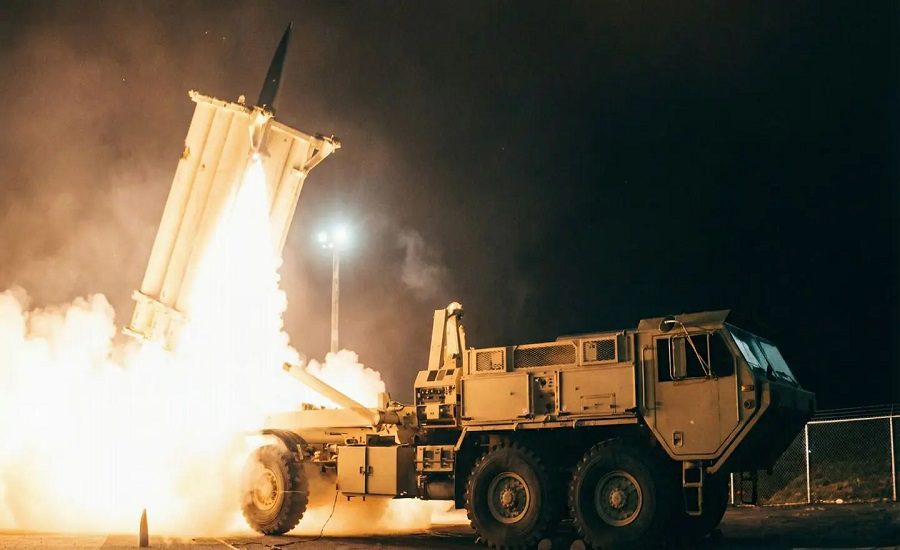
The THAAD system is designed to intercept ballistic missiles at the edge of Earth’s atmosphere, providing protection against complex and long-range threats that are more difficult to counter using shorter-range systems like the Patriot missile system.
With the AN/TPY-2 radar reportedly out of service, interception responsibilities may shift toward Patriot missile batteries.
However, supplies of PAC-3 interceptor missiles used in Patriot systems are already limited, raising concerns about sustainability if attacks continue.
Strategic Importance of THAAD Systems
The United States currently operates eight THAAD batteries worldwide, including deployments in:
• South Korea
• Guam
Each battery typically includes:
• About 90 soldiers
• Six truck-mounted launchers
• 48 interceptor missiles (eight per launcher)
• One TPY-2 radar
• A tactical fire-control and communications unit
Each interceptor missile, produced by Lockheed Martin, costs around $13 million.
Experts Warn of Limited Redundancy
According to defence expert Tom Karako from the Center for Strategic and International Studies, the loss of a THAAD radar could represent a significant setback.
He noted that the US Army’s current eight-battery THAAD force remains below the nine-battery requirement established in 2012, leaving little operational redundancy.
“These are scarce strategic resources, and losing one is a major blow,” Karako said.
Earlier Radar Damage in Qatar
Earlier in the conflict, another US radar installation — the AN/FPS-132 early warning radar in Qatar — was also reportedly damaged during an Iranian attack.
According to research by the James Martin Center for Nonproliferation Studies, the system functions as an early-warning radar capable of detecting threats at long distances, although it lacks the precision needed to guide missile interceptors.
Missile Defence Systems Under Pressure
Air and missile defence networks across the Gulf region are reportedly under intense pressure due to waves of Iranian drones and ballistic missile attacks.
Experts warn that stockpiles of advanced interceptors such as THAAD and PAC-3 missiles could be depleted if the conflict continues at its current pace.
In response, US defence contractors including Lockheed Martin and RTX Corporation reportedly met at the White House on Friday as the Pentagon seeks to accelerate weapons production and replenish missile defence stocks.