Davos: Jharkhand has signaled a strategic shift from its traditional mineral-based economy to a diversified industrial future. At the World Economic Forum 2026, Chief Minister Hemant Soren and Finance Secretary Prashant Kumar presented a roadmap focused on value-added manufacturing, capital efficiency, and decentralized job creation. The state aims to attract global investment while expanding social welfare programs and boosting human capital.
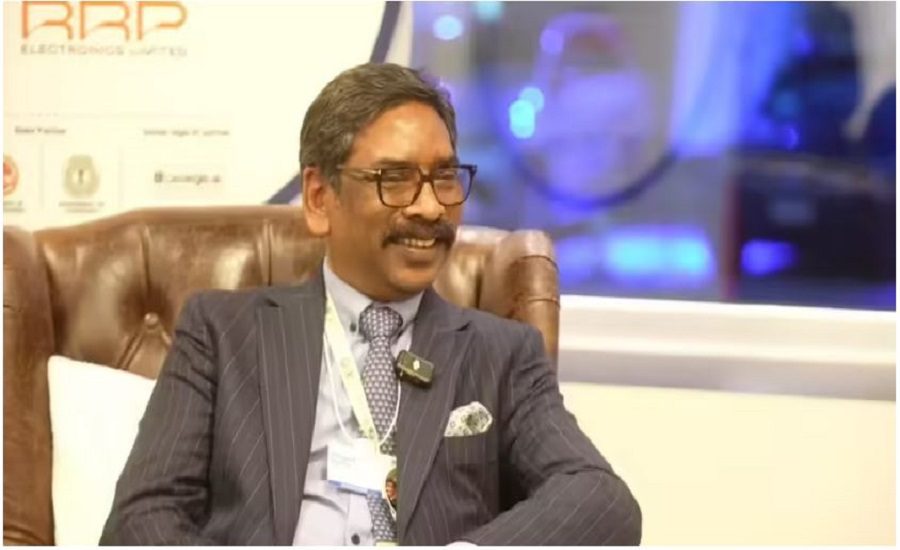
Speaking at ET House, CM Soren emphasized that while minerals have anchored Jharkhand’s economy, the future demands diversification into processing, manufacturing, and service sectors. “A new generation has come up, and its expectations are different. We must go beyond mineral extraction and explore opportunities in value addition and emerging industries,” he stated.
Leveraging Nuclear Energy and Policy Reforms
The Chief Minister highlighted the SHANTI Act 2025 (Sustainable Harnessing and Advancement of Nuclear Energy for Transforming India) as a game-changer. The legislation allows Jharkhand to explore new avenues in nuclear energy, complementing the existing uranium mining operations in the state.
MSMEs: Agile Engines of Growth
Soren identified micro, small, and medium enterprises (MSMEs) as a key pillar of Jharkhand’s next growth phase. Unlike capital-intensive projects, MSMEs can quickly establish operations and generate employment. “Small and medium industries move fast. They start operations quickly and create jobs almost immediately,” the CM said, emphasizing the state’s focus on enabling agile enterprises.
Tourism, Sports, and Women-Led Development
Beyond industry, Jharkhand is unlocking its tourism potential through religious circuits connecting sites like Deoghar. The state is also exploring investments in sports infrastructure, leveraging its legacy with icons such as MS Dhoni and contributions to the national women’s hockey team. Plans include globally benchmarked sports academies to nurture talent.
Women-led growth is another priority. The government is designing programs to support women entrepreneurs, building on existing welfare and livelihood schemes. Initiatives like the Maiya Samman Yojana and the Guruji Student Credit Card, which provides education loans up to ₹15 lakh, aim to empower citizens with financial independence.
Innovative Financing for Infrastructure Growth
Finance Secretary Prashant Kumar detailed Jharkhand’s approach to funding its industrial and infrastructure ambitions. Traditional financing models based on grants and bank lending are under strain. The state is now pursuing blended finance structures and public-private partnerships (PPP) to mobilize capital efficiently.
Kumar cited examples in the solar energy sector, where the government provides land and water at no cost alongside long-term power purchase agreements. This approach shifts operational risk to private players while de-risking upfront investments, creating confidence for investors. New policies for industrial parks and logistics hubs are also in the works.
Private Sector Perspective: Policy Certainty and Investor Confidence
Private sector experts attending WEF 2026 emphasized the importance of policy clarity. Mohammad Athar, PwC India, noted that private investment depends on clear regulations and land policies. Saurabh Tripathi of BCG highlighted that infrastructure projects require certainty in land acquisition, taxation, and regulatory continuity. He added that “once the right environment is created, states must actively market themselves to attract the right investors.”
Jharkhand at Davos 2026: A Rebranding Moment
The state’s presence at Davos marked a critical step in rebranding Jharkhand as a competitive destination for global capital. By balancing industrial reforms, fiscal innovation, and social welfare, the government is positioning Jharkhand for a future defined not just by its mineral wealth but by the entrepreneurial and technological potential of its people.