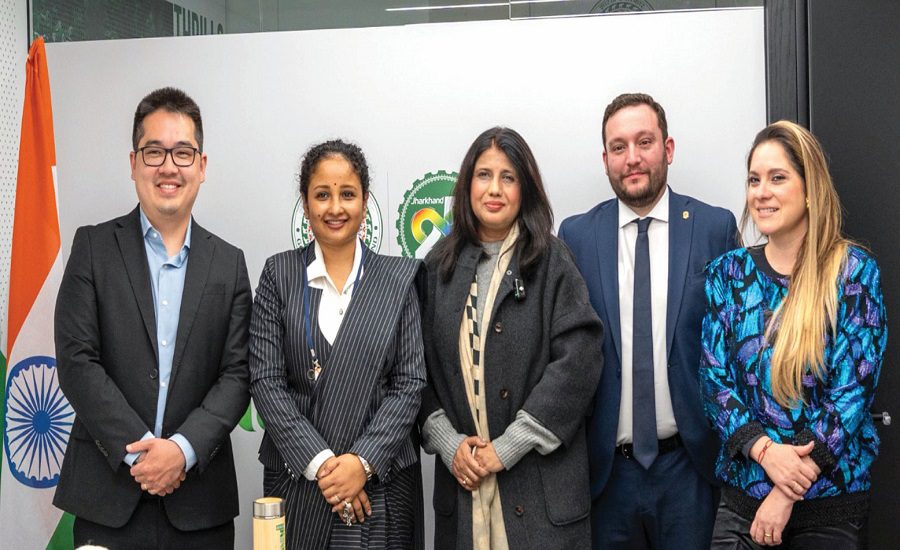
Davos: Leaders from government, finance, and industry stressed that women’s entrepreneurship should be treated as a central economic strategy, not just a social initiative, at a high-level panel convened by the BRICS Chamber of Commerce and Industry Women Empowerment (BRICS CCI WE) Vertical in collaboration with the Government of Jharkhand at the World Economic Forum in Davos.
Panel Focus: Driving Growth and Building a Sustainable Economy
The panel, titled “Women Entrepreneurship: Driving Growth and Building a Sustainable Economy,” brought together policymakers, financial leaders, and ecosystem builders from India and other BRICS+ nations. The discussion focused on how women-led enterprises can drive resilient, inclusive, and sustainable growth amid global economic uncertainty.
Read also: Jharkhand Showcases Vision for Critical Minerals and Sustainable Growth at WEF 2026
Jharkhand Highlights Women Empowerment Initiatives
Kalpana Murmu Soren, MLA and Chairperson of Jharkhand’s Women and Child Development Committee, highlighted how women’s empowerment through entrepreneurship is part of the state’s Vision 2050 roadmap. She noted:
- Over 3.4 million women mobilized through self-help groups
- Livelihood programs and credit linkages exceeding USD 650 million
- Focus on education, skill development, and enterprise creation
Soren emphasized that empowering women economically strengthens society as a whole.
Women Entrepreneurship as a Growth Imperative
Ruby Sinha, President of BRICS CCI WE and Founder of SheAtWork, said,
“Women entrepreneurship is no longer a social discussion. It is a growth imperative.” She highlighted the need for access, visibility, and trust, along with collaboration between policymakers, capital providers, platforms, and media to scale women-led businesses.
Global Perspective: Community, Capital, and Collaboration
Geovana Quadros, Founder of Mulheres Inspiradoras, stressed that women entrepreneurs often work in isolation, limiting access to capital, mentorship, and networks.
Fabio Maeda, CFO of Banco da Amazonia, highlighted the importance of coordinated financing solutions. He emphasized guarantee mechanisms, partnerships, and policy alignment to unlock credit for women without compromising financial discipline.
Call for Systemic and Scalable Solutions
The panel concluded with a call to move beyond pilot programs and intent-led initiatives. Experts agreed that women-led enterprises must be integrated into mainstream economic growth strategies to drive sustainable development and inclusive growth globally.