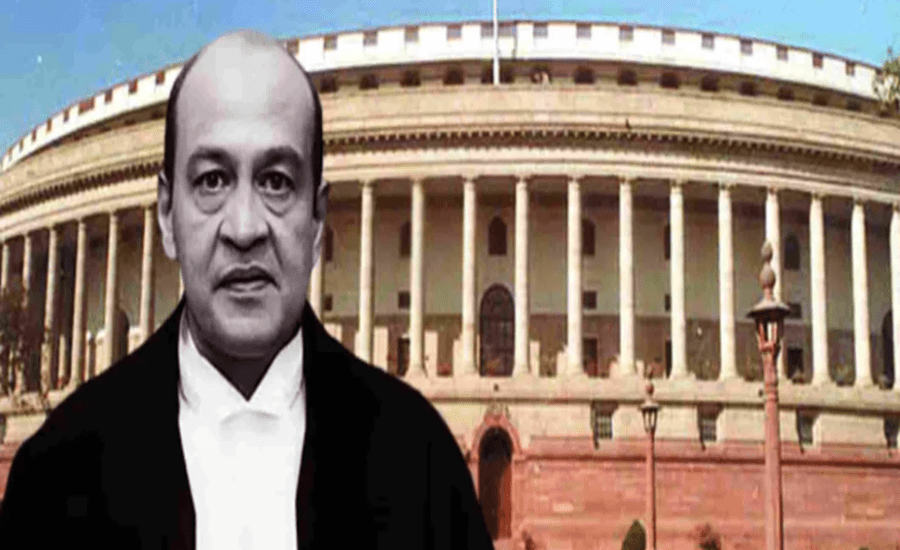
Delhi: In the latest development in the high-profile judicial controversy surrounding Justice Yashwant Varma, the Allahabad High Court judge has told a Parliamentary inquiry panel that he was not present at his official residence on the night of a fire in March 2025 and has denied that any cash was recovered from the premises during the incident.
His strongly worded written response, submitted on 12 January, forms part of his defence against an ongoing impeachment motion initiated in the Lok Sabha and under scrutiny in the Supreme Court of India.
Background of the Justice Yashwant Varma Cash Row
The controversy traces back to 14 March 2025, when a fire broke out at Justice Varma’s official residence in New Delhi’s Lutyens’ Zone. First responders — including firefighters and Delhi Police — arrived at the site and reportedly discovered stacks of burnt and partially burnt currency notes measuring up to 1.5 feet high in an outhouse or storage room on the property.
The shocking visuals of currency amidst the debris triggered public scrutiny and questions about judicial probity.
Initially serving as a judge of the Delhi High Court, Varma was transferred back to the Allahabad High Court shortly after the incident, and judicial duties were withdrawn while the matter was investigated.
Justice Yashwant Varma Cash Row: Impeachment Motion in Parliament and Inquiry Committee
Following the incident, the Lok Sabha Speaker admitted a motion signed by over 140 Members of Parliament to initiate impeachment proceedings against Justice Varma under the Judges (Inquiry) Act, 1968.
A three-member parliamentary panel was constituted to examine the allegations, including the fire, the alleged cash recovery, and issues of possible judicial misconduct.
The impeachment move saw cross-party interest, with members from major parties joining in support of investigating the judge’s conduct.
Justice Varma’s Core Legal Defence
In his detailed written reply to the panel, Justice Varma categorically stated that he was not present at his residence when the fire broke out and had been away at a remote location in Madhya Pradesh at the time.
As a result, he argued, he had no role in responding to the incident or in handling what was alleged to have been found afterward.
Denial of Cash Recovery
Central to Varma’s defence is his contention that no official or contemporaneous record exists to prove that cash was ever recovered from the premises.
He claimed that no official memo, seizure list, or documented proof was ever provided that would establish the presence or quantity of currency notes at the site — either during or after the firefighting operation.
He also stressed that fire personnel and police officials were the first responders, and any lapse in site security or documentation rested with them, not with him.
He questioned how he could be held responsible for failures of other authorities present on the scene.
Challenge to Parliamentary Committee Formation
In addition to contesting the factual allegations, Justice Varma has also challenged the constitution of the parliamentary committee itself before the Supreme Court, arguing procedural flaws in its formation and questioning the legal basis for its inquiry.
This legal challenge remains reserved for judgment by the Supreme Court.
Supreme Court’s Role and Judicial Accountability
The Supreme Court of India has been actively involved in the matter, with a separate in-house inquiry panel appointed by the then Chief Justice of India, Sanjiv Khanna, earlier finding “misconduct” in connection with the cash recovery episode and recommending steps for Varma’s removal.
Justice Varma’s subsequent plea against the in-house inquiry findings was dismissed by the top court, upholding the legitimacy of the internal scrutiny process.
As part of ongoing judicial proceedings, the Supreme Court recently reserved its judgment on the petition challenging the parliamentary panel’s formation.
What Happens Next?
Justice Varma is expected to appear before the parliamentary inquiry panel on 24 January 2026 to elaborate on his written submissions and respond to questions from lawmakers.
Meanwhile, the Supreme Court’s reserved judgment on his challenge to the committee’s constitution and procedural fairness is anticipated to be a key turning point in the ongoing judicial and parliamentary proceedings.