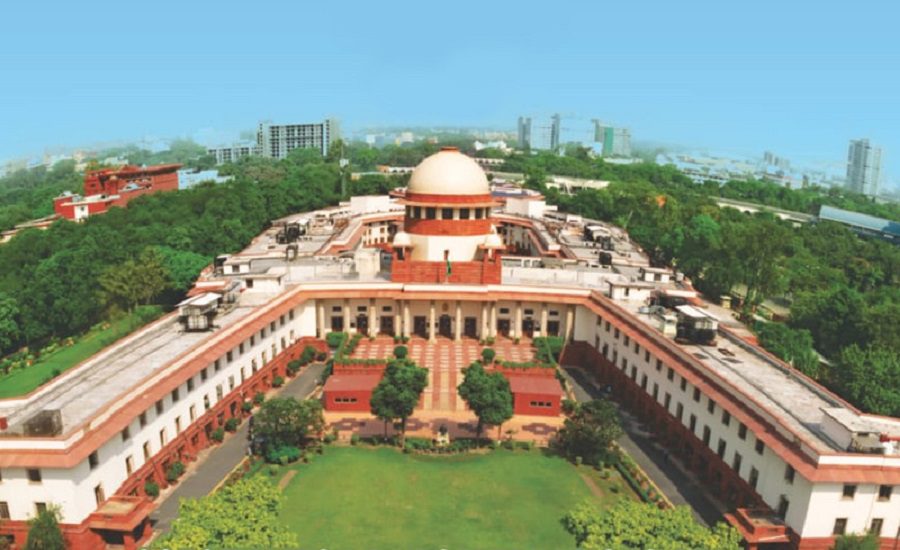
New Delhi: The Supreme Court of India has urged State Governments to examine a plea seeking minimum wages for domestic workers, emphasizing the need for better legal protection and fair pay in India’s informal labour sector.
The court stressed that appropriate mechanisms must be created at the state level to prevent the exploitation of domestic help.
Background of Minimum Wages for Domestic Workers
Domestic work in India is a major informal sector category. Millions of Indian households employ people for cooking, cleaning, caregiving, and other household chores without formal job contracts, job security, or regulated pay.
Domestic workers are largely excluded from:
- The Code on Wages, 2019, which governs minimum wages and working conditions,
- National wage and labour protections that apply to organized sectors.
The plea before the Supreme Court was filed by several domestic worker associations seeking constitutional recognition of a fundamental right to minimum wages under Article 21 (Right to Life) and Article 23 (Prohibition of Forced Labour).
Supreme Court View on Minimum Wages for Domestic Workers
While hearing the petition, a Bench comprising Chief Justice of India Surya Kant and Justice Joymalya Bagchi reiterated that fixing minimum wages involves complex socio-economic issues that are primarily the responsibility of the legislature and executive under India’s federal system.
The court emphasized that it would not issue a writ or judicial order mandating minimum wage rates for domestic workers because:
- Such matters require detailed policy evaluation beyond judicial reach.
- Mandatory wage requirements could have unintended effects on employment and households.
The Supreme Court noted that compulsory wage legislation without careful legislative planning might inadvertently reduce employment opportunities in the already informal and unregulated domestic work sector.
Concern About Litigation
The court also expressed concern that a judicial directive on minimum wages might spark widespread litigation across households, as trade unions could seek legal action against employers for non-compliance, making ordinary citizens hesitant to hire domestic workers.
Court’s Appeal to States to Take Action
Although the Supreme Court did not grant the specific reliefs sought in the petition, it made a clear appeal to State Governments and Union Territories to consider creating laws or policies that:
- Define minimum wage standards for domestic workers,
- Protect workers from exploitation, and
- Establish transparent mechanisms for wage fixation and enforcement.
The Bench disposed of the Public Interest Litigation (PIL) while urging the States to actively engage with domestic worker grievances and evolve appropriate wage protection frameworks.
Why This Matters: Informal Work and Worker Rights
Domestic work is typically informal, unregulated, and underpaid. Workers often lack:
- Job contracts
- Regulated pay scales
- Access to social security benefits
- Legal safeguards against unfair dismissal or abuse
Excluding domestic workers from wage laws also means they are often paid below living wage levels, which affects their dignity and financial security.
Experts and worker rights advocates argue that States must step in to protect this vulnerable labour segment by extending minimum wage laws or creating tailored legislation.
This issue is not unique to India. Several countries have introduced domestic worker protections that cover minimum pay, work hours, and social security, often through national legislation or bilateral agreements.
What Happens Next?
With the Supreme Court directing the matter back to the legislative domain:
- State Governments are expected to evaluate and introduce minimum wage laws or notifications for domestic workers.
- Worker unions may continue advocacy for better legislation.
- Civil society groups could push for formal wage policies and inclusion under labour codes.
The court’s approach highlights a collaborative model where judicial encouragement nudges states toward policy action rather than imposing mandates from the bench.