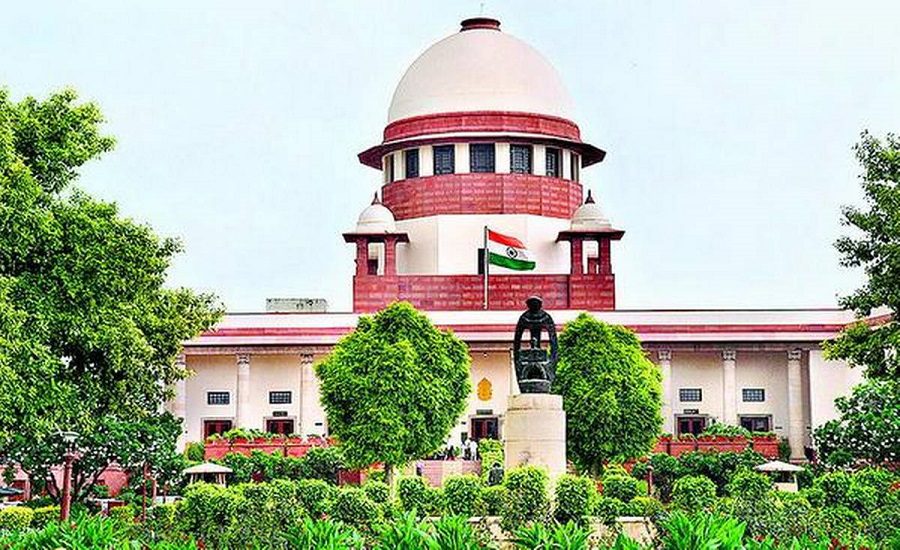
Mumbai: In a significant affirmation of judicial infrastructure expansion, the Supreme Court of India dismissed a plea challenging the establishment of a circuit bench of the Bombay High Court at Kolhapur in western Maharashtra.
The apex court’s decision effectively reinforces the Centre and judiciary’s authority to decentralize High Court sittings to improve access to justice for litigants across multiple districts.
A Bench comprising Justices Aravind Kumar and N.V. Anjaria found no merit in the contention that the formation of the circuit bench was procedurally flawed or unwarranted, rejecting the arguments presented by the petitioner’s counsel.
Background of Kolhapur Circuit Bench
The Kolhapur Circuit Bench of the Bombay High Court was formally inaugurated in August 2025 by then Chief Justice of India B.R. Gavai, marking an important expansion of judicial facilities in the state.
Under the notification issued on August 1, 2025, the bench became operational on August 18. It holds jurisdiction over six districts: Satara, Sangli, Solapur, Kolhapur, Ratnagiri and Sindhudurg — encompassing both inland and coastal regions of Maharashtra.
This is the fourth circuit bench under the Bombay High Court system, designed to decentralize adjudication away from the principal seat and improve litigant convenience in far-flung areas.
The Legal Challenge: Grounds and Arguments
The writ petition was filed by advocate Ranjeet Baburao Nimbalkar, who contended that the notification establishing the bench lacked a proper consultative process and failed to meet established criteria governing the creation of circuit benches.
Primary Contentions by the Petitioner
Jaswant Singh Commission Criteria: The petitioner argued that the notification did not adequately adhere to criteria laid out by the 1985 Jaswant Singh Commission on High Court decentralization, which emphasized factors such as:
- The volume of litigation arising from areas proposed for circuit bench jurisdiction;
- Disposal rates at the principal seat;
Whether increasing the number of judges might obviate the need for new benches.
Consultative Process: It was urged that the Chief Justice of the Bombay High Court should take into account the opinions of all sitting judges before creating a new bench — a procedural safeguard lacking documentation according to the petitioner.
Administrative Burden: The petitioner warned of an increased administrative burden on the Bombay High Court’s machinery, which could arise from spreading judicial operations over a broader geographic area.
Key Observations by the Apex Court
Preserving Access to Justice: The court noted that decentralizing High Court benches facilitates easier access to justice for citizens living far from the principal seat, aligning with constitutional principles of justice accessibility.
Discretion of High Court and Executive: Establishment of circuit benches falls within the discretionary executive and judicial domain, guided by statutory provisions such as Section 51(3) of the States Reorganisation Act, 1956 — a foundation used for the Kolhapur bench notification.
No Mandatory Rigid Criteria: While the Jaswant Singh Commission’s recommendations are useful guidelines, the court refrained from treating these as mandatory legal requirements in every instance of bench creation.
Judicial Review Standards: The bench effectively applied a deferential standard of review, focused on procedural regularity rather than reevaluating the merits of policy decisions on judicial infrastructure.
Taken together, the ruling reinforces the latitude that the judiciary and executive share in extending the reach of judicial infrastructure while setting reasonable parameters for legal challenge.