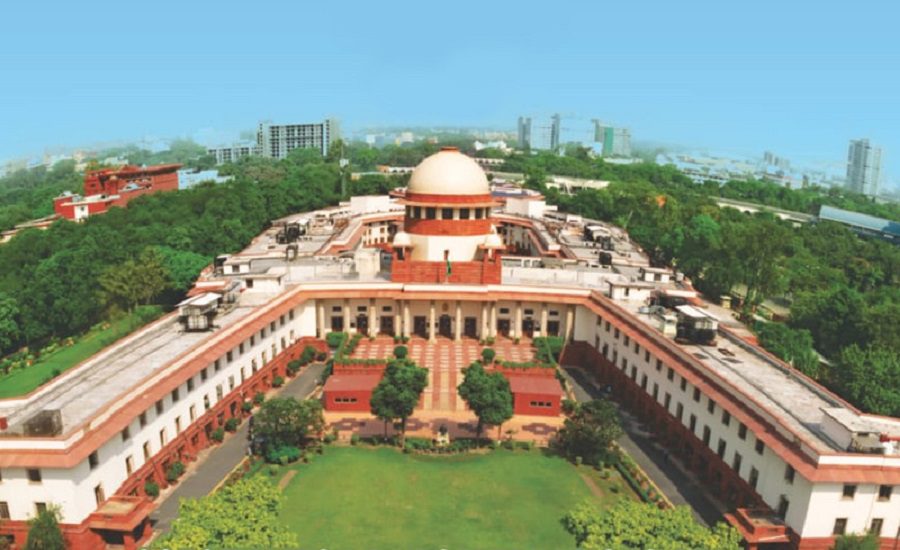
New Delhi: In a landmark judgment reaffirming meritocracy within India’s reservation framework, the Supreme Court of India has ruled that reserved category candidates who score above the general (unreserved) category cut-off in competitive selection processes must be counted against unreserved seats, provided they have not availed any special concessions.
The apex court clarified that the term “unreserved” signifies an open merit category, not a quota restricted only to general category candidates.
The decision came from a two-judge bench of Justices M. M. Sundresh and Satish Chandra Sharma, who set aside a 2020 Kerala High Court order in a dispute involving the Airports Authority of India (AAI) recruitment process.
The ruling draws directly from constitutional guarantees of equality before the law and equality of opportunity in public employment under Articles 14 and 16 of the Constitution of India.
Background of the Supreme Court Reservation Verdict
The case stems from a 2013 recruitment drive by the AAI for 245 posts of Junior Assistant (Fire Service). After conducting written exams and other stages, the authority filled 122 unreserved seats.
In the list, candidates belonging to reserved categories — Scheduled Castes (SC), Scheduled Tribes (ST), and Other Backward Classes (OBC) — who cleared the general cut-off were also included alongside general category candidates.
An unreserved candidate, Sham Krishna B, challenged this process, arguing that meritorious reserved candidates should be confined only to their reserved quota.
The Kerala High Court accepted this view and directed that an unreserved candidate be appointed in place of meritorious reserved candidates in the general list. This decision triggered legal scrutiny that culminated in the Supreme Court’s recent ruling.
Details of Supreme Court Reservation Verdict
In its judgment, the Supreme Court laid down the principle of “Merit Induced Shift”: when a reserved category candidate scores higher than the general category qualifying marks without having availed any relaxation, that candidate must be treated as having qualified against an unreserved vacancy.
The bench emphasized that unreserved seats are open to all candidates strictly based on merit.
According to the court:
- Unreserved seats are not a quota exclusively for the general category.
- Reserved category candidates who outperform general candidates on merit cannot be excluded from unreserved vacancies.
- When such candidates are adjusted in unreserved seats, it ensures reserved quota seats remain available for other eligible candidates from those categories.
This interpretation reinforces that merit — not social category alone — should govern selection for posts classified as unreserved.
The court anchored this view in constitutional equality provisions that prohibit discrimination based on caste, class, or other identities.
Constitutional Framework Behind the Supreme Court Reservation Verdict
The Supreme Court cited Articles 14 and 16 of the Indian Constitution, which guarantee:
Article 14: Equality before law and prohibition of discrimination.
Article 16: Equality of opportunity in public employment.
Observed Justice Sharma, the author of the judgment, that confining a superior scoring candidate to their reserved slots simply because of their social identity — when they have legitimately crossed the general cut-off — would run counter to the core values of equality and fairness.
Merit vs. Reservation: Parsing the Court’s Scope
While the ruling underscores merit, it also makes it clear that not all reserved category candidates scoring above the general cut-off can automatically be placed in unreserved seats.
This is because:
- Only those candidates who have not availed any substantive relaxations (like age concessions or reduced qualifying standards) are eligible for adjustment against unreserved vacancies.
- This nuance aligns with earlier legal interpretations which hold that the open category should reflect true merit without dilution from relaxation benefits. As a result, the judgment strikes a balance — protecting the spirit of affirmative action while ensuring that merit remains central where applicable.
What are the Implications of Supreme Court Reservation Verdict
Recruiting authorities must now restructure selection lists for unreserved positions to ensure that higher-scoring reserved candidates are not excluded.
Agencies like SSC, UPSC and others may need to revise processes and merit lists accordingly.
Academic & Professional Entrance
Although this case involved a government recruitment, the logic — that open seats are merit-based and not restricted by category — can extend to competitive academic admissions, especially where similar cut-off standards apply.
Policy and Future Legal Controversies
The judgment also hints at the need to re-examine existing policies that hamper upward movement of high scoring candidates due to mechanical application of category-based quotas.
Decisions like this could form precedent in future challenges related to reservation frameworks in examinations and public selection processes.