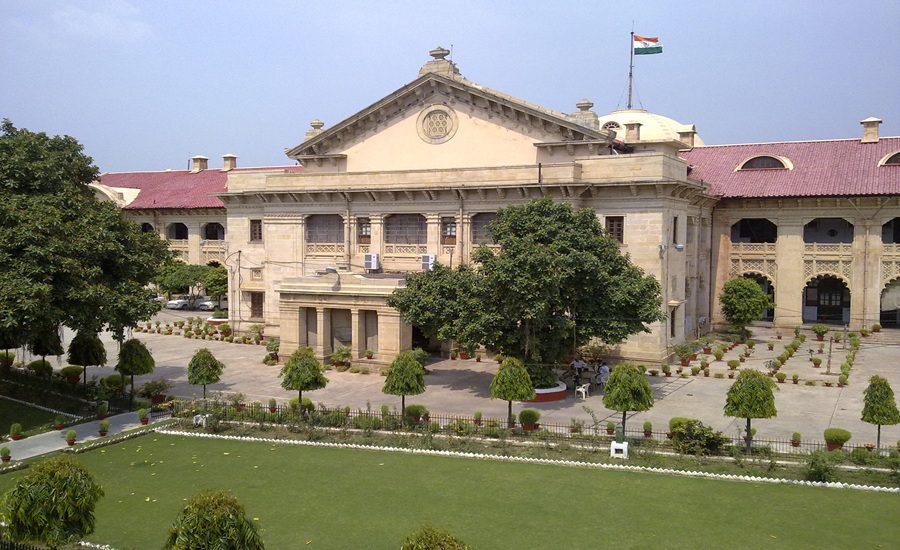
Uttar Pradesh: The Allahabad High Court has taken corrective judicial action after an Aligarh trial court allegedly invoked a non-existent provision of the Scheduled Castes and Scheduled Tribes (Prevention of Atrocities) Act, 1989 while issuing summons, marking a rare instance of judicial accountability within the criminal justice process.
Details of the Aligarh Trial Judge Non-existent SC/ST Case
A Bench of the Allahabad High Court led by Justice Praveen Kumar Giri has formally issued a show-cause notice to the Special Judge (SC/ST Act), Aligarh, directing an explanation for issuing a summoning order that quoted a provision — “Section 3(2)(5)” — which does not exist in the SC/ST Act.
Read also: Explained: Why Allahabad High Court Is Unhappy With UP DGP’s CCTV Storage Policy
The High Court observed that such judicial orders, when based on incorrect legal references, can have grave consequences for personal liberty protected under Article 21 of the Constitution of India.
What Triggered the High Court Intervention?
The controversy stems from a criminal matter titled Rajan Bajaj v. State of Uttar Pradesh & Another, where the accused was summoned on allegations including voluntarily causing hurt (Section 323 IPC) and intentional insult (Section 504 IPC), along with purported offences under the SC/ST Act.
However, as the accused pointed out, the trial court’s order invoked “Section 3(2)(5)” of the SC/ST Act, a clause that does not exist in the statute.
What the Act actually contains are provisions such as Section 3(2)(v) and Section 3(2)(va), none of which correspond to the citation the lower court used.
Allegations of Misuse?
According to the accused’s petition, the criminal proceedings were alleged to have been initiated maliciously to gain leverage in an unrelated property dispute involving land declared industrial by the Uttar Pradesh State Industrial Development Corporation (UPSIDC), rather than to pursue legitimate atrocity charges.
High Court Findings on Aligarh Trial Judge Non-existent SC/ST Case
The High Court criticized the mechanical and casual manner in which the impugned summoning order was passed, stressing that reliance on invalid statutory provisions undermines the rule of law and negatively affects the fundamental rights of the accused.
> “Such a mechanical invocation of penal provisions directly impacts the fundamental rights of an accused… an explanation is warranted from the Special Judge,” observed the Bench.
In its order, the High Court also highlighted procedural irregularities, including the trial court’s purported failure to comply with statutory safeguards under the Code of Criminal Procedure, such as territorial jurisdiction rules.
Aligarh Trial Judge Non-existent SC/ST Case: Interim Relief and Directions
While hearing the matter, the High Court provided interim relief to the accused:
- No coercive action shall be initiated against him in connection with the SC/ST Act charges until the next date of hearing.
- Any outstanding warrants issued against the applicant have been ordered to remain in abeyance.
The Court has fixed January 30, 2026 as the date by which the explanation from the Special Judge is to be submitted through appropriate judicial channels.
What are the Implications of Aligarh Trial Judge Non-existent SC/ST Case
This High Court order underscores the importance of strict adherence to statutory text and legal accuracy within the criminal justice system.
The SC/ST Act, enacted in 1989 to prevent caste-based atrocities and discrimination, is a stringent statute — but misapplication or misquotation can lead to unwarranted harassment of defendants and misuse of special legislation.
Addressing Judicial Oversight
Judicial accountability, even at trial-court levels, strengthens confidence in the legal system and serves as a check against inadvertent or negligent errors. Judicial powers must be exercised with precision, particularly where individuals’ personal liberty and reputations are at stake.
What Happens Next
The High Court’s directive to the trial court seeks not just an explanation but aims to establish precedent for judicial diligence. The proceedings will resume on the next scheduled hearing, where both the explanation and any response from the complainant will be considered.
Read also: Allahabad High Court Rules PCS Officers on IAS/IPS Probation Can Claim Full State Service Benefits