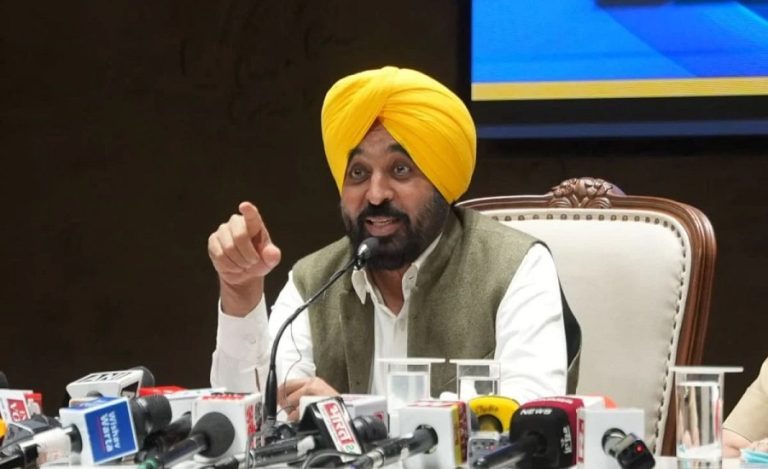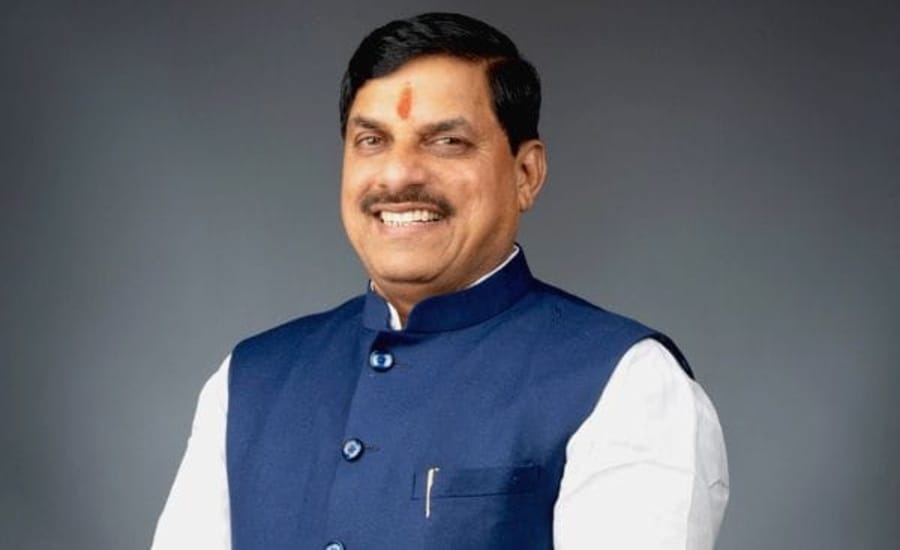
Bhopal: Madhya Pradesh Chief Minister Mohan Yadav has reflected on Prime Minister Narendra Modi’s 25-year journey in public office, highlighting his transition from Gujarat Chief Minister to Prime Minister and the policies and initiatives associated with his tenure.
Yadav’s article describes Modi’s journey through the lens of governance, development, welfare, national security, foreign policy and India’s growing engagement with the international community.
Modi first took oath as Gujarat Chief Minister in October 2001 and later became Prime Minister in 2014. In October 2025, the Prime Minister himself marked the beginning of his 25th year as head of a government, recalling his Gujarat tenure and expressing his commitment to public service and the goal of a Viksit Bharat.
From Gujarat Governance to National Leadership
In his article, Yadav highlights Modi’s nearly 13-year tenure as Gujarat Chief Minister, describing development, governance and public participation as key elements of the administration during that period.
Yadav writes that Modi subsequently brought this experience to the national level after becoming Prime Minister in 2014. He points to initiatives related to self-reliance, infrastructure, welfare delivery, technology and economic development as major areas associated with the Union government during Modi’s tenure.
The Prime Minister’s official account similarly recalls his Gujarat tenure and his stated focus on improving people’s lives and contributing to national development.
Read Also: From ‘Mini Brazil’ to Basketball Hub: Shahdol Hosts MP’s 70th School Basketball Meet
Foreign Policy and India’s Global Engagement
A major part of Yadav’s article focuses on India’s position in international affairs.
He highlights India’s engagement with major global powers, including the United States and Russia, as well as its interests in West Asia and its approach to international conflicts. Yadav argues that India has sought to maintain strategic autonomy while protecting its national interests.
The article also refers to India’s engagement with the Global South and multilateral platforms such as BRICS. According to Yadav, India’s participation in such forums has provided opportunities to present its priorities on development, economic cooperation and reform of multilateral institutions.
Yadav also highlights bilateral meetings between Modi and other heads of government, linking them to discussions around regional issues, trade and economic cooperation.
Welfare Schemes and Focus on Basic Needs
The article gives considerable space to welfare programmes launched or expanded under the Modi government.
Yadav mentions schemes including:
- Pradhan Mantri Awas Yojana
- Pradhan Mantri Garib Kalyan Anna Yojana
- PM-KISAN
- Pradhan Mantri Fasal Bima Yojana
- Pradhan Mantri Ujjwala Yojana
- Ayushman Bharat
He argues that these programmes have focused on housing, food security, healthcare, cooking fuel, financial inclusion and support for farmers.
Yadav also refers to the government’s stated principle of “Sabka Saath, Sabka Vikas, Sabka Vishwas and Sabka Prayas” while discussing its approach to welfare delivery.
The Prime Minister’s official account has similarly described poverty reduction, welfare delivery and improved access to basic amenities as key areas of the government’s work.
Security, Crisis Response and Humanitarian Operations
National security is another major theme in Yadav’s assessment.
He refers to the surgical strike following the Uri attack, the Balakot air strike after the Pulwama attack and Operation Sindoor as examples of India’s response to security challenges. These are presented in the article as part of what Yadav describes as a stronger approach towards terrorism.
The article also highlights evacuation and humanitarian operations involving Indian citizens during international crises. It refers to the evacuation of Indian students from Ukraine and assistance provided during other emergencies.
Yadav further points to India’s support to other countries during the COVID-19 pandemic, including the supply of medicines and vaccines, as an example of India’s humanitarian engagement.
Swachh Bharat, Economy and Technology
Yadav also identifies the Swachh Bharat Mission as a major campaign launched after Modi became Prime Minister.
He recalls Modi’s public participation in the cleanliness campaign and highlights Indore as an example of sustained civic participation in cleanliness initiatives.
On the economic front, the article discusses Make in India, Digital India, Startup India and Atmanirbhar Bharat, linking them with manufacturing, technology, entrepreneurship and innovation.
The article also points to developments in defence production and India’s space programme. The success of Chandrayaan-3 is highlighted as an example of India’s achievements in space science.
Youth and Women at the Centre of Development
Yadav’s article also focuses on youth and women as important areas of government policy.
For young people, he mentions skill development, entrepreneurship, Mudra loans, startups and technology-driven opportunities. The emphasis, he writes, has increasingly extended beyond employment to entrepreneurship and self-employment.
For women, the article highlights Ujjwala, PM Awas Yojana, the women’s reservation law and the Lakhpati Didi initiative.
Yadav presents these measures as part of efforts to expand women’s participation in economic and social development, particularly in rural India.
Culture, Yoga and Direct Public Outreach
The article also discusses Modi’s focus on India’s cultural heritage and international outreach through yoga.
Yadav points to the International Day of Yoga, observed globally on June 21, as an example of India’s cultural influence. He also refers to the Ram Mandir consecration in Ayodhya and the abrogation of the special constitutional provisions associated with Article 370 in Jammu and Kashmir, presenting them as major developments during Modi’s tenure.
Another initiative highlighted is Mann Ki Baat, through which the Prime Minister communicates directly with citizens. Yadav says the programme has brought attention to individuals and community initiatives from villages, towns and different parts of the country.
Looking Ahead to Viksit Bharat 2047
Concluding his article, Yadav describes Modi’s 25-year public life as a journey that began with organisational work, continued through Gujarat’s chief ministership and reached the Prime Minister’s Office.
He frames the next phase around the government’s stated objective of building a Viksit Bharat by 2047.
The Prime Minister has also publicly linked his continued public service with the goal of achieving a developed India, saying that constitutional values would remain his guide and that he would continue working towards the collective vision of Viksit Bharat.
Yadav’s article ultimately presents Modi’s 25-year public career through themes of governance, welfare, economic development, national security, international engagement, youth, women and cultural outreach, while calling for continued citizen participation in the country’s development journey.
Read Also: Seva Sankalp Abhiyan: MP Plans Free Land Registrations for Over 50 Lakh Rural People