https://indianmasterminds.com

ADVERTISEMENT
ADVERTISEMENT

No More Delays in DGP Appointments: Supreme Court Allows UPSC to Move Contempt Against States

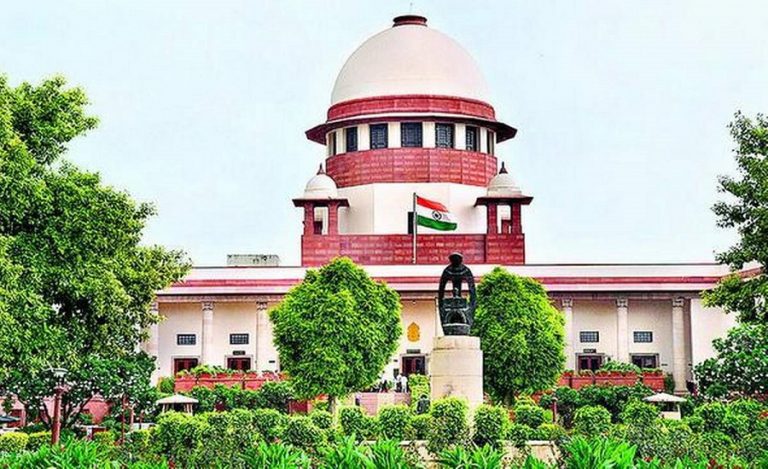
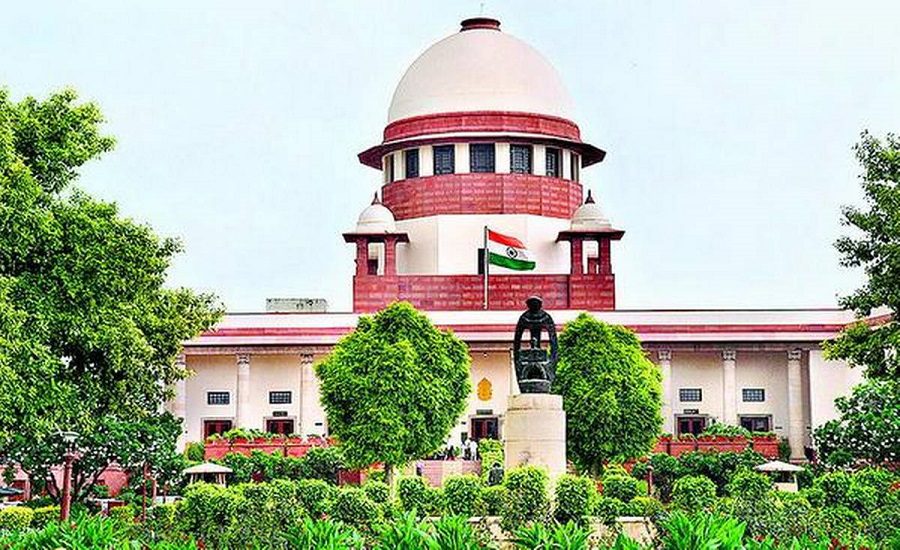
The Supreme Court has empowered the UPSC to initiate contempt proceedings against states that fail to send timely proposals for Director General of Police appointments.
DGP Appointment Rules
Indian Masterminds Stories

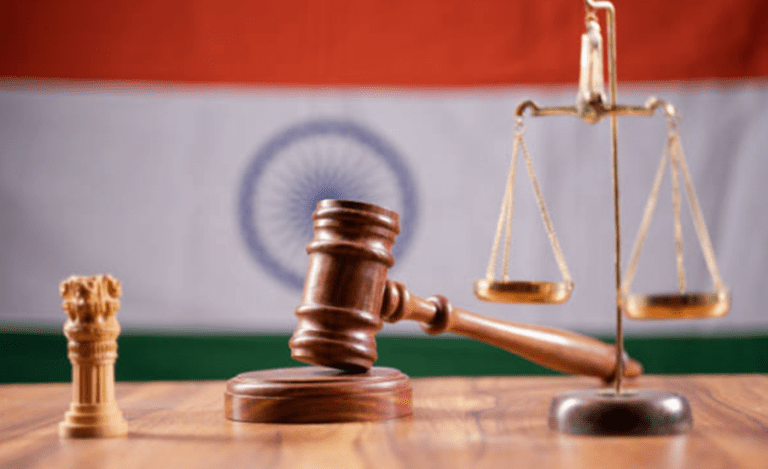
New Delhi: The Supreme Court of India has ruled that the UPSC can initiate contempt proceedings against states failing to give timely proposals for DGP appointments, reinforcing its 2006 and 2018 directives aimed at ensuring merit, seniority and transparency in top police leadership selections. 

Background of the DGP Appointment Rules

In a landmark 2006 ruling in Prakash Singh v. Union of India, the Supreme Court established key guidelines for police reforms across India. One of the central directives requires that Director General of Police (DGP) appointments be made from a panel of the three senior-most Indian Police Service (IPS) officers empanelled by the Union Public Service Commission (UPSC).

Read also: NEET-PG 2025-26 Cut-Off Cut Under Scanner: Supreme Court Issues Notice to Centre, NBEMS and NMC

Further clarifications in 2018 specified that states must send proposals to the UPSC at least three months before the incumbent DGP’s retirement so that the Commission has adequate time to prepare and forward an appropriate selection panel.

The purpose of these directives was to promote fairness in senior police appointments, avoid arbitrary leadership changes, and preserve institutional integrity in state police forces.

Supreme Court Reasoning on DGP Appointment Rules

During Thursday’s hearing, a bench comprising Chief Justice of India Surya Kant and Justice Joymalya Bagchi took serious note of repeated delays by several states in sending timely proposals to the UPSC.

The Court observed that many states prefer appointing ‘acting’ or ad-hoc DGPs rather than following the scheduled empanelment process. This practice, the UPSC argued, undermines the purpose of the Prakash Singh directives and penalises senior officers who either retire or are overlooked due to procedural delays.

Justice Surya Kant reportedly noted that the UPSC should not be “trapped by states” that default on their obligations, and emphasised that the Commission must be empowered to enforce compliance.

UPSC’s New Authority: Reminder Notices and Contempt Actions

To enforce compliance, the Supreme Court allowed the UPSC to write to state governments reminding them to send proposals for DGP appointments on time. This marks a significant shift from the UPSC’s traditional advisory role to a more active enforcement position.

Importantly, the Court held that if states continue to default in submitting proposals within the prescribed period, the UPSC may approach the Supreme Court under the Contempt of Courts Act, seeking action against those responsible for non-compliance.

Such contempt applications would underline the judiciary’s intent to ensure that its orders are meaningful and implemented in letter and spirit. This approach is aimed at discouraging the ongoing culture of appointing acting DGPs contrary to the Court’s earlier orders.

Illustrative Example: Telangana’s Long Delay

The issue is particularly stark in Telangana, where the last regular DGP was appointed in November 2015 and retired in November 2017. Since then, the state has reportedly functioned with acting/temporary leadership due to repeated delays in forwarding proposals.

Such prolonged delays have resulted in senior IPS officers either retiring without consideration or being superseded for regular appointment, which directly contradicts the aim of merit-based selection and fixed tenure.

Implications of DGP Appointment Rules

The Supreme Court’s order is significant because the DGP is the highest law enforcement official in a state, responsible for maintaining public order, supervision of police discipline, and execution of law and order policies. Timely and transparent appointments can bolster the professionalism and stability of state police forces.

Delays in appointment proposals not only impact the morale of senior officers but also raise concerns about potential political interference and administrative lapses, particularly when states prefer short-term or ad-hoc leadership over structured processes.
Read also: Justice After 12 Years: Kerala Police Complaints Authority Orders Criminal Case Against Officers Who Framed 82-Year-Old


Indian Masterminds Stories
ADVERTISEMENT
ADVERTISEMENT
Related Stories
ADVERTISEMENT
ADVERTISEMENT
NEWS
India power consumption July 2025
Insolation Energy Appoints Former IAS Officer Shreemat Pandey as Additional Independent Director
Dr Raju Narayana Swamy
Business Transformation Towards Sustainability Is No Longer a Choice but a Responsibility: IAS Dr Raju Narayana Swamy at ICBTS 2026
Jal Jeevan Mission
Jal Jeevan Mission Under the Scanner: How Central Nodal Officers Are Fixing Gaps in Rural Water Supply
Multi-Lingual Tourist Helpline India
Traveling in India Gets Safer: Centre Introduces 24x7 Multi-Lingual Tourist Helpline for Global Visitors
BCI Nomination Fee
Big Relief for Bar Council of India: Supreme Court Clears ₹1.25 Lakh Nomination Fee, Freezes High Court Challenges
DGP Appointment Rules
No More Delays in DGP Appointments: Supreme Court Allows UPSC to Move Contempt Against States
Ex Serviceman Contractual Pension Ruling
No Civil Pension for Contractual Re-Employment: Punjab & Haryana High Court Delivers Key Verdict on Ex-Servicemen Rights
India-Oman Training Vessel Deal
Oman Chooses ‘Made in India’ Naval Training Vessel, Marking a Strategic Boost for India-Oman Maritime Ties
ADVERTISEMENT
ADVERTISEMENT
Videos
WhatsApp Image 2026-02-05 at 6.39
The IAS Officer Who Refused to Let Bastar’s Children Fail Alone | Vinit Nandanwar’s Interview
Vinit Nandanwar
Vinit Nandanwar And The Making Of Bastar's First IAS
Mugdha Sinha
A Bottle-Painter, A Poetess, An Author, Avid Reader, Champion Player and A Successful IAS Officer – Mugdha Sinha Has Aced It All
ADVERTISEMENT
UPSC Stories
WhatsApp Image 2026-02-04 at 2.08
Aditya Mathur: A Name That Emerged from the Middle of the Merit List
From disciplined preparation to AIR 328, Aditya Mathur’s UPSC 2024 journey reflects quiet perseverance,...
Siddharth Babu UPSC IFS
Calm, Clarity and Rank 15: How Siddharth Babu Cracked UPSC and Joined the IFS
Who is Siddharth Babu? The 2017-batch IFS officer who interpreted for PM Modi on Republic Day and cracked...
IAS Avdhija Gupta UPSC
She Cried, She Learned, She Returned: The Unbreakable UPSC Journey of IAS Avdhija Gupta
From three consecutive Prelims failures to securing AIR 43, IAS Avdhija Gupta’s UPSC CSE-2024 journey...
Social Media
One-Horned Rhino Calf
Watch: First One-Horned Rhino Calf of 2026 Takes Birth at Jaldapara National Park, IFS Officer Shares Rare Footage
A newborn one-horned rhinoceros calf was spotted at Jaldapara National Park on January 1, 2026. IFS officer...
venomous banded krait
Rare Night Encounter: IFS Officer Spots Highly Venomous Banded Krait During Forest Patrol, Internet Amazed
An IFS officer’s night patrol video of a highly venomous banded krait has gone viral, highlighting India’s...
elephant rescue Karnataka
Heroic Karnataka Elephant Rescue: How a 28-Hour “Impossible Mission” Became a Triumph of Wildlife Care, IFS Parveen Kaswan Shares Video
A trapped elephant was rescued after 28 hours in Karnataka through a massive, expertly coordinated Forest...
ADVERTISEMENT
ADVERTISEMENT
ADVERTISEMENT
Latest
India power consumption July 2025
Insolation Energy Appoints Former IAS Officer Shreemat Pandey as Additional Independent Director
Dr Raju Narayana Swamy
Business Transformation Towards Sustainability Is No Longer a Choice but a Responsibility: IAS Dr Raju Narayana Swamy at ICBTS 2026
ADVERTISEMENT
ADVERTISEMENT
ADVERTISEMENT
ADVERTISEMENT
ADVERTISEMENT
ADVERTISEMENT
ADVERTISEMENT
Videos
WhatsApp Image 2026-02-05 at 6.39
Vinit Nandanwar
Mugdha Sinha
ADVERTISEMENT
ADVERTISEMENT