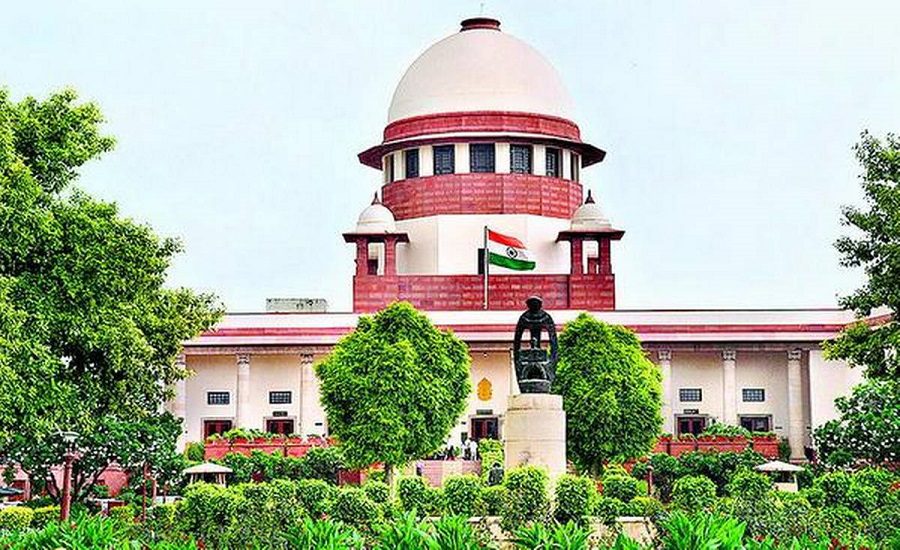
New Delhi: The Supreme Court of India has ruled that the UPSC can initiate contempt proceedings against states failing to give timely proposals for DGP appointments, reinforcing its 2006 and 2018 directives aimed at ensuring merit, seniority and transparency in top police leadership selections.
Background of the DGP Appointment Rules
In a landmark 2006 ruling in Prakash Singh v. Union of India, the Supreme Court established key guidelines for police reforms across India. One of the central directives requires that Director General of Police (DGP) appointments be made from a panel of the three senior-most Indian Police Service (IPS) officers empanelled by the Union Public Service Commission (UPSC).
Read also: NEET-PG 2025-26 Cut-Off Cut Under Scanner: Supreme Court Issues Notice to Centre, NBEMS and NMC
Further clarifications in 2018 specified that states must send proposals to the UPSC at least three months before the incumbent DGP’s retirement so that the Commission has adequate time to prepare and forward an appropriate selection panel.
The purpose of these directives was to promote fairness in senior police appointments, avoid arbitrary leadership changes, and preserve institutional integrity in state police forces.
Supreme Court Reasoning on DGP Appointment Rules
During Thursday’s hearing, a bench comprising Chief Justice of India Surya Kant and Justice Joymalya Bagchi took serious note of repeated delays by several states in sending timely proposals to the UPSC.
The Court observed that many states prefer appointing ‘acting’ or ad-hoc DGPs rather than following the scheduled empanelment process. This practice, the UPSC argued, undermines the purpose of the Prakash Singh directives and penalises senior officers who either retire or are overlooked due to procedural delays.
Justice Surya Kant reportedly noted that the UPSC should not be “trapped by states” that default on their obligations, and emphasised that the Commission must be empowered to enforce compliance.
UPSC’s New Authority: Reminder Notices and Contempt Actions
To enforce compliance, the Supreme Court allowed the UPSC to write to state governments reminding them to send proposals for DGP appointments on time. This marks a significant shift from the UPSC’s traditional advisory role to a more active enforcement position.
Importantly, the Court held that if states continue to default in submitting proposals within the prescribed period, the UPSC may approach the Supreme Court under the Contempt of Courts Act, seeking action against those responsible for non-compliance.
Such contempt applications would underline the judiciary’s intent to ensure that its orders are meaningful and implemented in letter and spirit. This approach is aimed at discouraging the ongoing culture of appointing acting DGPs contrary to the Court’s earlier orders.
Illustrative Example: Telangana’s Long Delay
The issue is particularly stark in Telangana, where the last regular DGP was appointed in November 2015 and retired in November 2017. Since then, the state has reportedly functioned with acting/temporary leadership due to repeated delays in forwarding proposals.
Such prolonged delays have resulted in senior IPS officers either retiring without consideration or being superseded for regular appointment, which directly contradicts the aim of merit-based selection and fixed tenure.
Implications of DGP Appointment Rules
The Supreme Court’s order is significant because the DGP is the highest law enforcement official in a state, responsible for maintaining public order, supervision of police discipline, and execution of law and order policies. Timely and transparent appointments can bolster the professionalism and stability of state police forces.
Delays in appointment proposals not only impact the morale of senior officers but also raise concerns about potential political interference and administrative lapses, particularly when states prefer short-term or ad-hoc leadership over structured processes.