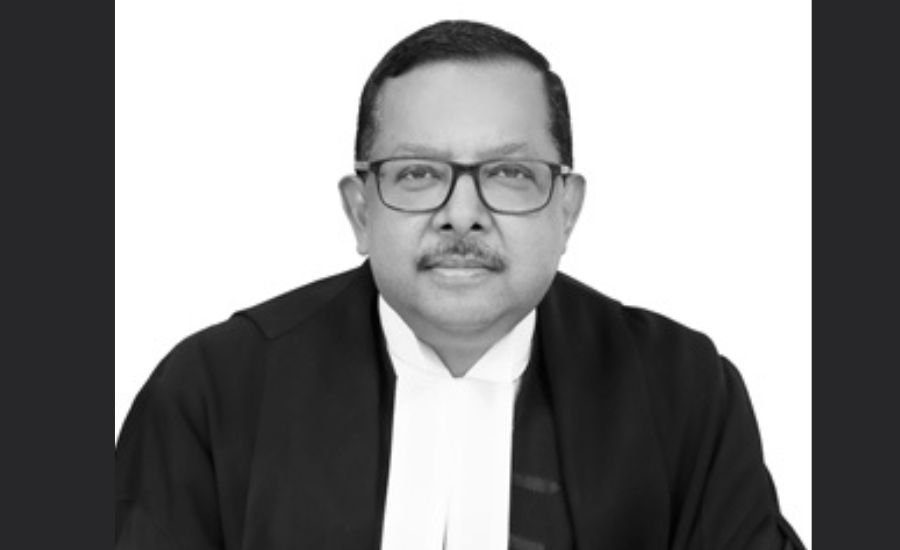
A major controversy has erupted over the transfer of a High Court judge, with Supreme Court Justice Ujjal Bhuyan raising serious concerns about executive interference in the collegium system. His remarks relate to the transfer of Madhya Pradesh High Court judge Justice Atul Sreedharan to the Allahabad High Court, a decision taken during the tenure of former Chief Justice of India (CJI) B.R. Gavai.
“Transfer at Government’s Request” Sparks Outrage
The controversy intensified after it emerged that former CJI B.R. Gavai publicly stated that Justice Sreedharan’s transfer was carried out at the request of the Central Government. Justice Bhuyan described this disclosure as a direct admission of executive influence in a process constitutionally meant to remain within the exclusive domain of the judiciary.
Can Judges Be Moved for Uncomfortable Verdicts?
Justice Bhuyan posed a fundamental question: should a judge be transferred merely for passing orders that are inconvenient or unfavourable to the government? He warned that such actions undermine judicial independence and cast serious doubts on the impartiality and credibility of the collegium system.
Transfers Are an Internal Judicial Matter
Emphasising constitutional boundaries, Justice Bhuyan stated that the transfer and posting of High Court judges is entirely an internal matter of the judiciary. The executive, he said, has no role in influencing these decisions, which must be guided solely by the requirements of better administration of justice.
Collegium’s Own Resolution Raises Red Flags
Justice Bhuyan noted that when the collegium itself records in its resolution that a transfer was made at the request of the Central Government, it exposes executive intrusion in unmistakable terms. Such transparency, he argued, also reveals a deeper institutional vulnerability.
Context: Change in Transfer Destination
The original collegium resolution of October 2025 had proposed transferring Justice Sreedharan to the Chhattisgarh High Court. However, this was later modified to the Allahabad High Court following a request for reconsideration from the government—a fact openly acknowledged in the resolution. This modification has sparked intense debate on whether accommodating executive preferences compromises the integrity of the collegium.
Speaking at Pune Lecture on Constitutional Morality
Delivering the Principal G.V. Pandit Memorial Lecture on “Constitutional Morality and Democratic Governance” at ILS Law College, Pune, Justice Bhuyan reminded the audience that after the Supreme Court struck down the National Judicial Appointments Commission (NJAC), the responsibility on collegium members increased manifold to guard judicial independence.
Judges Must Honour Their Constitutional Oath
Justice Bhuyan underlined that judges swear an oath to uphold the Constitution without fear or favour. While acknowledging that judges are human and may hold ideological views, he stressed that such beliefs must never influence judicial decisions.
Warning Against Perception of Pre-Decided Judgments
Judicial independence, Justice Bhuyan said, is a basic feature of the Constitution and cannot be compromised. If court decisions begin to be perceived as pre-determined, it would be “extremely unfortunate” and damaging to public faith in the judiciary.
Debate Rekindles on Collegium Autonomy
Justice Bhuyan’s remarks, made on January 24–25, 2026, have reignited concerns over preserving judicial independence amid growing perceptions of executive influence in judicial transfers, raising uncomfortable questions about the future credibility of the collegium system.