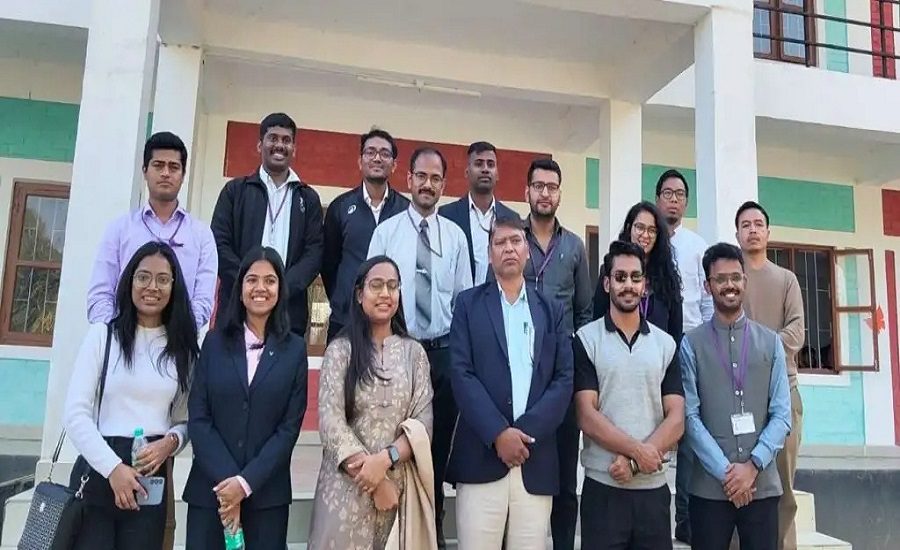
Ukhrul/Churachandpur: A group of ten IAS probationers from the Lal Bahadur Shastri National Academy of Administration (LBSNAA) visited Tokpa Kabui Village (Zeihkuluang) under the Loktak Project in Churachandpur district as part of their study tour on grassroots governance, hill area administration, education, and socio-cultural heritage of Manipur.
Warm Reception and Village Tour
The visiting trainees were warmly received by Gideon Kamei, Chairman and Chief of Tokpa Kabui Village. The delegation also visited the Eklavya Model Residential School (EMRS) located within the village, where they interacted with the principal, faculty, staff, and students.
Read also: 2 IAS Officers Suspended in Punjab Over Anganwadi Smartphone Delay
Insights on Hill Administration and Constitutional Provisions
During an interactive session, Kamei briefed the IAS trainees on the administrative and governance framework of Manipur’s hill areas under Article 371C of the Indian Constitution. He emphasized the constitutional provisions’ role in protecting the administrative, cultural, and political interests of the hill regions.
Kamei highlighted the peaceful coexistence between tribal communities in the hills and the Meitei population in the valleys, showcasing how local governance balances traditional autonomy with state-level administration.
Historical and Cultural Heritage of Tokpa Kabui
Kamei elaborated on the historical significance of Tokpa Kabui Village, recounting its role during World War II, when villagers were compelled to relocate due to intense aerial bombardment between Allied and Japanese forces.
He also shared that Tokpa Kabui Village has existed for over four centuries, explaining its traditional polity, cultural practices, and governance systems. The Chief noted that historically, Naga villages functioned as autonomous republics governed by customary laws and institutions before British colonial administration.
Focus on Education and Community Development
The visit concluded with discussions at the EMRS, providing the IAS trainees with practical insights into education administration in remote tribal areas. The interaction helped the probationers understand the challenges and opportunities in delivering quality education, as well as the role of local governance in facilitating community development and preserving cultural heritage.
The study tour offered the officers an in-depth understanding of hill administration, local governance traditions, historical context, and socio-cultural dynamics in Manipur.
Read also: Political Storm Erupts in Punjab Over Suspension of IAS Officers; BJP Urges Central Intervention