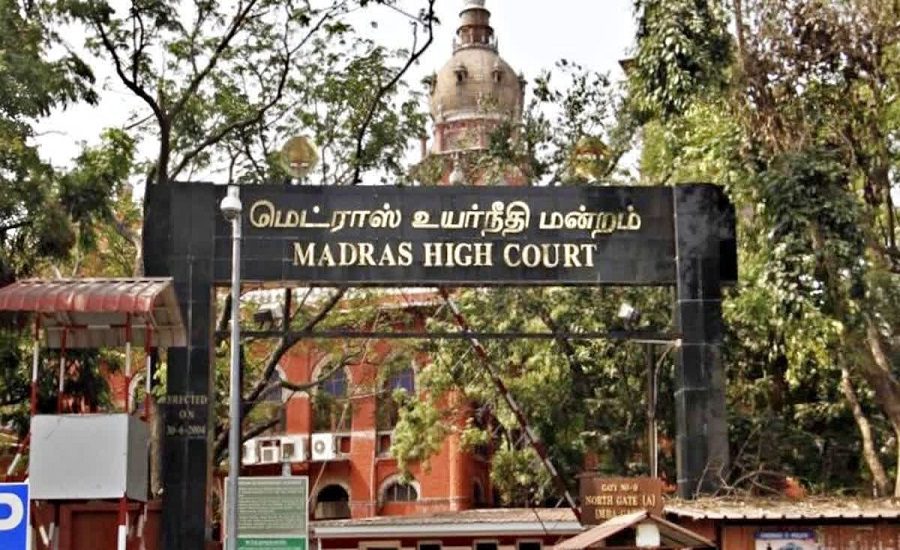
Chennai: In a noteworthy intervention in the Indian intellectual property regime, the Madras High Court has ordered the Patent Office to allow an inventor to physically demonstrate his invention before reconsidering a previously rejected patent application.
The ruling underscores the judiciary’s commitment to fairness in patent proceedings and highlights the tension between scientific plausibility and procedural justice in India’s patent system.
Background of Madras High Court Patent Demo Order
On 18 December 2025, a division bench of the Madras High Court led by Justice N. Anand Venkatesh delivered its order in the case of Kannan Gopalakrishnan vs Controller of Patents.
The case arose out of a writ petition challenging the rejection of Gopalakrishnan’s patent filing titled “Solar Supplemental Power Source” as well as the subsequent dismissal of his review petition by the Patent Office.
The petitioner argued that he had been denied a fair opportunity to demonstrate his invention before the patent examiner and that this violated basic rights to due process.
The Patent Office maintained that the inventor had already been heard and that the application was rightly rejected as scientifically unsound.
What the Invention Claimed
According to court records, the proposed invention was described as a mechanical system capable of generating electricity even in the absence of sunlight.
The device featured a wheel-based structure fitted with multiple arms and weights, purportedly leveraging gravitational and buoyant forces to cause sustained rotation and generate power independently of conventional solar input.
However, the Patent Office concluded that the claimed mechanism was frivolous and contrary to established laws of physics — specifically, that it resembled a perpetual motion machine, which cannot operate without external energy input.
Based on this reasoning, the Assistant Controller of Patents dismissed the application on 7 November 2024 under Section 3(a) of the Indian Patents Act, 1970.
Court’s Rationale on Madras High Court Patent Demo Order
While the High Court acknowledged that its review jurisdiction was limited and that it could not substitute its technical assessment for that of the Patent Office, it took note of the petitioner’s submission that a working prototype existed and had not yet been physically examined by the patent authorities.
In the Court’s view, “an invention should not be allowed to go waste without being tested in practice” — a phrase that became a guiding principle of the judgment.
The Court observed that denying the inventor an opportunity to demonstrate the functioning of his device amounted to a denial of fair hearing, especially where the inventor was prepared to present the prototype on request.
The Court therefore exercised its discretion under Article 226 of the Constitution of India, emphasizing equity and procedural fairness over technical dismissal.
Madras High Court Patent Demo Order: Directions to Patent Office and Inventor
The Madras High Court has directed the following:
- The inventor must make his prototype available for demonstration before the Assistant Controller of Patents and Designs within four weeks from the date of receipt of the order.
- The Patent Office must permit and facilitate the physical demonstration of the device.
- After the demonstration, the Patent Office must pass a reasoned and final decision on the patent application within four months.
These directions intend to provide both procedural fairness and a transparent framework for reassessing the merits of the invention.
Implications of Madras High Court Patent Demo Order for Indian Patent Jurisprudence
This judgment reflects a nuanced judicial approach to patent examination — one that balances scientific scrutiny with basic principles of natural justice.
Instead of outright endorsing the merit of the invention, the Court has carved out space for an equitable hearing that allows the inventor’s empirical evidence to be evaluated.
Indian courts, including the Madras High Court in other patent cases, have historically engaged with nuanced patentability issues — such as inventive steps, technical contribution, and procedural fairness — in diverse contexts.
For instance, in a recent software-related patent dispute, the same court held that inventions demonstrating true technical contribution could be patentable even if implemented through software, emphasizing substantive innovation over form.