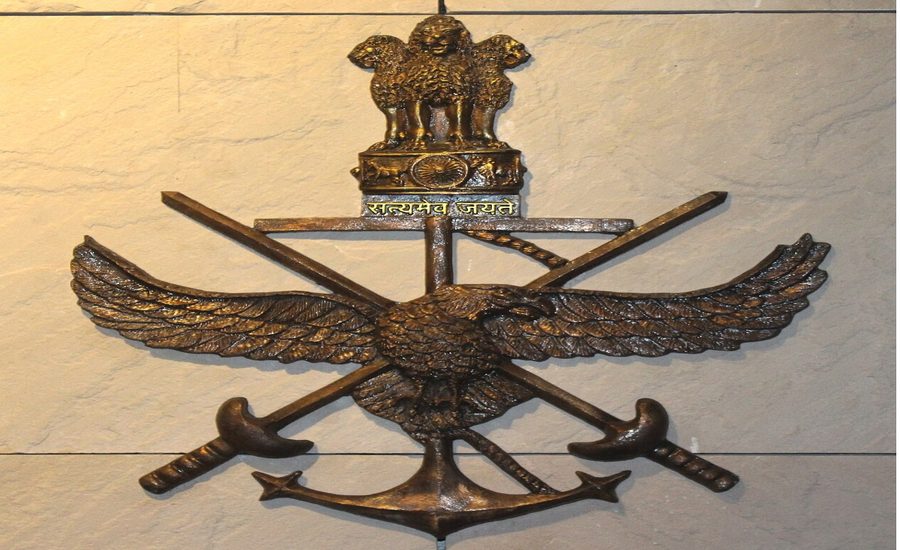
New Delhi: India is planning a major transformation in its defence structure by establishing four specialised tri-service military agencies under its long-term defence modernisation plan. The initiative aims to strengthen the country’s ability to deal with emerging threats in modern warfare such as cyber attacks, drone warfare, data-driven operations, and information warfare.
The four specialised tri-service military agencies—the Defence Geo-Spatial Agency (DGA), Data Force, Drone Force, and Cognitive Warfare Action Force—will integrate the capabilities of the Army, Navy, and Air Force. This move is part of India’s Armed Forces Vision 2047, which aims to make the Indian military a technologically advanced force by 2030.
What is the Need Specialised Tri-Service Military Agencies in India
Modern wars are no longer fought only with tanks, ships, and fighter jets. Today, battles also happen in space, cyberspace, data networks, and the information domain.
Read also: Post-Operation Sindoor Impact: Why India’s Defence Budget Touched a Record ₹7.85 Lakh Crore in 2026
India’s defence planners believe that to stay ahead of evolving threats, the armed forces need dedicated organisations that focus on new technologies and intelligence systems.
The four specialised agencies will help the Indian military:
- Improve real-time battlefield intelligence
- Use AI and big data for decision making
- Strengthen drone warfare capabilities
- Counter propaganda, misinformation, and psychological warfare
Together, these agencies will create a highly integrated digital and intelligence-driven military structure.
Details of Specialised Tri-Service Military Agencies in India
The Defence Geo-Spatial Agency (DGA) will act as the central hub for geospatial intelligence.
This agency will combine data from:
- Satellite imagery
- Advanced digital mapping systems
- Ground sensors
- Navigation technologies
Using this information, commanders will be able to visualise the battlefield in three-dimensional digital maps, helping them understand terrain, enemy movement, and operational opportunities more accurately.
The DGA will also use data from indigenous satellites developed by ISRO to improve targeting accuracy and mission planning.
By 2030, the agency is expected to develop predictive geospatial analytics, which could help anticipate threats along sensitive borders such as the Line of Actual Control (LAC) and improve maritime monitoring in the Indian Ocean Region.
Data Force: Turning Military Data Into Strategic Intelligence
The Data Force will be responsible for managing and analysing the massive amount of information generated by modern military systems.
In today’s battlefield, information comes from many sources such as:
- Radar systems
- Surveillance drones
- Satellites
- Sensors on military vehicles
- Human intelligence networks
The Data Force will use artificial intelligence (AI) and machine learning to analyse this data and provide quick insights for military decision-makers.
Key roles of the Data Force include:
- Detecting patterns in enemy movement
- Predicting logistics requirements
- Supporting cyber defence operations
- Improving real-time battle management systems
The agency will also use advanced encryption and edge computing to ensure secure communication and data processing.
Drone Force: Strengthening Unmanned Warfare Capabilities
The Drone Force will focus entirely on unmanned aerial systems and drone warfare.
Drones are becoming a critical part of modern warfare because they can perform missions without risking human pilots.
The Drone Force will operate:
- Unmanned Combat Aerial Vehicles (UCAVs)
- Intelligence, surveillance, and reconnaissance drones
- Loitering munitions (kamikaze drones)
- Swarm drones
India is already developing indigenous drone platforms such as Rustom, Tapas UAV, and the Nagastra-1 loitering munition.
One of the most advanced strategies the Drone Force plans to adopt is swarm warfare, where hundreds of small drones work together to overwhelm enemy defence systems.
These drones will be integrated with the DGA for targeting and with the Data Force for command-and-control operations.
Cognitive Warfare Action Force: Fighting Information Wars
The Cognitive Warfare Action Force will focus on the psychological and informational aspects of modern conflict.
Modern warfare increasingly involves information manipulation, propaganda, and digital influence campaigns.
This agency will specialise in:
- Psychological operations (PSYOPS)
- Counter-disinformation campaigns
- Digital influence operations
- Social media monitoring and response
Using AI-driven analysis tools, the unit will track online narratives and counter hostile propaganda aimed at destabilising public opinion or weakening military morale.
The agency will also help protect India’s digital information ecosystem from foreign interference.
Importance of Specialised Tri-Service Military Agencies in India
The creation of these agencies is seen as a strategic response to evolving geopolitical threats.
Countries like China and Pakistan are increasingly investing in technologies such as:
- Space-based surveillance
- Cyber warfare
- Drone swarms
- Information warfare
By building specialised agencies in these domains, India aims to strengthen its defence posture and maintain technological superiority in the region.
The move also aligns with India’s ambition to become a major security provider in the Indo-Pacific region while strengthening cooperation with international partners.
A Major Step Toward Armed Forces Vision 2047
The four new agencies are a key part of India’s Armed Forces Vision 2047, which aims to transform the country’s military into a fully integrated, technology-driven force.
By combining advanced data systems, unmanned technologies, satellite intelligence, and information warfare capabilities, India is preparing its armed forces for the next generation of warfare.
The goal is to ensure that by 2030, the Indian military can operate faster, smarter, and more effectively in complex modern battlefields.
Read also: From Drones to Rafales: How Operation Sindoor Changed Indian Defence Spending Pattern