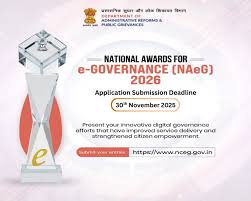
New Delhi: The Government of India has announced the winners of the National Awards for e-Governance (NAeG) 2026, recognising 17 outstanding projects and initiatives across seven categories for their excellence in digital governance and citizen-centric service delivery.
The awards include 10 Gold Awards, 6 Silver Awards and 1 Jury Award, highlighting innovative efforts by Central Ministries, States, UTs, local bodies and public sector organisations in strengthening India’s digital governance ecosystem.
The awards will be presented during the 29th National Conference on e-Governance scheduled to be held in Jaipur, Rajasthan.
National Awards for e-Governance 2026: Purpose and Significance
The National Awards for e-Governance are presented annually to encourage innovation and excellence in implementing digital governance initiatives across India.
The 2026 edition focuses on:
- Digital transformation of government services
- Use of Artificial Intelligence and emerging technologies
- Cybersecurity in governance systems
- Strengthening grassroots-level digital service delivery
- Data-driven governance and policy implementation
The awards also recognise efforts to improve transparency, efficiency and accessibility of public services.
List of Gold Award Winners (10 Projects)
A total of 10 projects have been selected for the Gold category for their outstanding contribution to e-governance innovation:
Major Central and National Initiatives
- Agri Stack – Ministry of Agriculture & Farmers Welfare
- e-Jagriti – Ministry of Consumer Affairs
- Mahakumbh 2025 Digital Initiative – Prayagraj Mela Authority, Uttar Pradesh
- AI-enabled Clinical Decision Support System in eSanjeevani – Ministry of Health and Family Welfare
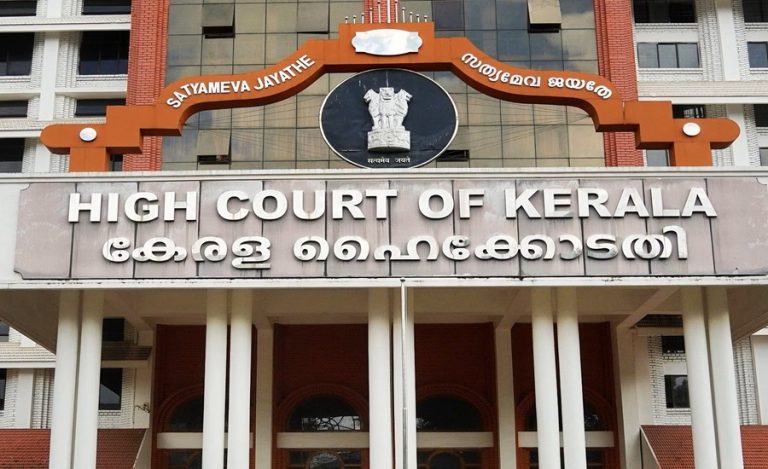
- District Court Case Management System (DCMS) – High Court of Kerala
Healthcare and Research Innovations
ICMR-MINDS Project – Indian Council of Medical Research (ICMR)
E-Aarogya Dhamni – Zilla Parishad, Nandurbar, Maharashtra
Cybersecurity and Digital Infrastructure
Security Product for Threat Intelligence Distribution and DNS Filtering – Space Applications Centre, ISRO
Integrated Cyber Security Framework for Digital Banking Ecosystem – Bank of Baroda
Urban and Local Governance
- E-Nagar Palika with Cyber Security – Urban Development and Housing Department, Madhya Pradesh
- Pune 360 Initiative – Pune Municipal Corporation, Maharashtra
- Kadepur Gram Panchayat Initiative – Sangli District, Maharashtra
- Bijoy Nagar Gram Panchayat Initiative – West Tripura District, Tripura
- TRINETRA AI-based Surveillance System – Mahakaleshwar Temple Trust, Ujjain
- Panchayat Advancement Index – Ministry of Panchayati Raj
Silver Award Winners (6 Projects)
Six initiatives have been recognised under the Silver category for their contribution to digital governance and innovation. These include projects spanning:
District-level digital governance systems
- Replication and scaling of successful e-governance models
- Data-driven service delivery platforms
- State and UT-level digital transformation initiatives
These projects reflect growing adoption of technology-driven governance solutions across India.
Jury Award Winner
The Jury Award 2026 has been conferred on:
- Real Time Precise Positioning Services through CORS Network – Survey of India
- The project has been recognised for its advanced geospatial technology and its role in improving precision-based positioning services across governance and infrastructure applications.
Seven Categories of NAeG 2026
The awards are distributed across seven thematic categories, including:
- Government Process Re-engineering using Digital Transformation
- AI and Emerging Technologies for Citizen Services
- Cybersecurity Innovations in e-Governance
- District-Level Digital Initiatives
- Gram Panchayat-Level Digital Governance
- Replication and Scaling of Successful e-Governance Models
- Data Analytics-driven Governance Systems
These categories reflect India’s expanding digital governance framework from national to grassroots levels.
Incentives and Recognition
Each award includes:
- Trophy
- Certificate
- Financial incentive
Gold Award winners receive ₹10 lakh, while Silver Award winners receive ₹5 lakh, to be utilised for project implementation, scaling or public welfare initiatives.
Conclusion
The National Awards for e-Governance 2026 highlight India’s continued progress in digital governance, showcasing how technology is transforming public service delivery across healthcare, judiciary, agriculture, cybersecurity and local governance.
With participation from ministries, PSUs, state governments and gram panchayats, the awards reflect a growing ecosystem of innovation aimed at building a more efficient, transparent and citizen-friendly governance model.