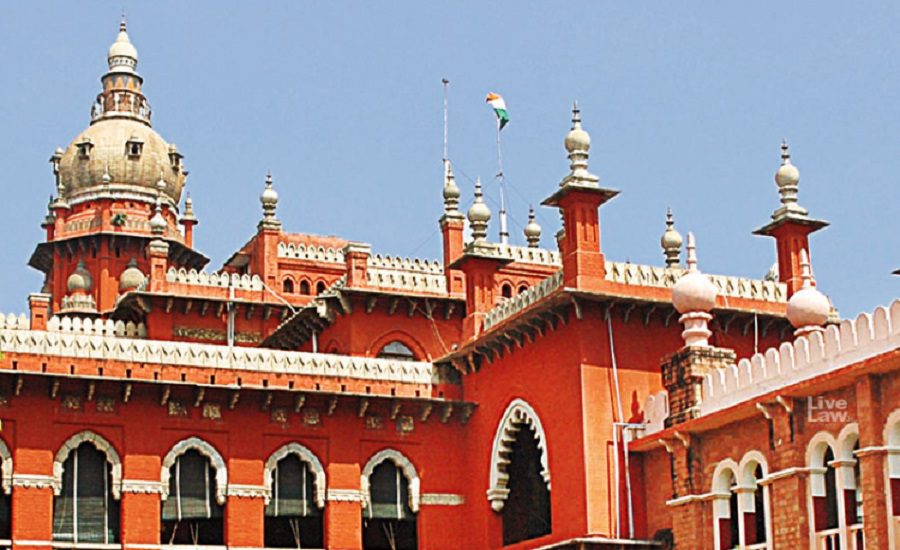
Madras: The Madras High Court expressed serious concern over the absence of a trespass complaint by temple authorities against the management of the nearby Dargah despite flag-hoisting inside the Arulmigu Subramania Swamy Temple’s property on Thiruparankundram Hill, a landmark legal and cultural flashpoint in Madurai district, Tamil Nadu.
Context of the Thiruparankundram Row
The high court’s observations came in the course of contempt proceedings initiated for alleged non-compliance by the district administration and police with earlier judicial directions about the Karthigai Deepam ritual — a traditional lamp-lighting ceremony atop Thiruparankundram Hill.
The litigation stems from a broader dispute involving religious rights, property ownership, and public order on a multi-faith historic site that includes Hindu, Muslim, and Jain structures.
What Prompted the Court’s Question on Trespass?
During the hearing, Justice G.R. Swaminathan observed that despite the Dargah authorities hoisting a flag without permission on an area declared as temple property by a recent division bench order, neither the Arulmigu Subramania Swamy temple management nor the state authorities had filed a complaint under trespass laws with the local police.
The executive officer of the temple admitted that no permission had been sought by the Dargah side before placing the flag and conceded the act was a criminal trespass. In response, the officer assured the court that a formal complaint would be filed before the jurisdictional police.
The judge pressed the temple administration to explain why no legal steps were taken earlier to protect the Devasthanam’s rights in view of the property declaration by the High Court.
Background of the Thiruparankundram Row
Thiruparankundram hill, located near Madurai, Tamil Nadu, is a historically significant site featuring the Arulmigu Subramania Swamy Temple, one of the six abodes (Arupadai Veedu) of Lord Murugan.
At the hill’s summit lies the Thiruparankundram Dargah, also known as the Hazrat Sultan Sikandar Badusha Auliya Dargah, a 13th-century Sufi shrine with an active worship tradition tied to occasions such as Eid, Ramadan, and the Santhanakoodu festival.
The hill also houses ancient Jain relics and rock inscriptions, making it a multi-religious heritage landscape.
Recent Judicial Orders and Government Response
The immediate catalyst for the latest hearings was the deepam lighting dispute, where a single-judge of the Madras High Court directed the temple authorities to allow the lighting of the Karthigai Deepam (sacred lamp) on a stone pillar (Deepathoon) near the hilltop.
Although the Tamil Nadu government and police cited law-and-order concerns, the court has rejected those apprehensions as speculative and order-defying.
A division bench later upheld the earlier judgment permitting the lamp ritual while imposing conditions like limited participation and supervision by authorities (ASI, police and local administration).
Contempt Proceedings and Show Cause Notices
The court has repeatedly issued show-cause notices to officials including the Madurai Collector and Deputy Commissioner of Police for failing to justify their non-compliance with judicial directives.
Officials have been warned that failure to provide a satisfactory explanation could lead to framing of contempt charges.