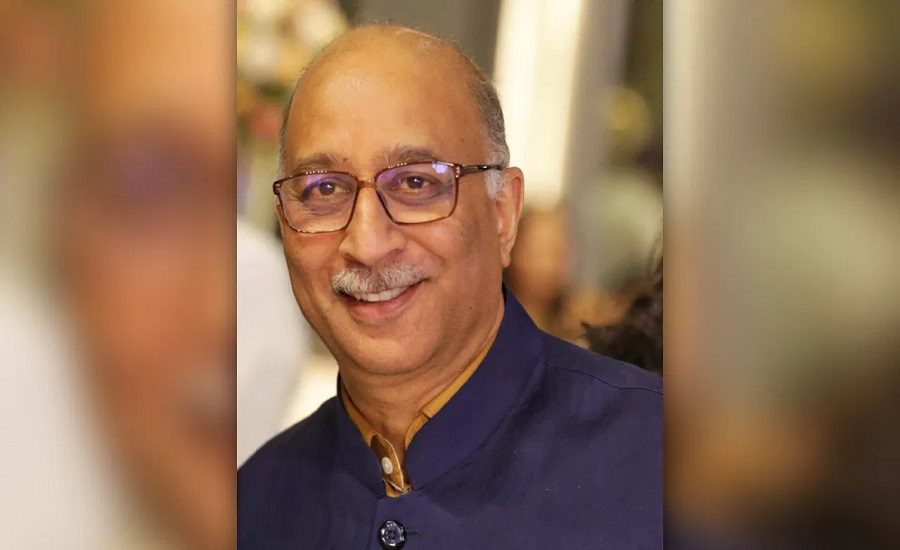
Kolkata: In a significant administrative development, the West Bengal government on Wednesday appointed former Chief Secretary Manoj Pant (Retd. IAS:1991:WB) as Principal Secretary to the Chief Minister, in the rank of Chief Secretary, soon after he completed his tenure as the state’s top bureaucrat.
Appointment Following Completion of Extended Tenure
Mr Pant’s appointment comes after the conclusion of his six-month service extension, which ended on December 31, 2025. Pant was originally due to retire in June 2025, but the state government had granted him an extension in view of administrative continuity.
The state had sought a further six-month extension from the Union government; however, the proposal was not finally cleared by the Department of Personnel and Training (DoPT), the cadre-controlling authority for All India Services officers.
Following this, the state government appointed Nandini Chakraborty (IAS:1994:WB) as the new Chief Secretary of West Bengal and simultaneously decided to retain Pant’s services by posting him to the Chief Minister’s Office (CMO).
Early Career: Grounded in District Administration
IAS Pant began his administrative career in the early 1990s, gaining critical grassroots experience as District Magistrate of Murshidabad and North 24 Parganas. In these roles, he handled law and order, electoral management, and development administration, acquiring a deep understanding of governance at the field level.
These formative years laid the foundation for his later work in policy formulation and senior administration.
Close Association with Pranab Mukherjee
A defining phase of Pant’s career was his tenure as Private Secretary to Pranab Mukherjee, then Union Finance Minister, between 2009 and 2011. Working closely with one of India’s most respected statesmen, Pant was exposed to national budget-making, macroeconomic policy, and high-level political coordination.
This period significantly broadened his administrative and policy perspective.
International Exposure at the World Bank
In 2011, Mr Pant moved to the World Bank as a Senior Adviser, where he worked for three years on development programs across India, Bangladesh, Bhutan, and Sri Lanka.
This international assignment sharpened his understanding of multilateral institutions, regional cooperation, and development finance, providing him with a global lens rarely available to state-level administrators.
Key Roles in West Bengal: Land and Finance
After returning to West Bengal, Pant headed some of the state’s most critical departments –
- Land and Land Reforms Department
- Finance Department
As Land Secretary, he pushed for digitisation of land records, transparency, and policy alignment with welfare schemes, viewing land as a key instrument for poverty reduction and equitable growth.
As Finance Secretary, he played a central role in budget preparation, fiscal planning, revenue mobilisation, and expenditure management, navigating the challenges of limited fiscal space with a reputation for being methodical and reform-oriented.
Leadership Style and Administrative Persona
Colleagues describe Manoj Pant as a quiet, analytical administrator, known for precision over rhetoric. He avoids the spotlight but maintains a strong grip on both detail and the broader policy picture.
His academic approach to governance, combined with pragmatism, has helped him earn the confidence of political leadership across assignments. Despite being empanelled for Secretary-level positions in the Government of India, the state repeatedly chose to retain him for key responsibilities.
Steering the State During a Challenging Phase
Mr Pant assumed charge as Chief Secretary during a period marked by public unrest, administrative challenges, and intense political scrutiny. His understanding of land, finance, and governance systems proved valuable in navigating these pressures.
His calm and structured approach is widely seen as a stabilising influence within the bureaucracy.
A New Role in the Chief Minister’s Office
As Principal Secretary to the Chief Minister, Manoj Pant will now play a crucial role in policy coordination, inter-departmental alignment, and strategic decision-making at the highest level of the state government.
The appointment ensures continuity of experience and institutional memory at a time when governance demands both decisiveness and balance.