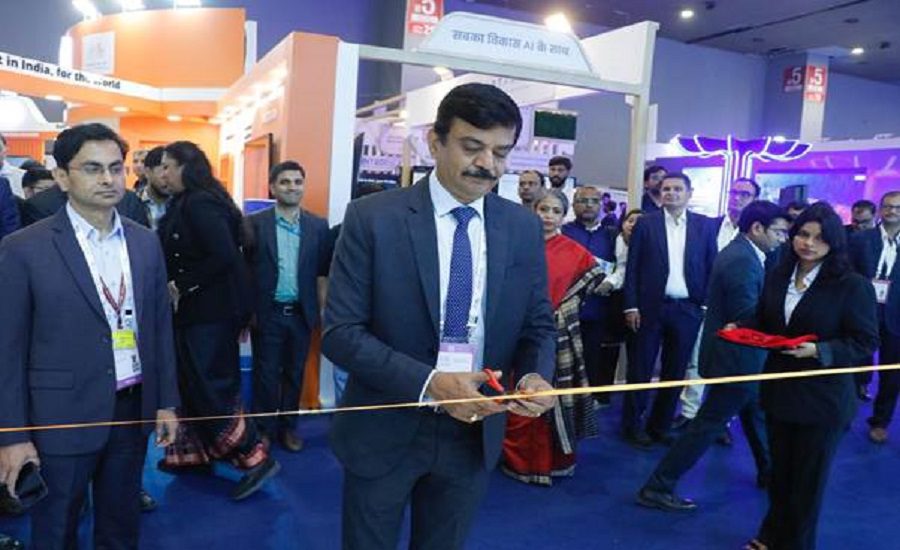
New Delhi: The Ministry of Steel has unveiled a comprehensive digital roadmap aimed at accelerating AI-led transformation across India’s steel value chain at the India AI Impact Summit 2026 held at Bharat Mandapam.
The roadmap outlines a strategic shift toward intelligent systems, predictive analytics, automation, and data-driven decision-making to position India as a technology-driven global steel powerhouse. The initiative aligns with the Ministry’s long-term goal of expanding crude steel capacity to 400 million tonnes (MT) by 2035-36.
AI in Steel: From Vision to Implementation
At the heart of the initiative is the AI in Steel Pavilion, a first-of-its-kind collaborative platform designed as a problem-to-solution marketplace.
Unlike conventional exhibitions, the pavilion showcases real-time operational challenges faced by steel producers and mining companies, including:
- Production efficiency
- Logistics optimization
- Worker safety
- Quality control
- Sustainability and emission reduction
- Marketing and demand forecasting
AI startups, technology firms, research institutions, and innovators are invited to co-develop scalable, measurable solutions. The Ministry emphasized that the focus is shifting from isolated pilot projects to full-scale AI integration across mining, logistics, production, quality assurance, and governance systems.
Industry–Startup Convergence to Accelerate Innovation
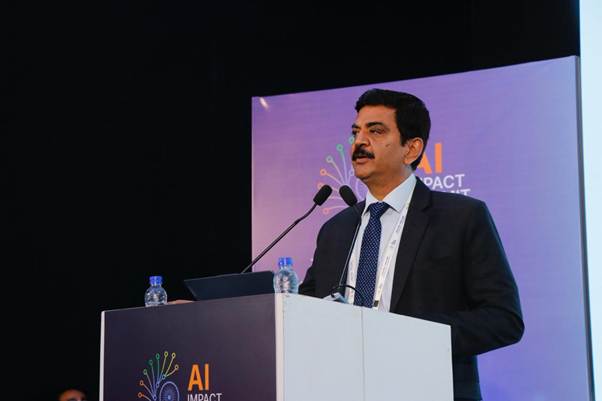
A high-level session at the summit brought together steel producers, iron ore miners, policymakers, and AI innovators to discuss practical execution strategies.
Industry leaders identified high-impact AI use cases, including:
- Predictive maintenance algorithms
- Computer vision systems
- Supply chain optimization models
- Intelligent decision-support platforms
- Raw material blending optimization
- Downtime reduction and yield improvement
The dialogue enabled direct engagement between industry stakeholders and AI companies, creating a structured innovation pipeline to test, validate, and scale digital solutions across the steel ecosystem.
Steel Sector Growth and Expansion Targets
The Secretary of the Ministry of Steel highlighted the sector’s rapid growth trajectory. India’s steel consumption has nearly doubled from 77 million tonnes in 2014-15 to 152 million tonnes in 2024-25, driven by infrastructure expansion, urbanization, industrial growth, and rising domestic demand.
To support India’s vision of becoming a developed nation by 2047, the Ministry has set ambitious benchmarks:
- Increase crude steel capacity from ~200 MT to 300 MT by 2030-31
- Expand capacity further to 400 MT by 2035-36
This large-scale expansion will be supported by parallel growth in mining output, logistics networks, beneficiation capacity, and downstream value addition.
AI as a Strategic Enabler for 400 MT Vision
The Ministry clarified that AI is not a peripheral tool but a strategic enabler for the next phase of steel sector growth.
Key focus areas include:
- Intelligent capacity utilization
- Real-time monitoring and automation
- Energy efficiency management
- Decarbonization strategies
- AI-driven process control systems
- Digital twins and advanced analytics
As capacity increases, productivity, safety, sustainability, and quality standards must improve proportionately to maintain global competitiveness.
Call to AI Startups and Innovators
The Ministry invited AI developers, deep-tech startups, academic institutions, and research laboratories to collaborate through the Steel Research and Technology Mission of India, which will serve as a live sandbox for innovation.
Industry leaders also emphasized the need for:
- Domain-specific customization
- Scalable system architecture
- Cybersecurity resilience
- Multilingual workforce interfaces
- Solutions tailored to Indian industrial conditions
The steel sector presents one of the largest industrial AI opportunity landscapes in India, spanning mining, heavy manufacturing, logistics, sustainability, and global trade.
Data-Driven Future of Indian Steel
With clear strategic direction and large-scale capacity expansion plans, the Ministry of Steel has signaled that the future of Indian steel will be shaped by both metallurgy and digital intelligence.
As India moves toward the 400 MT target by 2035-36, AI-driven automation, analytics, and innovation will play a defining role in ensuring efficiency, resilience, and sustainability across the steel value chain.