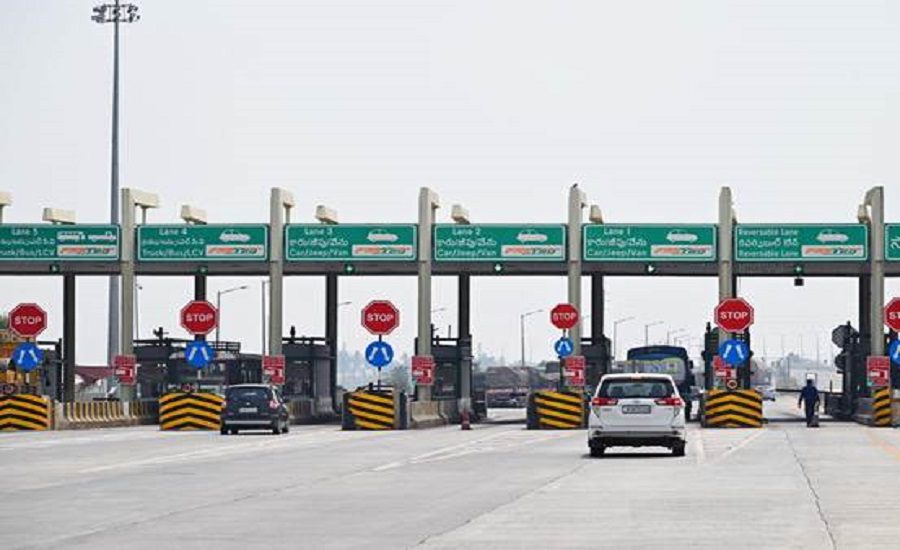
New Delhi: With the rapid expansion of India’s National Highway network, toll plazas have long been a pressure point for daily commuters, freight operators, and long-distance travelers. Long queues, unpredictable toll expenses, and frequent stoppages were once a routine part of highway travel.
However, over the past decade – and especially during 2025 – the Ministry of Road Transport and Highways (MoRTH) and the National Highways Authority of India (NHAI) have quietly but steadily transformed tolling through technology-driven, people-centric reforms. These measures are now delivering smoother travel, lower costs, and greater certainty for millions of road users across the country.
FASTag Annual Pass: Predictable Costs, Stress-Free Commutes
One of the most impactful reforms of 2025 has been the launch of the FASTag Annual Pass on 15 August 2025.
Under this scheme, users can pay ₹3,000 for either –
- 200 toll trips, or
- One full year of validity,
whichever comes first, across 1,159 toll plazas nationwide.
For daily commuters, the savings have been substantial.
A resident of Kushehri in Unnao, who travels daily between Unnao and Lucknow, shared that earlier he spent around ₹90 per day on tolls. With the Annual Pass, his daily cost has dropped to ₹30, while also saving valuable time by crossing toll plazas in under a minute.
Similarly, a commuter from Yamuna Nagar, Haryana, who frequently travels to Chandigarh, said his round-trip toll expense earlier stood at ₹150, which has now reduced to just ₹30 after opting for the Annual Pass.
Beyond savings, the scheme has brought predictability. Monthly toll expenses, once uncertain, have now become a fixed, stress-free cost, eliminating the need for frequent FASTag recharges.
In just a few months, over 40 lakh FASTag Annual Passes have been sold, with adoption reaching nearly 20% of car users, clearly reflecting public trust in the policy.
Encouraging Digital Payments at Toll Plazas
Cash payments at toll plazas were once synonymous with long queues, change-related disputes, and delays. While MoRTH had earlier imposed a double toll charge (2x) for non-FASTag users to discourage cash, this proved costly for some commuters.
In 2025, the policy was refined. The penalty for UPI-based toll payments was reduced to 1.25x, making it a more affordable and practical alternative to cash.
Now, commuters can simply scan, pay, and move on, significantly reducing wait times.
Between 15 November and 10 December 2025, toll plazas recorded –
- Over 15 lakh UPI transactions
- A total value of ₹19.44 crore
- A 25% drop in cash collection, easing congestion and improving transparency
With 98% of vehicles already using FASTag, the remaining gap is now being closed not through penalties alone, but through convenience-driven incentives.
No More Stopping: Barrier-Free Tolling on the Horizon
For truck drivers and long-haul transporters, stopping and restarting at toll plazas leads to fuel loss, fatigue, and delays. Recognizing this, MoRTH and NHAI have taken a major leap toward the future with Multi-Lane Free Flow (MLFF) tolling.
India’s first barrier-free MLFF tolling system has been awarded for implementation at the Choryasi Fee Plaza on NH-48 in Gujarat, and is scheduled to become operational in 2026. Additionally, five more MLFF projects have already been awarded.
Once operational –
- Vehicles will pass through toll plazas at highway speeds
- Toll deduction will happen automatically
- There will be no barriers and no queues
This marks a fundamental shift in how tolling will work on Indian highways.
50% Toll During Highway Construction
Acknowledging the inconvenience caused during highway upgrades, MoRTH has introduced a transparent and commuter-friendly rule.
When a highway is being upgraded from –
- 2 lanes with paved shoulders to
- 4, 6, or more lanes,
users will pay only 50% of the earlier toll until construction is completed.
For example, if the existing toll is ₹50, commuters will pay only ₹25 during the construction phase.
This policy ensures that road users are not overcharged during disruptions, reinforcing fairness and accountability in highway development.
Strengthening the FASTag Ecosystem
Beyond toll rates, MoRTH has fortified the FASTag system to prevent misuse and ensure smooth operations –
- One Vehicle, One FASTag rule to eliminate duplication
- FASTag issuance linked with VAHAN to prevent vehicle class fraud
- Double fee for loose FASTags to avoid scanning delays
Multiple grievance redressal channels –
- 1033 helpline
- Email support
- Bank helplines
- RajmargYatra App
These measures have improved enforcement while keeping user convenience at the forefront.
A Quiet but Meaningful Transformation
While these reforms may not always dominate headlines, their impact is felt daily – through shorter queues, predictable expenses, smoother rides, and hassle-free toll crossings.
The past year demonstrates that governance does not have to choose between economic growth and public convenience. With smart policy, digital innovation, and empathy for road users, MoRTH and NHAI have shown that both can be achieved simultaneously.
For millions of Indians on the move, highway travel is steadily becoming simpler, faster, and more comfortable, marking a significant step toward improved ease of living.