Bhopal: On the occasion of World Wildlife Day, a major conservation development has emerged from Madhya Pradesh, where the combined population of tigers and leopards is estimated to be close to 6,000. While this reflects the state’s strong conservation efforts, it has also raised concerns about growing pressure on forest ecosystems and territorial conflicts among predators.
In response, the state government has sought assistance from the Wildlife Institute of India (WII) in Dehradun to develop a scientific methodology to determine the ecological “carrying capacity” of tiger reserves and forests.
MP Home to India’s Largest Big Cat Population
According to the National Tiger Conservation Authority (NTCA) report All India Tiger Estimation 2022, India had 3,682 tigers, of which 785 were recorded in Madhya Pradesh, the highest in the country.
Forest officials now estimate that the number of tigers in the state could exceed 1,000 in the latest census.
The state also has the largest population of leopards in India. In 2022, around 3,907 leopards were recorded in Madhya Pradesh out of 13,874 across the country. Current estimates suggest that the leopard population in the state may have risen to around 5,000.
Together, the numbers of these two apex predators are now approaching 6,000, increasing ecological pressure on forests.
Supreme Court Directive on Tiger Reserve Capacity
The move to conduct a scientific assessment follows a directive from the Supreme Court of India, issued on November 17, instructing authorities across the country to determine the carrying capacity of tiger reserves.
Carrying capacity refers to the maximum number of animals that a forest ecosystem can sustain over a long period, based on factors such as prey availability, water resources, habitat size, and territorial behaviour.
Officials say this requirement applies to all tiger reserves in India, not just those in Madhya Pradesh.
Forest Department Seeks Scientific Methodology
Shubharanjan Sen, the Chief Wildlife Warden and Head of Forest Force of Madhya Pradesh, has written to the Wildlife Institute of India requesting the development of a standard scientific methodology to calculate carrying capacity.
Currently, there is no universally accepted method to determine how many tigers or leopards a forest can sustain. The institute has been asked to design a model that can be applied consistently across all tiger reserves in the state and eventually across India.
A copy of the letter has also been shared with the National Disaster Response Force (NDRF) to seek guidance on management strategies if ecological stress increases.
Increasing Pressure on Forest Ecosystems
Experts say that as the population of apex predators rises, competition for territory and prey intensifies.
This can lead to:
• Territorial disputes among animals
• Migration of predators outside forest areas
• Increased ecological stress within reserves
Data from 2025 reflects this challenge. During the year:
• 55 tigers died in the state
• 112 leopards were reported dead
Officials believe most deaths were caused by territorial fights and inter-species conflict, marking the highest mortality recorded in the 53-year history of Project Tiger.
Not Linked to Human-Wildlife Conflict
Authorities clarified that the study is not being conducted due to rising attacks on humans.
According to officials, tigers account for only a very small proportion of casualties in Madhya Pradesh, and there is no evidence suggesting that tiger populations are becoming unmanageable.
Instead, the exercise is purely a scientific and administrative response to the Supreme Court’s directive.
Three Key Suggestions Requested from WII
The state government has asked the Wildlife Institute of India to examine three specific aspects while designing the carrying capacity model:
1 Assessment based on food availability and habitat conditions in forests.
2 Evaluation of prey-based carrying capacity models used in wildlife management.
3 Identification of ecological indicators that signal whether forests still have space and resources for additional animals.
Rare Wildlife Moment in Pench Tiger Reserve
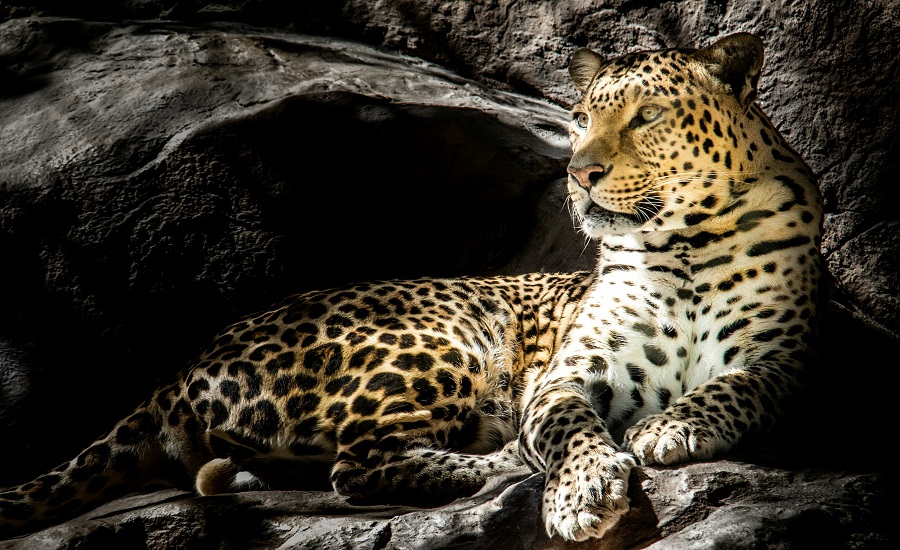
Meanwhile, wildlife enthusiasts recently witnessed a rare moment in Pench Tiger Reserve, where a female leopard was seen carrying her cub gently in her jaws while moving among rocks.
Wildlife photographer Varun Thakkar captured the scene, describing it as one of the rarest sightings in his 19-year career.
Such moments highlight the secretive nature of big cats, which often raise their cubs in secluded and protected areas deep within forests.
Understanding ‘Carrying Capacity’
In ecological terms, carrying capacity means the maximum number of animals that a forest can sustain sustainably over a long period.
This depends on several factors, including:
• Availability of prey animals
• Access to water sources
• Size and quality of habitat
• Territorial behaviour of predators
Once a scientific model is developed, authorities will be able to determine whether current tiger reserves can support additional predators or if conservation strategies need adjustments.
Read also: Madhya Pradesh CM Mohan Yadav Releases 5 Rare Vultures at Halali Dam to Boost Wildlife Conservation