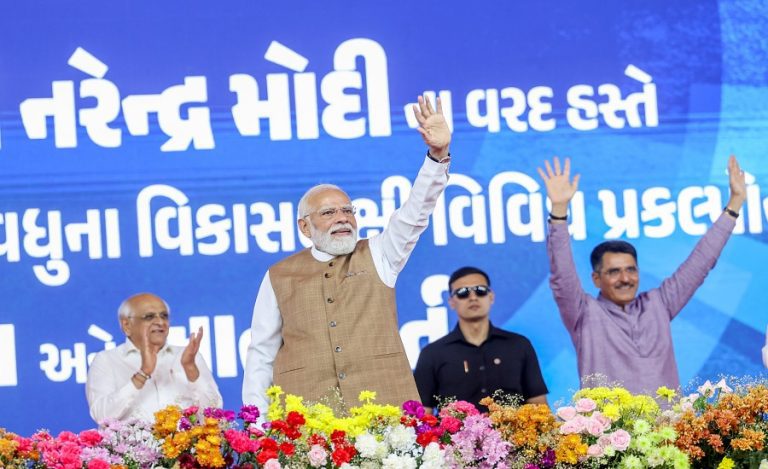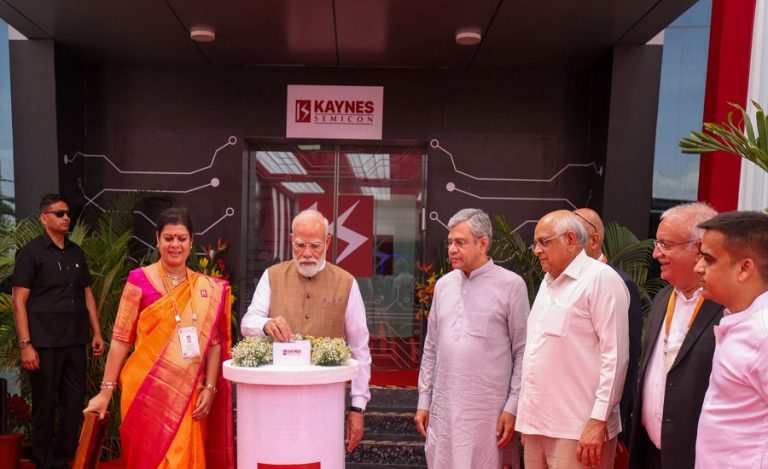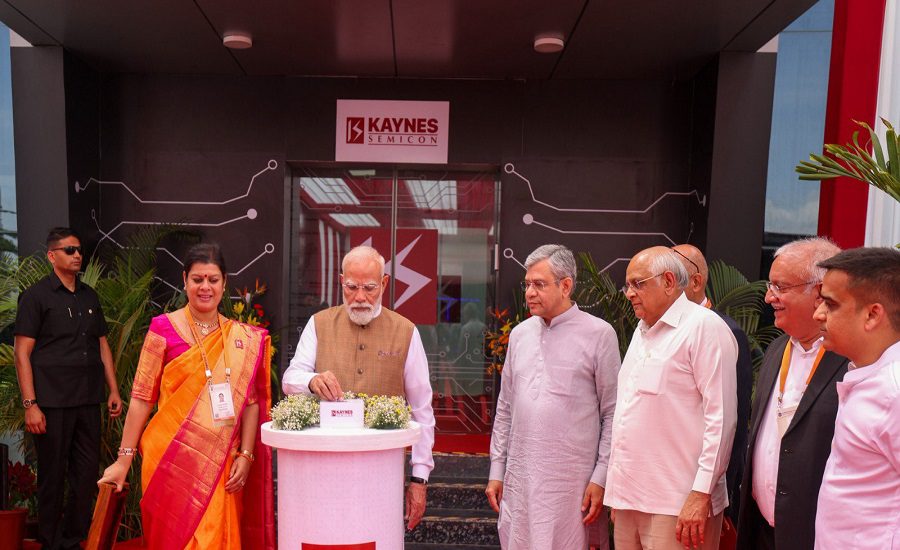
Sanand, Gujarat: Narendra Modi inaugurated the Kaynes Technology semiconductor plant in Sanand, Gujarat, officially marking the commencement of commercial production. The facility represents a significant milestone in India’s journey toward a self-reliant and globally competitive semiconductor ecosystem.
Strengthening India’s Semiconductor Ecosystem
Addressing the gathering, PM Modi highlighted the strategic importance of the new facility, calling it a historic step toward building a robust semiconductor ecosystem. He said the plant demonstrates India’s growing capabilities in chip manufacturing and its integration into the global supply chain.
He congratulated Kaynes Technology, the Gujarat government, and all employees for their efforts in bringing this project to fruition, emphasizing that this achievement reinforces the “Make in India, Make for the World” vision.
Read also: Gujarat: PM Narendra Modi Inaugurates Samprati Museum in Koba, Gandhinagar on Mahavir Jayanti
Global Reach: Connecting Sanand with Silicon Valley
The plant will produce advanced Intelligent Power Modules (IPMs), critical for electric vehicles, industrial automation, and energy-efficient systems. A substantial portion of the production is already earmarked for export, including supply to U.S.-based companies, creating a “bridge” between Sanand and Silicon Valley.
PM Modi stressed the strategic value of these modules, noting that they will strengthen India’s and the world’s electric vehicle ecosystem and heavy industries.
India’s Semiconductor Mission: A Vision for Self-Reliance
The Prime Minister reiterated India’s commitment to becoming a global semiconductor hub, a vision initiated during the COVID-19 pandemic under the India Semiconductor Mission (ISM).
- Over ₹1,60,000 crore worth of projects are underway across six states, including Kaynes and Micron facilities.
- Indigenous development of the ‘DHRUV 64’ microprocessor supports 5G infrastructure, automotive electronics, and industrial automation.
- India is enhancing design and manufacturing capabilities across the semiconductor value chain.
PM Modi also announced the launch of India Semiconductor Mission 2.0, focusing on domestic production of semiconductor equipment and materials to establish a full-scale Indian semiconductor ecosystem.
Skill Development and Innovation
Highlighting the importance of a skilled workforce, PM Modi said India aims to train over 85,000 design professionals. Through initiatives like the “Chips to Startup” program, around 400 universities and startups now have access to modern design tools, enabling the design and production of over 55 semiconductor chips.
He emphasized that technological development and skilled human resources must progress hand in hand, and India is committed to achieving both.
Strategic Importance and Global Supply Chain
PM Modi stressed the criticality of strengthening semiconductor and rare mineral supply chains, citing global disruptions caused by the pandemic and geopolitical tensions. Initiatives such as Pax Silica membership, the National Critical Minerals Mission, and ₹1,500 crore for mineral recycling, as well as the Rare Earth Corridor, aim to secure supply chains for domestic and global markets.
He described India’s semiconductor growth as essential for the global advancement of technology and energy security.
India’s Techade: Leading the Future of Innovation
Calling the current decade India’s “Techade”, PM Modi highlighted India’s leadership in artificial intelligence, fintech, and digital initiatives. He referred to landmark policy decisions, such as opening the space sector through IN-SPACe, introducing the SHANTI Bill in nuclear technology, and mission-mode investments in quantum computing.
He emphasized that India is not just witnessing technological change but is actively shaping it on the global stage.
Boosting Ease of Doing Business and Manufacturing
PM Modi reaffirmed the government’s focus on improving Ease of Doing Business, Ease of Manufacturing, and Ease in Logistics, ensuring a favorable environment for industrial growth. He called the Kaynes plant a testament to India’s capabilities as a trusted global semiconductor supplier and wished success to all involved in the project.