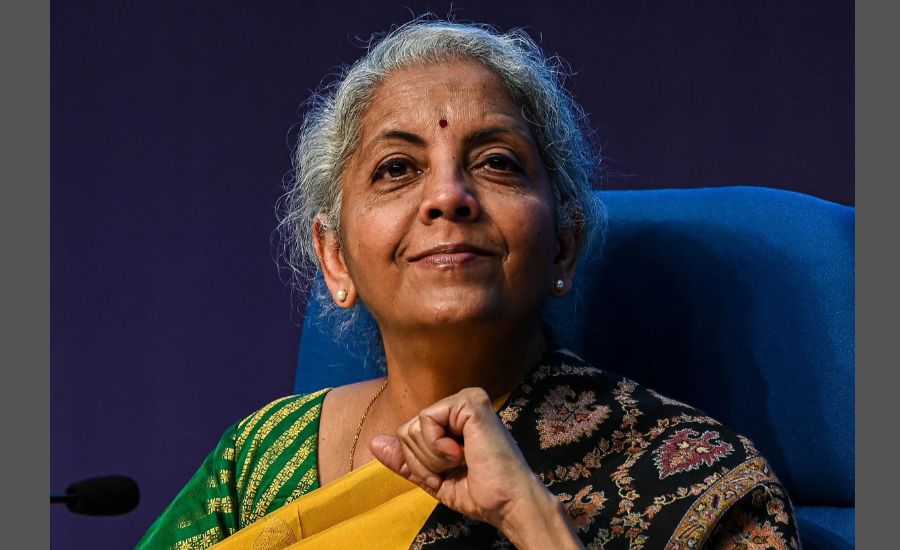
New Delhi: Finance Minister Nirmala Sitharaman is scheduled to address the Reserve Bank of India’s (RBI) Central Board on February 23, where she is expected to outline and explain the key priorities and provisions of the Union Budget 2026–27 (FY27). The interaction is part of the customary post-Budget engagement between the government and the RBI.
Sources said the finance minister will highlight major Budget announcements, including measures aimed at boosting manufacturing, along with enhanced support for agriculture and tourism, while underlining the government’s commitment to balancing economic growth and fiscal prudence.
Meeting Follows RBI’s Status Quo on Policy Rate
The RBI board meeting comes just days after the central bank decided to retain the key policy rate at 5.25 percent, maintaining a neutral stance amid ongoing global economic uncertainties. The policy decision underscores the importance of coordination between fiscal and monetary authorities at a time of volatile global conditions.
Focus on Growth, Stability and Fiscal Discipline
During the meeting, Sitharaman is expected to elaborate on how the Budget 2026–27 seeks to sustain economic momentum while adhering to fiscal discipline. While presenting her ninth consecutive Union Budget in the Lok Sabha on February 1, the finance minister said India’s economic journey over the last 12 years has been defined by stability, fiscal discipline, sustained growth, and moderate inflation.
She emphasized that the government has pursued far-reaching structural reforms, ensured monetary stability, and maintained a strong emphasis on public investment to support long-term growth.
Debt Reduction Roadmap and Fiscal Deficit Targets
A key highlight of the Budget was the government’s announcement of a new roadmap to reduce the debt-to-GDP ratio to around 50 percent by March 2031, from an estimated 55.6 percent in FY27.
In line with this debt consolidation path:
- The fiscal deficit for BE 2026–27 is pegged at 4.3 percent of GDP, marginally lower than 4.4 percent estimated for the current financial year.
- Non-debt receipts are estimated at Rs 36.5 lakh crore.
- Total expenditure is projected at Rs 53.5 lakh crore.
Net tax receipts of the Centre are estimated at Rs 28.7 lakh crore.
Borrowing Programme and Financing of Deficit
To finance the fiscal deficit:
- Net market borrowings from dated securities are estimated at Rs 11.7 lakh crore.
- The remaining financing is expected to come from small savings and other sources.
- Gross market borrowings for FY27 are estimated at Rs 17.2 lakh crore.
These figures are expected to be closely watched by the RBI board, given their implications for liquidity, interest rates, and monetary policy transmission.
Growth Projections and Economic Outlook
The Budget 2026–27 projects a nominal GDP growth rate of 10 percent for the next fiscal year, compared to an estimated 8 percent for the current year. The projection is backed by:
- GDP growth of 7.4 percent in the current fiscal year
- 8 percent growth recorded during the first half of the ongoing financial year
The performance reinforces India’s position as the world’s fastest-growing major economy.
Senior Officials to Accompany Finance Minister
The finance minister will be accompanied by Minister of State for Finance Pankaj Chaudhary, along with senior officials including:
- Economic Affairs Secretary
- Revenue Secretary
- Expenditure Secretary
- Financial Services Secretary
- Other top government officials
The interaction is expected to provide the RBI board with a comprehensive overview of the government’s fiscal strategy and macroeconomic priorities for FY27.
Read also: Union Budget 2026-27: 3 Kartavyas to Boost India’s Growth, Skills & Inclusive Development