New Delhi: In a key development that underscores the complexity and national significance of the proposed ‘One Nation One Election’ (ONOE) framework, former Chief Justice of India BR Gavai, IMF First Deputy Managing Director Gita Gopinath, senior advocate and MP Kapil Sibal, and representatives from the Election Commission of India are slated to brief the Joint Parliamentary Committee (JPC) on the ONOE Bill between December 4 and 17, 2025.
The high-profile consultations reflect the government’s intent to seek a wide spectrum of constitutional, economic, and governance insights before taking the Bill forward.
Background of One Nation One Election Bill Initiative and Parliamentary Scrutiny
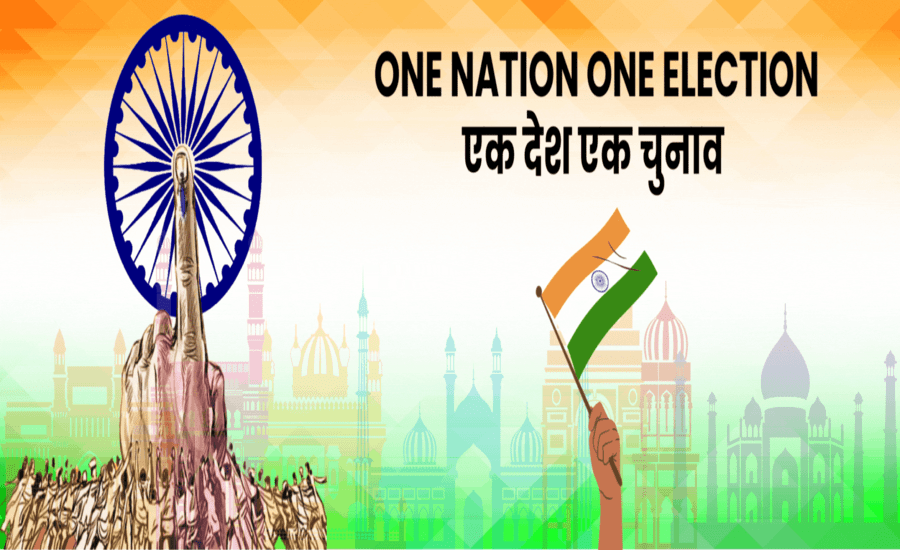
The One Nation One Election Bill, formally known as the Constitution (129th Amendment) Bill, 2024 and the Union Territories Laws (Amendment) Bill, 2024, proposes synchronized elections for the Lok Sabha and all State Assemblies.
The idea, earlier floated by previous governments and think tanks, has gained renewed momentum under the current administration. Its objective is to reduce the frequency of elections, cut costs, improve governance efficiency, and ensure smoother policy continuity.
The 39-member Joint Parliamentary Committee, chaired by BJP MP PP Chaudhary, held its first meeting on January 8, 2025. The Lok Sabha has already extended the panel’s tenure to the last week of the winter session, and another extension is likely.
Key Faces to Examine One Nation One Election Bill
1. Former CJI BR Gavai: Justice BR Gavai, who recently demitted office as the Chief Justice of India, is scheduled to appear before the panel on December 17.
His insights will be crucial, particularly concerning constitutional amendments, federal relations, and possible areas of judicial scrutiny.
2. IMF’s First Deputy Managing Director Gita Gopinath: Gita Gopinath will brief the committee on December 3, offering an economic and fiscal perspective on synchronised elections.
Her input is expected to touch upon macroeconomic stability, governance efficiency, and global comparisons.
3. Senior Advocate & MP Kapil Sibal: Kapil Sibal, renowned for his legal expertise and parliamentary experience, will appear on December 10.
He is expected to highlight legal, political, and administrative implications of simultaneous polls.
4. Election Commission of India: Representatives of the Election Commission will also depose on December 10, focusing on:
- Logistical challenges
- Required reforms and resources
- Constitutional limitations
- Polling infrastructure and manpower requirements
5. Other Distinguished Experts: Several other former judges and experts have already appeared before the committee, including:
- Former CJIs Sanjiv Khanna
- DY Chandrachud
- UU Lalit
- JS Khehar
- Economist Sanjeev Sanyal
- Member of the Prime Minister’s Economic Advisory Council
- Delhi High Court advocate J Sai Deepak
- Law Commission representatives
Their depositions covered constitutional validity, judicial doctrines, administrative feasibility, and federal concerns.
One Nation One Election Bill: Key Concerns Raised During Consultations
1. Constitutional & Federal Challenges: Legal experts have flagged concerns revolving around:
- Basic structure doctrine
- Federal autonomy of states
- Article 14 (Equality Before Law)
- Possibility of judicial challenges on postponing Assembly elections
One significant point raised by Justice Sanjiv Khanna involves fears of “indirect President’s Rule” if elections are postponed by the Election Commission under the new framework.
2. Administrative & Logistical Feasibility: Conducting simultaneous elections across 28 states and 8 UTs will require:
- Massive deployment of security forces
- Additional electronic voting machines (EVMs) and VVPATs
- Training and mobilization of millions of polling personnel
- Synchronizing terms of multiple state assemblies
Election Commission officials are expected to present cost estimates, manpower assessments, and revised guidelines necessary for such a transition.
3. Economic & Governance Impact: Gita Gopinath and other economists are likely to highlight:
- Reduced fiscal burden of frequent elections
- Impact on economic cycles and policy implementation
- Improved governance stability
- Comparative insights from countries with synchronized elections
Panel’s Timeline and Next Steps
The JPC will continue consultations until December 17, after which it is expected to:
- Prepare a comprehensive report
- Suggest constitutional amendments
- Recommend administrative reforms
- Possibly propose a staggered or phased roadmap for implementation
Given the broad range of stakeholders involved, the committee may seek another extension before finalizing its recommendations.
Read also: From Article 370 Removal to Ram Mandir: Who is Gyanesh Kumar, India’s Chief Election Commissioner?