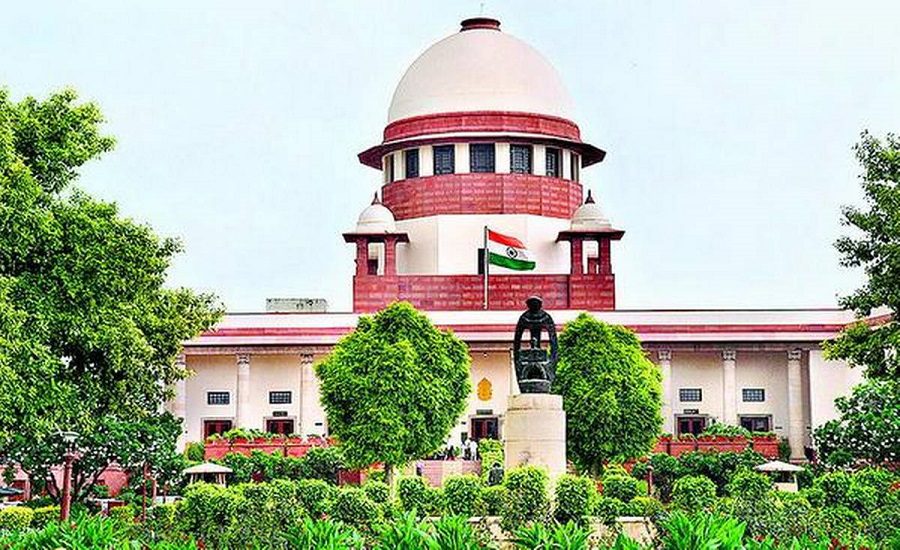
On December 3, 2025, the Supreme Court of India (SC) delivered a landmark judgment that promises greater accessibility and fairness for persons with disabilities (PwDs) seeking to undertake competitive examinations administered by Union Public Service Commission (UPSC). The Court directed UPSC to allow candidates — who require the assistance of scribes — to change their scribe up to seven days before the examination. Additionally, the Court asked UPSC to submit, within two months, a concrete proposal on the use of screen-reader software for visually impaired candidates.
The decision comes as a major step toward making public examinations more inclusive and accessible for persons with disabilities — not just in principle, but in everyday reality. Importantly, the ruling coincides with the International Day of Persons with Disabilities, underlining its symbolic and practical significance.
Background of UPSC Screen-Reader Software Access
The judgment arises from a writ petition filed by Mission Accessibility, an advocacy group working for the rights of PwDs in India. The petition challenged certain rigidities in the examination process for the Civil Services Examination (CSE) conducted by UPSC — particularly the requirement that scribe details must be submitted at the time of application, leaving little room for change if the scribe becomes unavailable or if circumstances change closer to the exam date.
The petition also sought permission for visually impaired candidates to use laptops equipped with screen-reader software and access to digital question papers.
In May 2025, the Court had already directed UPSC to consider scribe-change requests submitted by May 18 and to dispose of them within three working days. However, the petitioners contended that this window was too narrow and arbitrary, especially given that accessibility needs might evolve close to the exam date.
Further, though UPSC had expressed an “in-principle” willingness to allow screen-reader software, there was no concrete plan, timeline, or uniform standards in place.
Key Directives by the Supreme Court
In its judgment (Case: Mission Accessibility v. Union of India, W.P. (C) No. 206/2025), a Bench comprising Vikram Nath and Sandeep Mehta laid down the following directions:
Scribe-change provision: For every UPSC examination notification going forward, eligible candidates must be permitted to request a change of scribe up to at least seven days before the exam. Further, upon such request, UPSC must objectively consider and decide on the request within three working days of receipt.
Screen-reader software plan: UPSC must, within two months of the order, submit a comprehensive compliance affidavit laying out a detailed plan of action — including timeline, modalities for deployment/use of screen-reader software, standardisation and validation process, and infrastructure setup across examination centres.
Formulation of uniform guidelines: In coordination with the Department of Empowerment of Persons with Disabilities (DEPwD) and the National Institute for the Empowerment of Persons with Visual Disabilities (NIEPVD), UPSC must adopt uniform guidelines and protocols for assistive technologies (screen-reader software, digital question papers, etc.) to ensure standardisation, accessibility, and security across all (or designated) examination centres.
Administrative and technical support: The Union of India — via the Department of Personnel & Training (DoPT) and the Ministry of Social Justice and Empowerment — is directed to provide all required administrative and technical support, facilitating coordination with State Governments and examination authorities where needed.
Ensuring fairness and integrity: While implementing these measures, UPSC must ensure examination sanctity, confidentiality, fairness, and transparency — balancing accessibility with the core principles of competitive examinations.
In its observations, the Court emphasised that genuine inclusivity means removing barriers that prevent equal footing, not simply offering uniform procedures.
It underlined that rights for persons with disabilities are constitutional promises — not acts of generosity — rooted in Articles 14, 19, and 21 of the Constitution of India.
Key Significance of UPSC Screen-Reader Software Access
Promoting Substantive Equality, Not Formal Uniformity: The Court’s judgment recognizes that formal equality — offering the same terms for all — does not guarantee meaningful equality.
By allowing scribe changes close to the exam date and mandating assistive-technology deployment, the Court seeks to dismantle systemic barriers faced by candidates with disabilities. This shift from “same rules for all” to “equitable accommodation” underscores the constitutional aim of dignity and non-discrimination.
Enhanced Accessibility for PwBD / Visually Impaired Candidates: Allowing screen-reader software and digital formats for question papers could massively ease the burden on visually impaired aspirants — enabling them to independently read and attempt exams, reducing dependency on others, and ensuring confidentiality and fairness.
The move, if implemented properly, could mark a fundamental change in how inclusive competitive examinations are conducted in India.
Legal Precedent for Future Exams and Institutions: As UPSC is widely considered the benchmark for fairness and integrity in competitive exams, the SC’s mandate here could set a precedent for other exam-conducting bodies (state PSCs, educational institutions) to shun rigid, exclusionary norms, and adopt more inclusive, candidate-friendly procedures.
Translation of Rights into Reality: By binding UPSC to concrete deadlines, plans, and implementation modalities, the Court ensures that the rights under Rights of Persons with Disabilities Act, 2016 (RPwD Act) are not mere rhetorical commitments, but operational realities.
The requirement of a compliance affidavit and subsequent review offers accountability and enforceability.
Key Challenges and The Road Ahead
While the judgment is progressive and welcome, actual implementation will not be free from challenges:
Infrastructure limitations: UPSC does not directly control all examination centres; it depends on state authorities, schools, colleges, and other local bodies for facilities. Rolling out screen-reader software and requisite digital infrastructure uniformly across centres will require significant coordination and resources.
Standardisation concerns: The Court has mandated uniform guidelines and protocols. But ensuring that all centres implement the same standards — in terms of software, security, data confidentiality, and test integrity — could be difficult, especially in remote or resource-poor regions.
Training and facilitation: Using screen-reader software or digital papers effectively demands training for both the candidates and the invigilators. Without adequate training, accessibility may remain theoretical.
Timelines and compliance risk: UPSC is to file the compliance affidavit in two months (i.e., by early February 2026). The success of the judgment’s intent will depend heavily on whether UPSC, DoPT, DEPwD, and NIEPVD follow through diligently on their commitments. Any delays or half-measures could undermine the purpose.
Broader Impact: Symbolism and Social Message
- The ruling came on the International Day of Persons with Disabilities — sending a strong symbolic message that equality and inclusivity must transcend lip service. It emphasizes that rights for persons with disabilities are not charity, but constitutional mandates.
Moreover, the judgment may help shift societal attitudes: treating accessibility measures not as exceptional accommodations, but as essential features of a fair and just system. For thousands of aspirants with disabilities — especially visually impaired candidates — this may translate into renewed hope, confidence, and opportunity to compete on an equal footing.