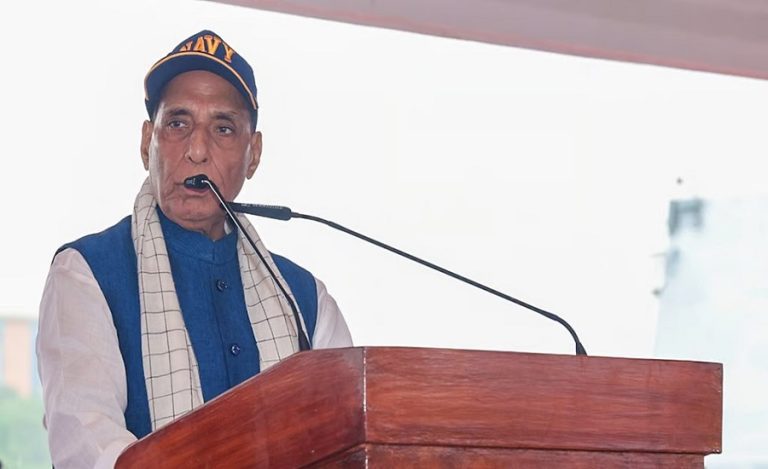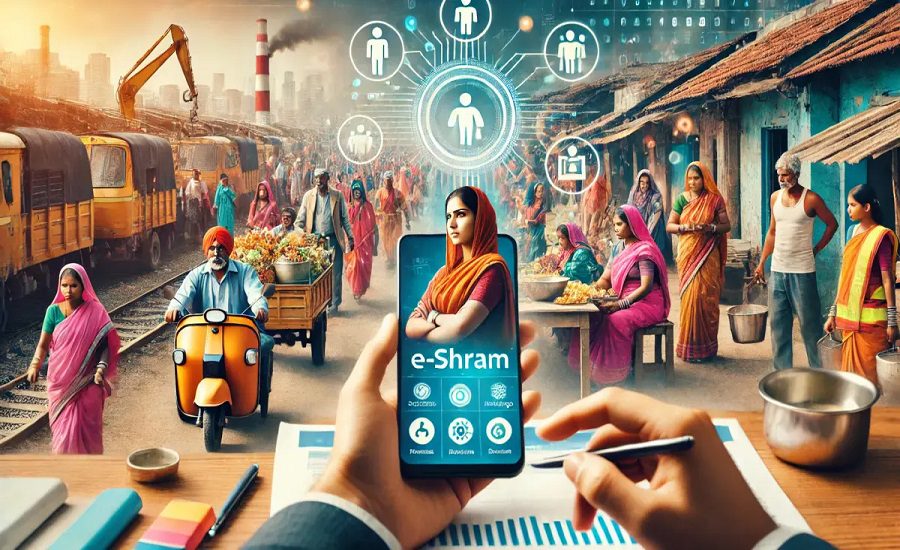
New Delhi: Women continue to play a pivotal role in India’s agricultural sector, with over 8.04 crore women workers registered on the e-Shram portal, the government informed Parliament. Minister of State for Agriculture and Farmers’ Welfare Ram Nath Thakur highlighted the growing contribution of women to agriculture and allied sectors, underscoring the government’s efforts to improve livelihoods, income security, and empowerment of women farmers.
Women Form a Significant Part of India’s Agricultural Workforce
As per the e-Shram portal, a total of 16.25 crore workers from agriculture and allied sectors are registered, of which women constitute nearly 50%. Data from the Periodic Labour Force Survey (PLFS) 2023–24 indicates that 76.9% of rural women and 12.3% of urban women are engaged in agriculture. Overall, 64.4% of India’s workforce depends on agriculture for employment, demonstrating the sector’s centrality to the country’s economy and the crucial role of women in sustaining it.
Minister Thakur emphasized that women’s contribution is not only vital for food security but also for the economic stability of rural households, and the government is committed to strengthening their participation through targeted schemes and interventions.
Read also: Startup India Drives Record Growth: Nearly 2 Lakh Startups Recognised and Over 21 Lakh Jobs Created
Government Schemes Supporting Women Farmers
The government has rolled out several initiatives aimed at empowering women in agriculture:
- Code on Wages, 2019: Ensures universal minimum wage protection for all workers, including women farmers without land titles, and prohibits gender-based wage discrimination for similar work.
- Mahila Kisan Sashaktikaran Pariyojana (MKSP) under DAY-NRLM: Focuses on empowering women through sustainable farming, improved livestock management, and scientific handling of forest produce. Over 4.86 crore women farmer households have adopted agro-ecological practices under MKSP.
- Community Resource Persons and Krishi Sakhis: More than 3 lakh Community Resource Persons from Self-Help Groups (SHGs) have been trained to provide extension services to women farmers. Additionally, 70,021 Krishi Sakhis have been certified as Agriculture Para Extension Workers, promoting natural farming practices.
- Pashu Sakhis / AHELPs: Accredited Agents for Health and Extension of Livestock Production (AHELPs) support women in livestock care, improving rural incomes and economic independence.
Access to Technology and Training
To ensure women farmers have access to modern agricultural tools and technology, the government has introduced several measures:
- Farm Machinery Training and Testing Institutes provide training on gender-friendly agricultural equipment.
- Under the Sub-Mission on Agricultural Mechanization (SMAM), women farmers are eligible for a 50% subsidy on machinery purchases.
- ATMA Programme: At least 30% of resources are earmarked for women farmers and women extension workers across 734 districts.
- Krishi Vigyan Kendras (KVKs): Regularly conduct training, demonstrations, and capacity-building programmes tailored for women.
Promoting Economic Independence through ICAR-CIWA
The Indian Council of Agricultural Research’s Central Institute for Women in Agriculture (ICAR-CIWA), Bhubaneswar, plays a key role in:
- Raising awareness among women farmers
- Promoting SHG-led income-generating activities
- Enhancing access to technology
- Supporting adoption of sustainable and agro-ecological practices
States with the highest adoption of MKSP practices include Andhra Pradesh (50.34 lakh), Bihar (48.26 lakh), Maharashtra (45.41 lakh), Uttar Pradesh (36.04 lakh), Assam (32.39 lakh), Telangana (30.86 lakh), and Odisha (26.66 lakh).
Empowering Women to Strengthen India’s Rural Economy
Minister Thakur reaffirmed the government’s commitment to expanding opportunities for women in agriculture through targeted interventions, capacity-building programmes, and improved access to modern tools and technology. By empowering women farmers, the government aims to ensure sustainable rural development, enhanced livelihoods, and inclusive growth, recognizing women as a driving force behind India’s agricultural economy.
Read also: Centre Clears All MNREGS Wage Arrears Except West Bengal; ₹68,393 Crore Released in FY 2025-26