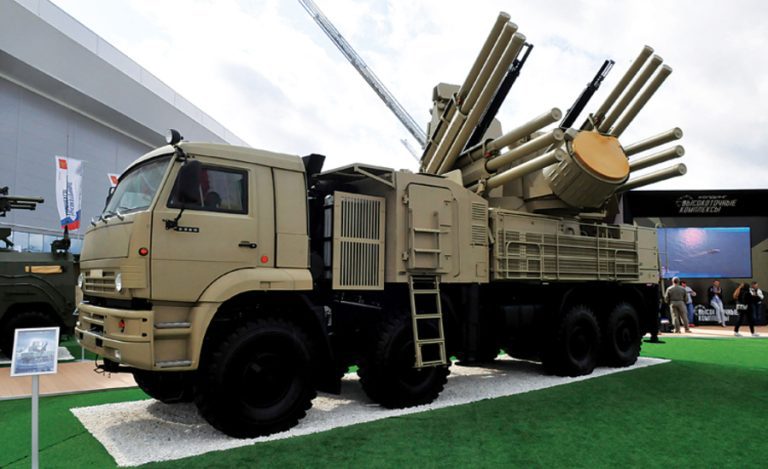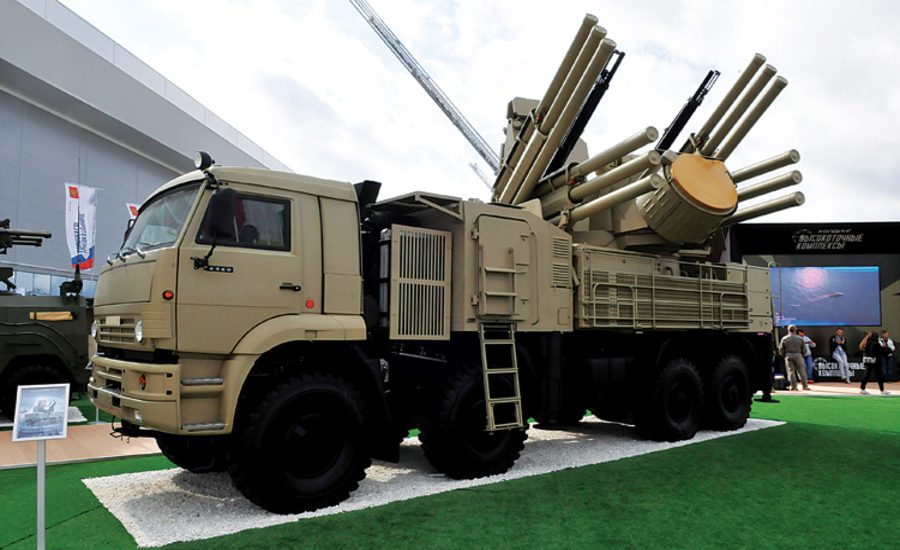
New Delhi: Pantsir-S1M air defence system is at the center of a new proposal by Russia to strengthen India’s air defence network. Russia has offered this short-range system to act as a protective shield for India’s powerful S-400 missile systems, especially against modern threats like drone swarms.
In recent conflicts, low-cost drones have emerged as a serious danger even to advanced systems. This proposal highlights how India is moving toward a layered air defence strategy, combining long-range and close-range systems for complete protection.
Details of Russia Pantsir-S1M Air Defence System Proposal
Russia has offered India the Pantsir-S1M short-range air defence system to provide close-in protection for S-400 units.
- The system is designed to act as a “bodyguard” for high-value assets
- It targets drones, cruise missiles, and low-flying threats
- It complements long-range systems like S-400
Reports suggest India may consider around 13 units, with most deployed to protect Air Force S-400 regiments.
Why S-400 Needs Pantsir-S1M Air Defence System
The S-400 is one of the world’s most advanced long-range air defence systems, capable of intercepting targets up to 400 km away.
However, it has one key limitation:
- It is vulnerable to cheap drone swarms and saturation attacks
- Using expensive long-range missiles against small drones is not cost-effective
Modern warfare has shown that even advanced systems can be overwhelmed by multiple low-cost drones. That’s why short-range protection is essential.
What Makes Pantsir-S1M Special
Hybrid Weapon System
The Pantsir-S1M combines:
- 12 surface-to-air missiles
- Twin 30mm automatic guns
This allows it to destroy threats at both medium and very close range.
Strong Anti-Drone Capability
- Can track and engage multiple targets at once
- Upgraded radars can detect small drones and UAVs
- Effective against swarm attacks
Cost-Effective Defence
- Missiles are used for high-value threats
- Guns are used for cheap drones
This reduces the cost per interception, saving expensive S-400 missiles for bigger threats.
India’s Layered Air Defence Strategy
India is building a multi-layered air defence shield, where each system plays a specific role:
1. Long Range Layer
- S-400 system
- Targets: aircraft, ballistic missiles
2. Medium / Short Range Layer
- Systems like Akash and future projects
3. Close-In Defence Layer
- Pantsir-S1M (proposed)
- Targets: drones, cruise missiles, helicopters
This layered approach ensures no single point of failure.
Pantsir-S1M Air Defence System Deployment Timeline (Expected)
- 10 systems for Indian Air Force (to protect S-400 units)
- 3 systems for Indian Army (border deployment)
This distribution reflects the need to protect both:
- Strategic air defence assets
- Forward military positions
What is the Importance of Pantsir-S1M Air Defence System
1. Countering Drone Warfare
Drone swarms are now widely used in conflicts like Ukraine. Pantsir helps India counter this threat effectively.
2. Protecting High-Value Assets
S-400 systems are expensive and critical. Losing one could be a major setback.
3. Strengthening India-Russia Defence Ties
The deal continues long-standing defence cooperation between India and Russia.
4. Boosting Layered Defence Doctrine
India is shifting towards a modern, integrated air defence system, similar to global standards.
Read also: What Is Krasukha-2 EW System? and How It Can Protect S-400 Air Defence Without Firing a Shot