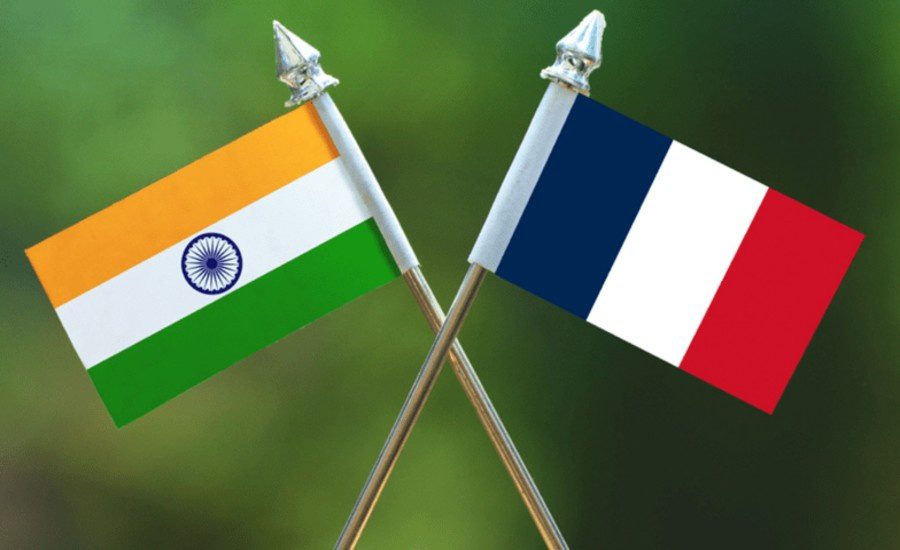
Mumbai: Prime Minister Narendra Modi and French President Emmanuel Macron virtually inaugurated the H125 helicopter final assembly line at Vemagal in Karnataka on February 17, 2026, marking a significant milestone in India’s aerospace and defence manufacturing ecosystem.
This strategic event highlights deepening defence cooperation and underscores India’s focus on “Make in India”, boosting domestic production and long-term economic growth in the rotorcraft sector.
Details of H125 Helicopter Final Assembly Line
The virtual inauguration was held from Mumbai as part of President Macron’s official visit to India, reinforcing the India-France “Special Global Strategic Partnership.” This collaboration reflects growing defence, aerospace, and industrial cooperation between the two nations.
Read also: What Makes INS Arnala Special? Inside India’s First Home-Built Anti-Submarine Shallow Water Craft
Senior officials present at the assembly line facility included Indian Defence Minister Rajnath Singh, French Minister of the Armed Forces Catherine Vautrin, Union Civil Aviation Minister K Rammohan Naidu, and Karnataka’s Industries Minister MB Patil.
The H125 Helicopter: A Landmark for Indian Aviation
The H125, a light utility helicopter renowned for its reliability and versatility, will be produced locally for civil, para-public, and defence applications. The helicopter has a global reputation — including being the only helicopter to have landed on Mount Everest, highlighting its high-altitude capability.
This facility is India’s first private-sector helicopter final assembly line, built by Tata Advanced Systems Limited (TASL) in partnership with Airbus Helicopters. The plant will initially cater to domestic demand and export markets in South Asia, showcasing India’s expanding presence in the global aerospace supply chain.
Importance of H125 Helicopter Final Assembly Line
Raksha Mantri Rajnath Singh called the H125 assembly line a “milestone in the strategic partnership between India and France,” stressing its role in achieving self-reliance in critical technologies and high-end manufacturing.
The project aligns with the Make in India and Aatmanirbhar Bharat policies, aimed at strengthening domestic industrial capabilities.
The investment in the H125 programme is expected to exceed ₹1,000 crore, creating significant direct and indirect employment opportunities, especially for skilled youth in the aerospace and defence sectors.
Civil and Defence Utility of the H125 Helicopters
The locally assembled H125 helicopter will support a wide range of missions:
- Civil services: emergency medical evacuation, disaster response, tourism, and law enforcement.
- Defence applications: high-altitude logistics, reconnaissance, surveillance, and rapid response operations.
Plans are also in place to manufacture the H125M military variant, which will incorporate higher levels of indigenised components and advanced avionics, enhancing operational flexibility for Indian armed forces.
Export Potential and Regional Impact
The first “Made in India” H125 helicopter is expected to roll out by early 2027, with India positioning itself as a regional hub for light helicopter production. Exports across South Asia are anticipated, strengthening India’s influence in the global helicopter market and expanding aerospace trade opportunities.
Karnataka, particularly the Vemagal Industrial Area, is set to become a strategic centre for helicopter manufacturing, with projections of producing up to 500 H125 helicopters over the next two decades.
H125 Helicopter Final Assembly Line: A Symbol of Deepening India-France Ties
During the virtual ceremony, PM Modi described the India-France partnership as one with “no boundaries,” emphasizing its potential to extend from “deep oceans to the tallest mountains.” The two leaders reaffirmed their commitment to long-term cooperation in defence technology, aerospace production, and broader bilateral relations.
The H125 assembly line inauguration coincides with broader strategic cooperation initiatives between India and France, including defence pacts, joint industrial projects, and innovation partnerships across multiple sectors.
Read also: Major Boost to Make in India: 96 Rafale Fighter Jets to Be Produced Domestically