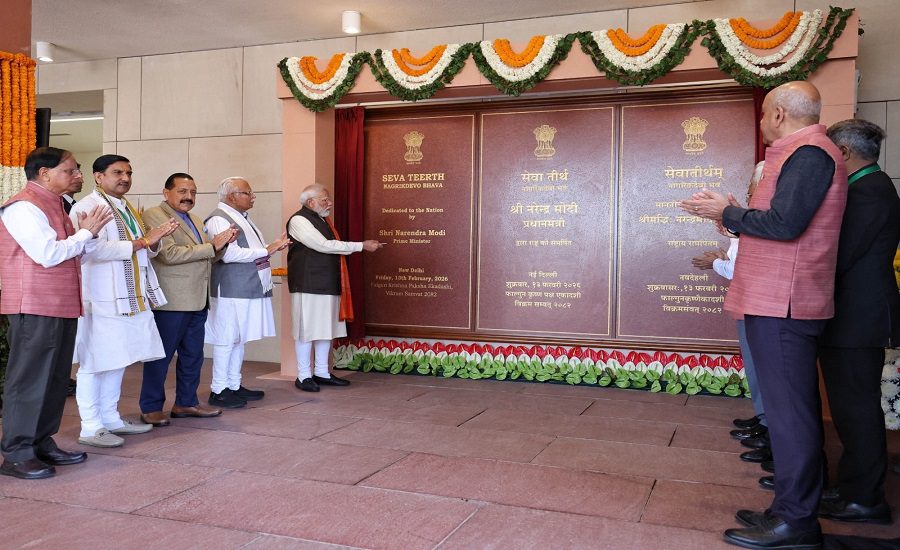
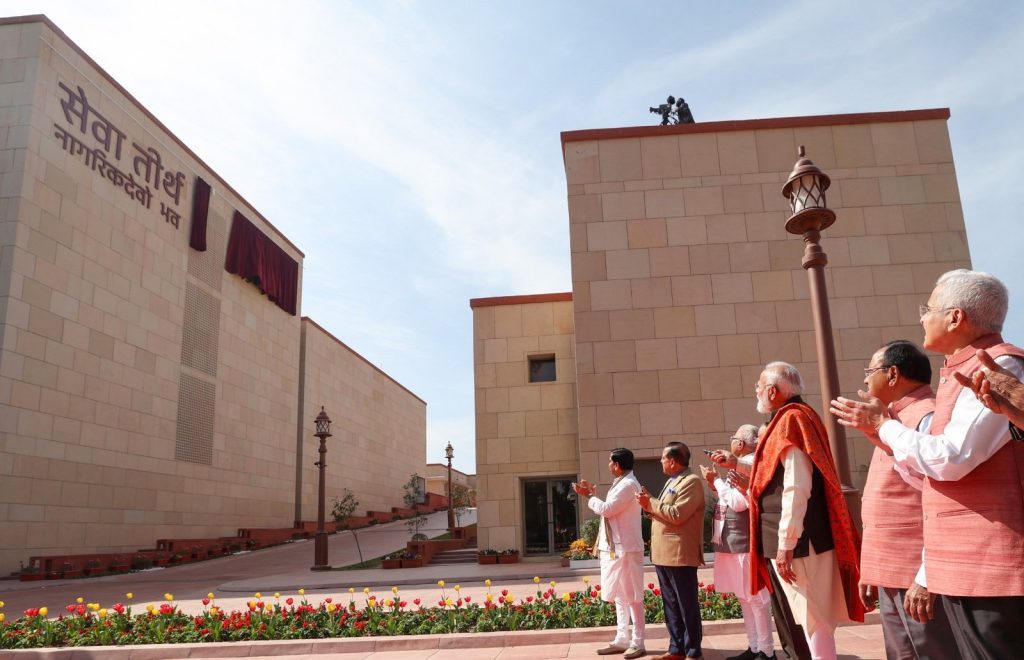
New Delhi: Prime Minister Narendra Modi on Friday inaugurated Seva Teerth, the new integrated complex that will now house the Prime Minister’s Office (PMO), the National Security Council Secretariat (NSCS), and the Cabinet Secretariat under one roof.
Earlier, these key administrative offices operated from different locations in the national capital. The new complex is aimed at strengthening coordination, improving efficiency, and reinforcing a citizen-centric governance model.
‘Seva Teerth’ Dedicated to the Nation
Dedicating Seva Teerth to the nation, the Prime Minister reaffirmed his unwavering resolve to serve the people of India. He highlighted the sacred spirit of ‘Nagrikdevo Bhava’—citizens are akin to God—as the guiding philosophy behind the new complex.
Mr. Modi stated that the dedication of Seva Teerth reflects a deep commitment toward public service and the welfare of citizens. He described the building as a radiant and powerful symbol of duty, compassion, and commitment to the principle of India First.
Expressing hope for the future, the Prime Minister said the complex would inspire generations to walk the path of selfless service and tireless dedication to the welfare of all citizens.
In a post on X, the Prime Minister wrote:
“With an unwavering resolve to serve the people of India and guided by the sacred spirit of Nagrikdevo Bhava, Seva Teerth is humbly dedicated to the nation.
May Seva Teerth always stand as a radiant symbol of duty, compassion, commitment to the principle of India First. May it inspire generations to walk the path of selfless service and tireless dedication to the welfare of all.”
The government, in an official statement, said the new buildings reflect “India’s administrative governance architecture” and the Prime Minister’s commitment to building a modern, efficient, accessible, and citizen-centric governance ecosystem.
The walls of Seva Teerth prominently display the motto ‘Nagriko Devo Bhava’ (Citizens akin to God).
Significance of February 13
The inauguration date carries historic importance. February 13 marks 95 years since New Delhi was formally inaugurated as India’s capital on February 13, 1931. By choosing this date, the government underscored the symbolic link between the capital’s administrative evolution and modern governance reforms.
Kartavya Bhavan 1 and 2 Also Inaugurated
Alongside Seva Teerth, Prime Minister Modi inaugurated Kartavya Bhavan 1 and 2, which will accommodate several key ministries.
The newly built complexes are equipped with:
- Digitally integrated office systems
- Structured public interface zones
- Centralized reception facilities
Designed in line with 4-Star GRIHA standards, the buildings incorporate:
- Renewable energy systems
- Water conservation measures
- Waste management solutions
- High-performance building envelopes
According to the Prime Minister’s Office, these features significantly reduce environmental impact while enhancing operational efficiency.
The complexes also include comprehensive safety and security frameworks such as:
- Smart access control systems
- Advanced surveillance networks
- Modern emergency response infrastructure
These measures ensure a secure and accessible environment for both officials and visitors.
Major Decisions on Day 1 from Seva Teerth
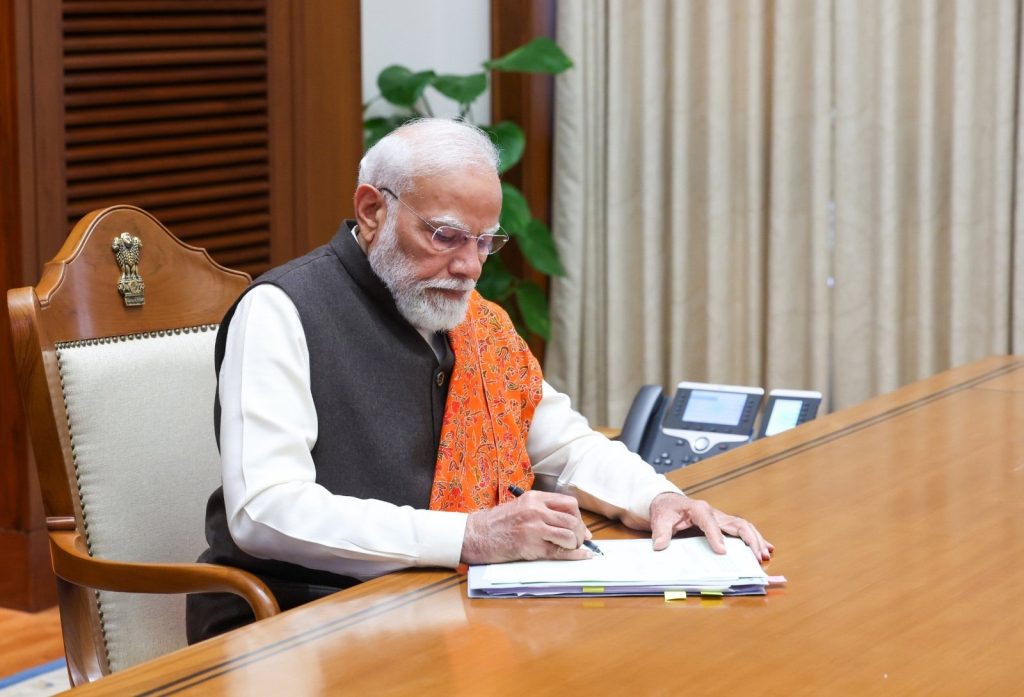
Prime Minister Modi began work immediately from his new office, taking several significant decisions focused on women, youth, farmers, innovation, and vulnerable citizens.
- PM RAHAT Scheme Approved
One of the first approvals was for the launch of the PM RAHAT Scheme.
Under this initiative:
- Accident victims will receive cashless treatment of up to ₹1.5 lakh.
- The objective is to ensure that no life is lost due to lack of immediate medical assistance.
Officials said the scheme aims to provide timely financial support during medical emergencies.
New Target for Lakhpati Didis
In a major announcement for women’s empowerment, the government revealed that it has crossed the landmark of 3 crore Lakhpati Didis more than a year ahead of the original March 2027 timeline.
Taking the initiative further, the Prime Minister has now set a new ambitious target:
- 6 crore Lakhpati Didis by March 2029
This move effectively doubles both the scale and aspiration of the women’s self-help booster programme, reinforcing the government’s focus on financial empowerment and entrepreneurship among women.
Agriculture Infrastructure Fund Outlay Doubled
In a significant boost to the agriculture value chain, the Prime Minister approved doubling the outlay of the Agriculture Infrastructure Fund:
- From ₹1 lakh crore
- To ₹2 lakh crore
The enhanced fund is expected to strengthen post-harvest management, rural infrastructure, and agricultural supply chains, benefiting farmers and agri-entrepreneurs.
Startup India FoF 2.0 Gets ₹10,000 Crore Corpus
To further strengthen India’s innovation ecosystem, especially in deep tech, early-stage ideas, advanced manufacturing, and breakthrough technologies, the Prime Minister approved Startup India Fund of Funds (FoF) 2.0.
Total corpus: ₹10,000 crore
The initiative is expected to accelerate innovation, support emerging startups, and enhance India’s global competitiveness in next-generation technologies.
A New Chapter in Governance
With Seva Teerth bringing together the PMO, the National Security Council Secretariat, and the Cabinet Secretariat under one integrated complex, the move marks a structural shift in administrative functioning.
By combining symbolism with structural reform and policy announcements on the very first day, the inauguration reflects a blend of governance modernization and immediate welfare-focused action.