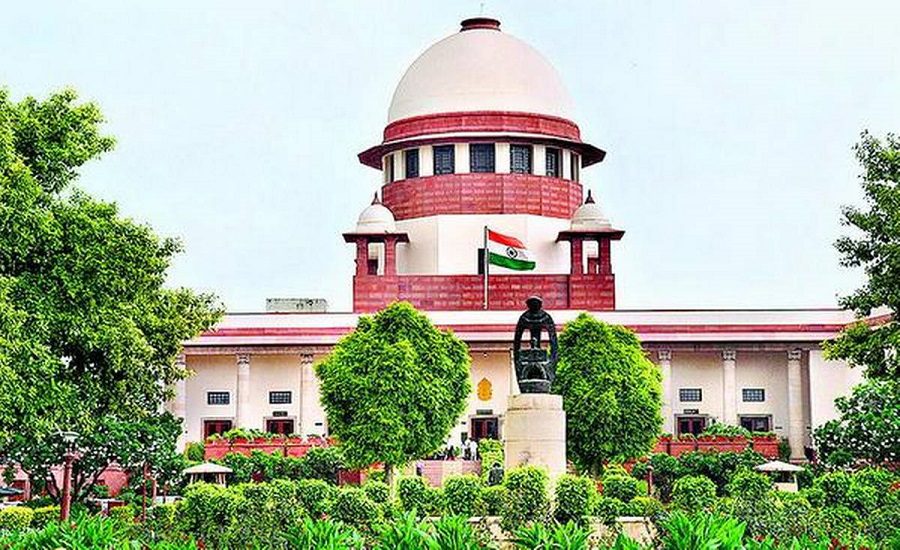
New Delhi / Hyderabad — The Supreme Court of India is set to hear a high-stakes petition from the Telangana government on January 5, 2026, challenging the Andhra Pradesh government’s controversial Polavaram–Banakacharla Link Project (PBLP), a proposed water-diversion scheme that has reignited interstate water disputes.
The dispute centers on the planned diversion of Godavari River water into the Krishna basin, a move Telangana says threatens its lawful water share and violates established inter-state water sharing norms.
What Is the Polavaram–Banakacharla Link Project?
The Polavaram–Banakacharla Link Project aims to transfer surplus water from the Godavari River at the Polavaram Reservoir in Andhra Pradesh to the Krishna River basin, particularly to the drought-prone Banakacharla region in the Rayalaseema area.
Read also: Telangana Government Forms 9-Member SIT for Phone-Tapping Case, Prabhakar Rao Custody Extended
The policy objective is to enhance irrigation, drinking water supply, and groundwater recharge in water-scarce regions of Andhra Pradesh.
The proposal envisions diverting up to 200 thousand million cubic feet (tmc) of water — significantly beyond the originally sanctioned 80 tmc for Krishna basin transfers.
This expansion has triggered major objections from neighbouring Telangana, which argues that such diversion is unilateral, legally questionable, and detrimental to its own water needs.
Telangana’s Legal Challenge on Polavaram–Banakacharla Link Project
Telangana’s government, led by Chief Minister A. Revanth Reddy and Irrigation Minister N. Uttam Kumar Reddy, has filed a writ petition in the Supreme Court alleging the Polavaram–Banakacharla Project:
1. Violates Water Sharing Norms
Telangana asserts that the diversion of Godavari water into the Krishna basin without mutual consent breaches the Inter-State Water Disputes Act and established tribunal awards governing water distribution.
2. Bypasses Regulatory Protocols
According to the state, Andhra Pradesh’s actions contravene statutory requirements by advancing project planning and issuance of tenders before securing in-principle approval from the Central Water Commission (CWC) and clearances from the Union Ministry of Jal Shakti.
3. Potential Violation of Reorganisation Act
Telangana claims the project also runs against provisions of the Andhra Pradesh State Re-organisation Act (2014), which governs cooperative federalism and equitable use of shared water resources.
Political Dimensions and Contentions
While Telangana’s political leadership has taken a legal route, the issue has also spilled into political exchanges:
BRS leader T. Harish Rao has accused Andhra Pradesh of securing approval from the CWC and alleged political compromises — claims rejected by Telangana’s irrigation minister as “misinformation.”
Andhra Pradesh has defended the project as vital for regional development and water security, pushing back against charges of lawlessness or disregard for norms.
This political backdrop adds complexity to an already deep legal and technical dispute over river water rights.
Importance of January 5 Hearing
The Supreme Court hearing on January 5, 2026 is expected to:
- Clarify jurisdictional questions on interstate water disputes.
- Examine whether Andhra Pradesh can proceed with project approvals and Detailed Project Report (DPR) preparation.
- Set precedents on how surplus river water (including floodwater) rights are adjudicated among states.
Broader Context of Interstate Water Conflicts
India has witnessed a series of interstate river water disputes — from Krishna to Cauvery — that strain federal ties and test cooperative resource sharing frameworks.
The Polavaram–Banakacharla dispute now raises larger questions:
- Who has rights over surplus or flood water in a shared river?
- How should central regulatory agencies balance development with equity?
- Can unilateral actions by one state be checked by the judiciary?
Answers from the Supreme Court in the upcoming hearing may shape policy approaches to river basins for decades.