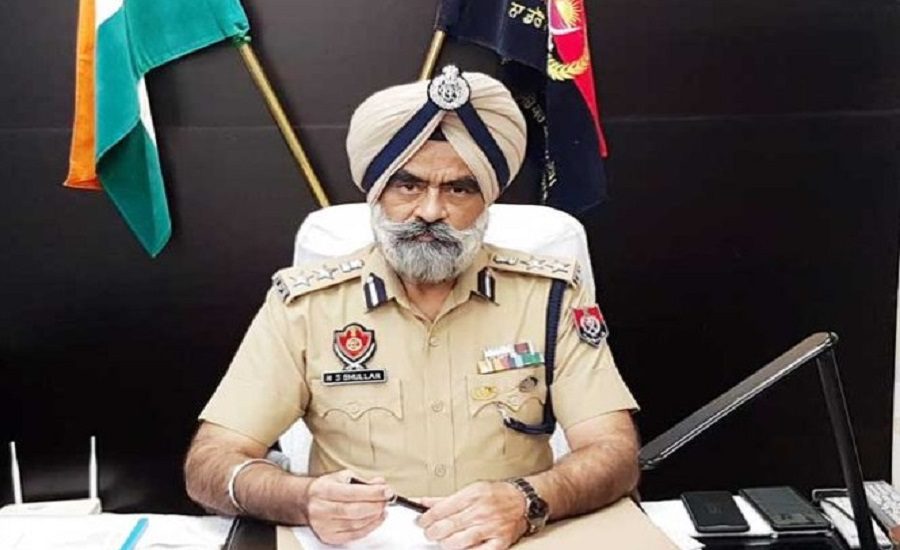
New Delhi: In a firm reiteration of judicial restraint in matters involving high-level corruption probes, the Supreme Court of India on Friday declined to grant interim bail or stay the Central Bureau of Investigation (CBI) proceedings against jailed Punjab Deputy Inspector General of Police (DIG) Harcharan Singh Bhullar.
The apex court’s stern remarks underlined its unwillingness to interfere at this stage in a case that has seen repeated judicial setbacks for the suspended police officer.
Legal Background of Harcharan Singh Bhullar Bribery Case
This was not Bhullar’s first attempt to block the investigation. Prior to approaching the Supreme Court, he had moved the Punjab and Haryana High Court seeking an interim stay on CBI proceedings and an interim release from jail.
That plea was also refused, with the High Court adjourning the matter for a January hearing without deciding on the interim aspects.
Read also: Supreme Court Clarification on RTI Act Limitation: Act Cannot Be Used to Probe Suspension Orders
Senior Advocate Vikram Chaudhary, representing Bhullar, argued that the High Court’s adjournment — rather than a substantive order on interim relief — compounded the need for top-court intervention.
He told the Supreme Court that the High Court ought to have at least considered Bhullar’s interim bail and stay requests before deferring.
Responding to the plea, the apex court made clear that the High Court remains seized of the matter and that extraordinary relief cannot be granted without compelling legal grounds.
Harcharan Singh Bhullar Bribery Case: Top Court Denies Relief, Issues Sharp Warning to Counsel
A bench led by Chief Justice of India Surya Kant heard Bhullar’s plea seeking temporary relief from custodial prosecution and a halt to the ongoing CBI probe. Instead of entertaining the petition, the bench was unambiguous in its response. CJI Kant admonished senior counsel for pressing the matter, warning:
> “Mr Chaudhary, better don’t make us open our mouth, and invite observations from us.”
The comment was widely interpreted by legal observers as a judicial signal to avoid escalation, suggesting that pressing for interim relief before constitutional courts without strong legal grounds could invite adverse commentary.
Ultimately, the Supreme Court allowed Bhullar’s counsel to withdraw the petition with liberty to pursue remedies before the Punjab and Haryana High Court — effectively ending the apex court hearing without granting the requested relief.
What is Harcharan Singh Bhullar Bribery Case
Bhullar, a 2009-batch senior Indian Police Service (IPS) officer and then Deputy Inspector General (Ropar Range), was arrested by the CBI in mid-October 2025 during a bribery sting operation.
According to the investigative agency’s FIRs, he was allegedly caught demanding and receiving ₹8 lakh to quash a criminal case against a local businessman — an act that contravenes the core tenets of law enforcement integrity.
Further complicating Bhullar’s legal standing were claims by the CBI that its investigation uncovered large quantities of unexplained wealth, purportedly disproportionate to his lawful income.
These included:
- Approximately ₹5 crore in cash
- Luxury vehicles and high-end watches
- Jewellery worth significant amounts
- Other items suggestive of assets beyond known sources of income
The case has also seen a default bail application dismissed by a special CBI court, leaving Bhullar in continued judicial custody as his legal challenges proceed.
Jurisdictional Clash: CBI Authority in Punjab
One of Bhullar’s central legal arguments has been that the CBI lacks jurisdiction to probe offences in Punjab given that the state supposedly withdrew its general consent under the Delhi Special Police Establishment (DSPE) Act — a law that governs CBI powers.
Senior counsel argued that the agency surreptitiously entered Punjab and circumvented Section 6 of the DSPE Act — a contention the Supreme Court seemed reluctant to examine at the interim relief stage.
The CBI, for its part, has maintained that the FIRs were lawfully registered in Chandigarh, a Union Territory where the agency’s jurisdiction is clear, and that it is fully empowered to pursue the investigation.
What’s Next: January High Court Hearing
With both the Supreme Court and the High Court refusing interim relief, Bhullar’s primary legal battle will now continue before the Punjab and Haryana High Court when the matter resumes in January.
Legal experts note that the decisions by both courts underscore the judiciary’s methodical approach to corruption and disproportionate assets cases, especially where jurisdictional challenges intersect with questions of executive authority.
Read also: Supreme Court Time Bound Investigation Ruling Explained: When Courts Can and Cannot Fix Timelines