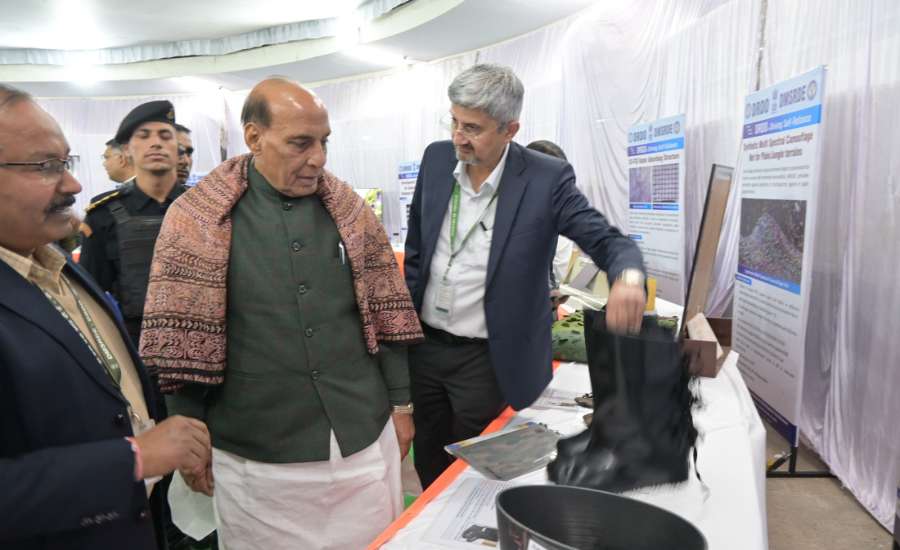
Kanpur: In a significant boost to India’s push for indigenous defence capabilities, Defence Minister Rajnath Singh on Sunday reviewed a suite of newly developed military products at the Defence Materials and Stores Research & Development Establishment (DMSRDE) located in Kanpur.
The visit underscores the growing importance of Kanpur in the national defence manufacturing and R&D ecosystem. During the visit, the Minister witnessed live demonstrations of advanced defence materials and equipment — a tangible sign of the country’s drive toward self-reliance in defence technology.
What is DMSRDE
The DMSRDE, a laboratory under the umbrella of Defence Research and Development Organisation (DRDO), has its roots dating back to 1929. Originally established as the Inspectorate of General Stores in the Ordnance Factory Board, the lab was reconstituted as DMSRDE to focus on high-tech non-metallic materials and protective equipment for Indian armed forces.
Over the decades, DMSRDE has designed and developed a range of protective and material solutions — from bulletproof jackets to blast-protection suits, NBC/CBRN gear, anti-mine boots and more. These contributions have been pivotal in enhancing the survivability and operational readiness of India’s defence personnel.
A Push for “Aatmanirbhar Bharat” in Defence in DMSRDE Kanpur
The visit by Rajnath Singh comes at a time when India is intensifying efforts to reduce dependence on foreign defence imports and build a robust indigenous manufacturing and R&D ecosystem. By personally reviewing innovations at DMSRDE, the Defence Minister sends a clear signal that the government is serious about empowering DRDO labs, encouraging homegrown solutions, and supporting regional defence-industry hubs beyond the traditional strongholds.
Further, the engagement is not merely ceremonial. Officials noted that over the past two years, DMSRDE has successfully transferred multiple technologies — aligning with the vision of a self-reliant defence industry. Singh’s visit — including his interaction with scientists and researchers — reflects an effort to closely link R&D output with user-requirements of the armed forces, ensuring that new products are relevant, field-ready, and designed with real operational needs in mind.
Major Innovations and Demonstrations in DMSRDE Kanpur
During the visit, DMSRDE Kanpur scientists showcased several next-generation defence materials and equipment via live demonstrations and detailed briefings. The objective was to highlight how these technologies could enhance the operational capabilities of Indian forces and improve battlefield protection.
Some of the key innovations reportedly include:
- Advanced bullet-proof jackets and protective gear — part of DMSRDE’s long tradition of producing non-metallic protective materials and clothing.
- Next-gen materials and defensive solutions designed for army operational needs, potentially including CBRN (chemical, biological, radiological, nuclear) protective suits, blast-resistant gear, and other protective wear.
- Materials and equipment developed to align with the future requirements of Indian armed forces, indicating a shift toward modern, end-user-driven research.
Minister Singh reportedly spent nearly an hour interacting with the research teams, probing technological details and urging scientists to continue advancing with user-driven innovation and collaboration with industry.
Strategic Implications of DMSRDE Kanpur
The visit also underscores a broader strategic shift: decentralizing defence R&D and manufacturing beyond traditional centres, and leveraging regional labs and talent pools. By focusing on DMSRDE in Kanpur, the government appears keen on promoting new defence hubs in Uttar Pradesh — enhancing local manufacturing capacity, encouraging industry-lab collaborations, and bringing employment and strategic development to non-metropolitan regions.
Moreover, the emphasis on transferring technologies to industry — notably MSMEs — through centres like the Defence Technology and Test Centre (DTTC) in Lucknow suggests a twin-track approach: R&D within DRDO labs and mass-scale manufacturing through private industry. This may help scale up production, reduce dependency on imports, and provide cost-effective solutions for the Armed Forces.
Rajnath Singh Message: Export Potential, Industry–Academia Collaboration & Future Vision
During the visit, Rajnath Singh did more than commend existing efforts — he called for exploring export potential for these indigenous defence products. This reflects a forward-looking ambition: transforming R&D output into defence exports, not just domestic supply.
He also stressed the importance of stronger collaboration between research institutions, industry players, and academic institutions — a synergy he believes is essential to realise the government’s long-term vision of a technologically advanced, self-reliant India by 2047.