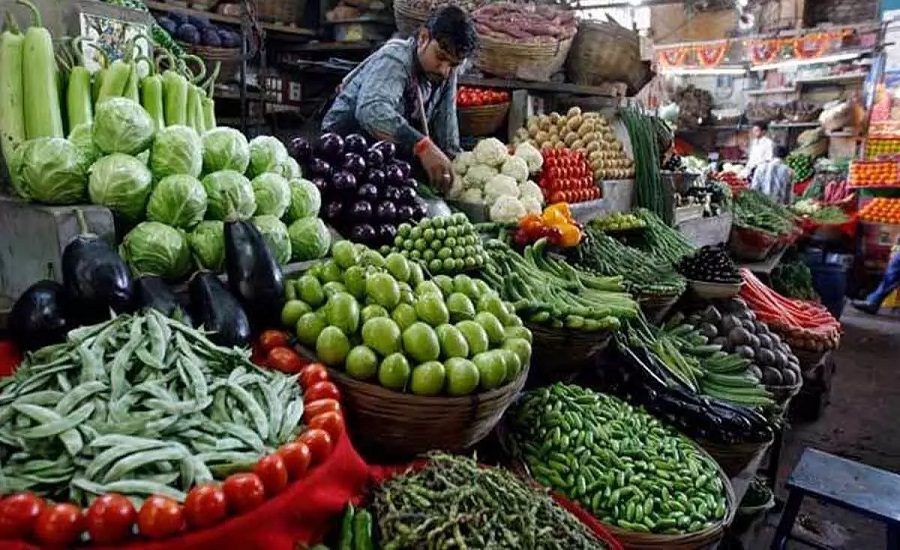
NEW DELHI: India’s retail inflation, measured by the Consumer Price Index (CPI), inched up to 3.4 per cent in March 2026 from 3.21 per cent in February, driven largely by a rise in select food items amid global uncertainties, including the ongoing West Asia crisis, according to data released by the National Statistics Office (NSO) on Monday.
Despite the marginal increase, inflation remains comfortably below the Reserve Bank of India’s (RBI) medium-term target of 4 per cent, reflecting continued price stability in the economy.
Food Inflation Drives the Uptick
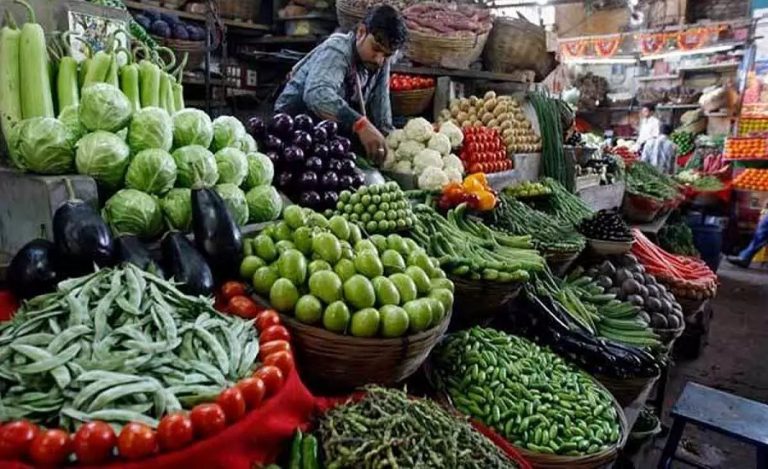
Food inflation rose to 3.87 per cent in March, up from 3.47 per cent in February, contributing significantly to the overall rise in CPI.
Prices of items such as gold and silver jewellery, coconut (copra), tomato, and cauliflower witnessed an increase during the month. However, the overall inflationary pressure was moderated by a decline in prices of key staples including onion, potato, garlic, arhar dal, and chickpeas, which recorded deflation.
Read Also: RBI Governor IAS Sanjay Malhotra Confirms New GDP and Inflation Series to Be Released Soon
New CPI Series with Base Year 2024
The latest inflation data is based on a revised CPI series with 2024 as the base year, marking a shift in statistical methodology aimed at better capturing current consumption patterns.
Sector-Wise Inflation Trends
Inflation trends across key sectors showed moderate changes:
- Electricity, gas and other fuels: Rose slightly to 1.65% (from 1.52%)
- Housing: Stood at 2.11% in March
A notable divergence was seen between rural and urban inflation:
- Rural inflation: 3.63%
- Urban inflation: 3.11%
This indicates relatively higher price pressures in rural areas compared to urban centres.
Sharp Variation Across States
State-wise data revealed significant differences in inflation levels:
- Telangana recorded the highest inflation at 5.83%, driven by elevated price levels in both rural and urban regions.
- Mizoram reported the lowest inflation at 0.66%, reflecting minimal price pressures.
Among other major states:
- Kerala: 3.62%
- Karnataka: 3.96%
- Rajasthan: 3.64%
Meanwhile:
- Delhi: 1.86%
- West Bengal: 2.84%
Large states remained close to the national average:
- Maharashtra: 3.44%
- Uttar Pradesh: 3.43%
- Gujarat: 3.07%
Industry Reaction: Inflation Under Control
Industry body ASSOCHAM stated that the inflation figure was largely in line with expectations and credited both the government and the RBI for effectively managing price pressures despite global challenges.
ASSOCHAM President Nirmal K. Minda highlighted that stable domestic fuel prices, even amid rising global crude oil rates, have played a crucial role in containing inflation. He also pointed to the RBI’s supportive monetary stance, including a stable repo rate, as a key factor.
Global Comparison
In contrast to India’s relatively stable inflation environment, the United States witnessed a sharp spike in energy inflation to 12.5 per cent in March, underlining the effectiveness of India’s inflation management.
Outlook: Stable Inflation Ahead
Looking ahead, ASSOCHAM expects inflation to remain benign and supportive of economic growth, aided by stable policy measures and easing supply-side pressures.
The current trajectory suggests that inflation is likely to remain within the RBI’s comfort zone in the coming months, barring any major global disruptions.
Read Also: India’s GDP Growth to Moderate in FY26 but Remain Among Fastest Globally: ADB, World Bank