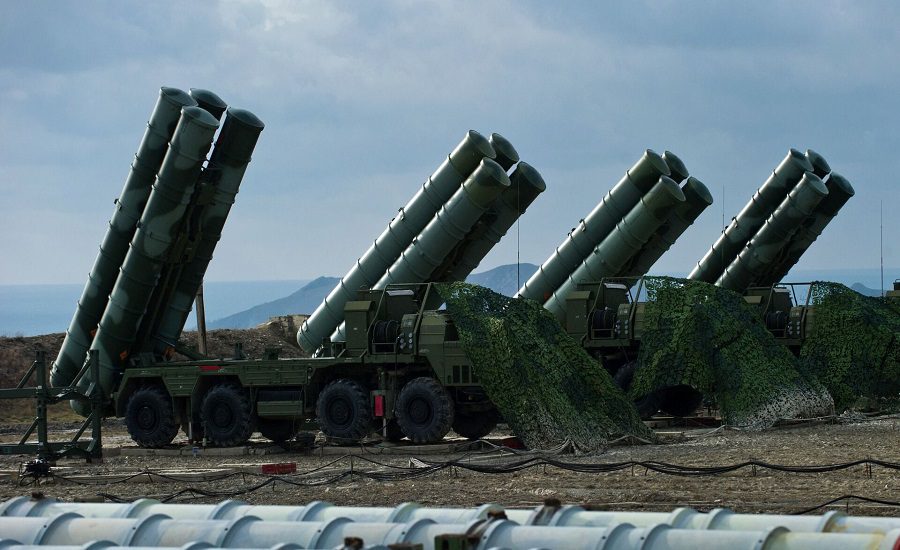
New Delhi, India: In a major advancement in defence cooperation between India and Russia, Moscow’s state-owned defence major Almaz-Antey has agreed to partner with an Indian firm to establish a Maintenance, Repair and Overhaul (MRO) facility for the Russian-origin S-400 Triumf surface-to-air missile system on Indian soil.
The facility — slated to be operational by 2028 — is expected to significantly strengthen the Indian Air Force’s (IAF) operational readiness and strategically insulate India from global supply chain vulnerabilities.
Background of S-400 Repair Hub in India
The decision to build an indigenous repair and support hub for the S-400 reflects a major shift in New Delhi’s defence posture — moving from dependency on foreign servicing to domestic lifecycle support.
Once completed, the MRO centre will handle routine inspection, complex repairs, diagnostics and technical overhauls of S-400 systems deployed across India’s critical defence sectors.
Previously, India had to send key components and subsystems back to Russia for servicing, resulting in long downtimes and constrained operational availability.
The new facility promises to drastically reduce turnaround time for maintenance, elevating the continuous readiness of the IAF’s air defence network.
S-400 Repair Hub in India and Modernization Imperatives
Under the $5.43 billion contract inked in 2018, Russia agreed to supply India with five S-400 Triumf squadrons. The system — locally designated as “Sudarshan Chakra” — fortifies India’s airspace defence with capabilities to detect and engage hostile aircraft, drones and ballistic targets up to 400 km away.
As of late 2025, three out of five contracted S-400 squadrons have already been delivered and deployed across sensitive frontier regions.
The remaining two squadrons are projected to arrive between 2026 and 2027 following delays caused by shifting production priorities in Russia due to the Ukraine conflict and Russian military commitments.
Operating independently from foreign maintenance cycles will also enable India to better integrate the S-400 with emerging Indian defence systems and doctrines — including future indigenous air defence layers under programs like Project Kusha.
Importance of S-400 Repair Hub in India
Operational Readiness and Reduced Downtime: The MRO hub’s primary advantage will be rapid maintenance turnaround, eliminating delays associated with transporting critical parts overseas. This is especially crucial in periods of heightened tension when defence equipment must remain fully mission ready.
Strategic Autonomy and Security of Supply: Global tensions, especially the ongoing Ukraine confrontation, have affected Russia’s defence production and international supply flows. Establishing a domestic servicing centre will insulate India’s S-400 capability from such disruptions and bolster long-term defence autonomy.
Skill Development and Technology Transfer: In line with “Make in India” and indigenisation mandates, the partnership will involve training Indian engineers and technicians on advanced radar, electronics and system-level diagnostics. This knowledge transfer will develop a skilled defence workforce and support future upgrades.
Deepening Indo-Russian Defence Ties: The agreement underscores enduring defence cooperation between the two countries, even as New Delhi diversifies its procurement portfolio with Western-origin platforms. India and Russia continue to engage in joint exercises (e.g., AviaIndra-2025) and high-level defence dialogue, reinforcing military diplomacy.
India’s Broader Air Defence Landscape
While the S-400 remains one of the most potent systems in India’s inventory, New Delhi is concurrently advancing indigenous multi-layer air defence systems and exploring further acquisition options.
Discussions have also been reported between India and Russia about procuring additional S-400 units and transferring critical technology to India’s private sector for broader production roles.
Geopolitical and Regional Security Implications of S-400 Repair Hub in India
India’s strategic geography — bordered by two nuclear-armed adversaries — emphasizes the imperative of credible and resilient air defence. The S-400’s integration, now backed by a domestic servicing hub, enhances deterrence capabilities along both Western and Eastern fronts.
Combined with indigenous aerospace advancement and diversified defence partnerships, this development contributes to India’s evolving security strategy in the Indo-Pacific.