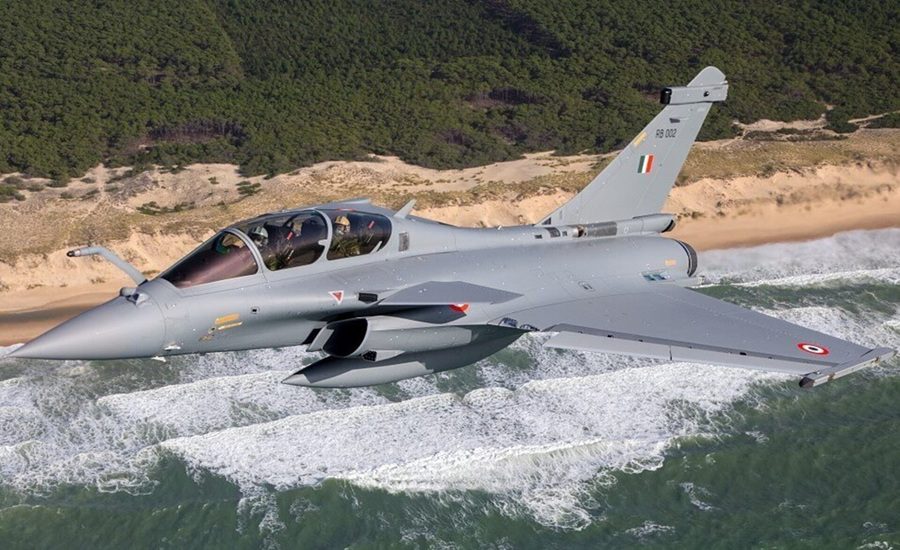
India: French aerospace major Safran has pledged to establish an Indian engine line for Rafale fighter jets as defence talks between India and France intensify.
The announcement comes amid discussions for India’s potential procurement of 114 additional Rafale aircraft, aligning with New Delhi’s goal of strengthening its domestic defence industry under the “Make in India” initiative.
The commitment includes not just assembling engines in India but sourcing parts locally — a significant step toward boosting India’s aviation manufacturing and technology ecosystem.
Details of Safran India Engine Production
Safran is the French aerospace and defence company that manufactures the M88 engines used in Dassault Aviation’s Rafale fighter jets.
The company’s offer to set up an engine assembly line in India is a major development for several reasons:
- It supports India’s push for local production and technology transfer.
- It can generate skilled jobs and benefit local suppliers.
- It could lay the groundwork for future aerospace collaborations.
This development ties in with India granting initial clearances for major defence purchases — including more Rafales and Boeing P-8I maritime patrol aircraft — as part of strengthening its air power capabilities.
Safran’s Strategic Role in India
Safran has a long history in India’s aviation and defence sector:
- It has supplied helicopter engines and other critical aerospace components for decades.
- It has agreements with Indian companies for manufacturing engine parts and collaborating on advanced aerospace solutions.
- Safran has also committed to full technology transfer for next-generation fighter jet engines in collaboration with DRDO if certain conditions are met.
Its expanded footprint aligns with its plan to triple revenue in India by 2030, increasing sourcing and production here.
Safran India Engine Production: Aligning with India’s “Make in India” Vision
India’s defence goals have been reshaped in recent years with a stronger emphasis on self-reliance:
- The government has prioritized indigenous defence manufacturing.
- Initiatives like the Strategic Partnership Model and policies for technology transfer encourage foreign OEMs to localize production.
- Establishing an engine assembly line in India could enhance supply chains for various aerospace programmes.
This approach also dovetails with India’s broader aerospace sector ambitions, including MRO facilities and new engine development projects.
Impact on Safran India Engine Production
If Safran proceeds with the Indian engine line:
- Job creation could surge across high-skill manufacturing, engineering, and testing roles.
- Local suppliers could join global aerospace value chains.
- Exports of aerospace components and services could grow.
- Companies like Tata Advanced Systems and Bharat Electronics Limited may benefit from extended industrial cooperation.
Overall, this could position India as an important aerospace manufacturing hub in the Asia-Pacific region.
Geopolitical Context
The engine line proposal comes at a time when India–France relations are strategically important:
- Both nations have deepened cooperation across defence and technology sectors.
- Talks on defence purchases often coincide with diplomatic visits and broader bilateral agreements.
Expanding Rafale fleet capabilities with localized engine production strengthens India’s deterrence against regional threats and enhances defence readiness.