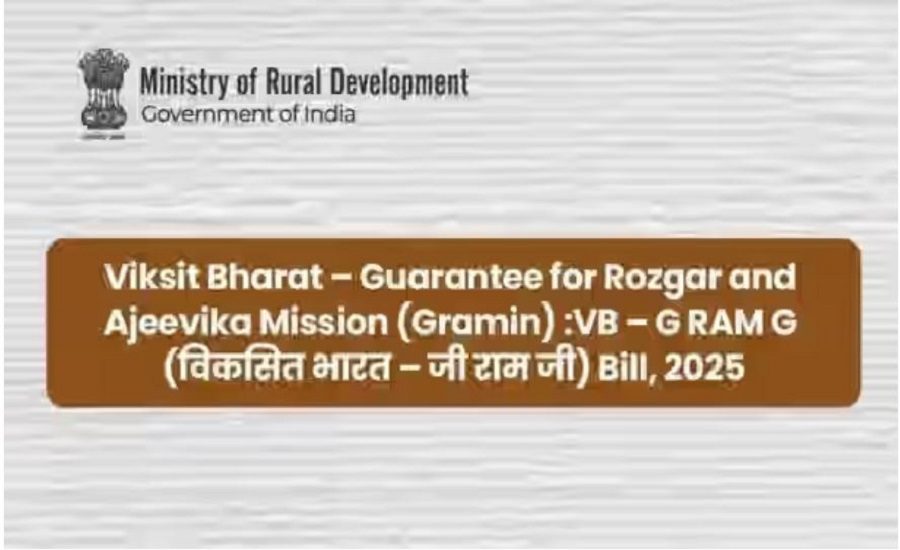
New Delhi: The Parliament of India has passed the Viksit Bharat – Guarantee for Rozgar and Ajeevika Mission (Gramin) – Viksit Bharat G-RAM G Act, 2025, which replaces the 20-year-old Mahatma Gandhi National Rural Employment Guarantee Act (MGNREGA), 2005. The bill, which has received the assent of President Droupadi Murmu, aims to enhance rural employment, improve fund allocation efficiency, and introduce transformative measures for sustainable income generation in villages across India.
Significant Gains for States
According to a research report by the State Bank of India (SBI), most states are expected to become net gainers of around ₹17,000 crore under the new Act, compared to the average allocations of the past seven years under MGNREGA. The report highlights that the restructuring of the earlier MGNREGA framework through the Viksit Bharat G-RAM G Act will improve overall fund distribution, transparency, and accountability in rural development programs.
Read also: DRDO’s DMSRDE and National Test House Sign MoU to Boost Research, Testing and Training Collaboration
Focus on Employment, Productivity, and Income Generation
The new legislation increases the guarantee of wage employment for rural households from 100 days to 125 days, reflecting a stronger commitment to livelihoods and social security. The Act emphasizes:
- Competitive project identification to ensure effective allocation of resources.
- Creation of productive assets that enhance long-term income generation and rural infrastructure.
- Enhanced income generation opportunities for rural households.
- Efficient monitoring mechanisms to improve transparency and reduce implementation bottlenecks.
SBI Chief Economic Advisor Dr. Soumya Kanti Ghosh, who authored the report, noted that the Viksit Bharat – G RAM G Act addresses structural weaknesses in the previous framework, while strengthening employment generation, planning, and accountability at all administrative levels.
Transformative Measures Under the Act
The Act is designed to integrate innovative practices and strategic interventions to uplift rural livelihoods. With the focus on both short-term employment and long-term asset creation, the legislation seeks to ensure that rural households not only receive wage security but also benefit from sustainable development initiatives. By promoting productive work, improving monitoring, and enhancing fund flow efficiency, the Act is expected to transform the rural economy and provide a boost to income generation in villages nationwide.
Parliamentary Approval and Presidential Assent
The Viksit Bharat – G RAM G Bill, 2025 was passed during the recently concluded winter session of Parliament and received the President’s approval, making it a key milestone in India’s rural development policy. The Act strengthens the government’s commitment to rural employment, financial inclusion, and equitable development, and ensures that most states benefit from increased allocations and efficient fund usage.
Impact on Rural Livelihoods
With an expanded wage guarantee, improved monitoring, and a stronger focus on income-generating projects, the Viksit Bharat – G RAM G Act is expected to empower millions of rural households, strengthen rural infrastructure, and provide a more equitable distribution of resources. By combining employment assurance with productive asset creation, the Act marks a new era in India’s rural employment and development strategy.