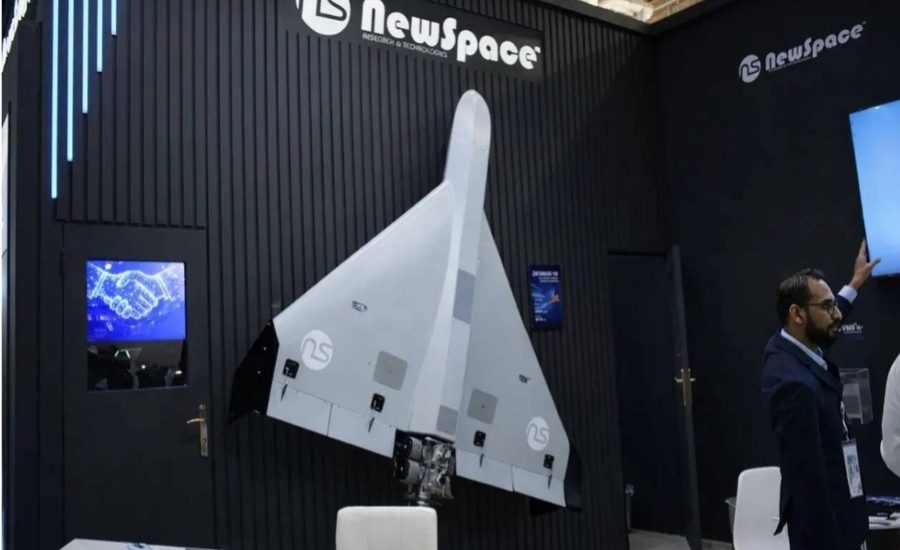
New Delhi: Sheshnaag-150 drone is emerging as one of the most advanced indigenous unmanned strike platforms designed for modern warfare. Developed by Bengaluru-based defence startup NewSpace Research & Technologies (NRT), the Sheshnaag-150 drone is designed for long-range swarm attacks capable of overwhelming enemy air-defence systems.
With a range of over 1,000 km, an endurance of more than five hours, and the ability to carry a 25–40 kg warhead, the drone represents a major step in India’s push for self-reliant defence technology. The system uses artificial intelligence and autonomous coordination to conduct precision strikes with minimal human control.
What Is the Sheshnaag-150 Drone?
The Sheshnaag-150 is a long-range autonomous strike drone designed for swarm warfare, a tactic where multiple drones work together to attack targets simultaneously.
It has been built from the ground up by NewSpace Research & Technologies, a Bengaluru-based aerospace startup focusing on AI-driven unmanned systems and swarm robotics.
Unlike traditional drones that operate individually, swarm drones communicate with each other and coordinate attacks. This allows them to overwhelm enemy air defence systems and strike high-value targets with precision.
The drone reportedly completed its maiden flight about a year ago and is currently progressing through development and testing phases for operational use.
Key Features of the Sheshnaag-150 Drone
Here are the key features of Sheshnaag-150 drone;
1. Long-Range Strike Capability
The Sheshnaag-150 has an operational range of more than 1,000 kilometres, allowing it to strike deep inside enemy territory.
This extended range provides strategic flexibility for the Indian armed forces and enables long-distance precision operations.
2. Long Endurance Flight
The drone can stay airborne for over five hours, enabling it to loiter over target areas before executing an attack.
This capability allows it to conduct surveillance, identify targets, and strike when the opportunity arises.
3. Powerful Warhead Payload
Sheshnaag-150 can carry a 25–40 kg explosive warhead, which is capable of damaging infrastructure, vehicles, and enemy defence systems.
Despite its relatively small size, this payload is powerful enough to cause significant tactical damage.
4. Autonomous AI-Based Targeting
The drone uses AI algorithms and autonomous navigation systems to detect, track, and attack targets.
Once launched, it can operate with minimal human intervention and make real-time decisions based on battlefield conditions.
5. GPS-Denied Navigation
One of its most advanced features is the ability to operate in GPS-denied environments using visual navigation systems.
This ensures that the drone can still reach targets even if satellite navigation signals are jammed during warfare.
How Does Swarm Attack Technology Works
Swarm drones are designed to operate as a coordinated group instead of individual aircraft.
In a swarm attack:
- Dozens or even hundreds of drones can be launched simultaneously.
- They communicate with each other through AI-based networking systems.
- The drones distribute targets automatically among themselves.
This strategy overwhelms enemy air defence systems, which may struggle to track and intercept multiple incoming threats at once.
The Sheshnaag system’s core technology lies in its proprietary “mother code”, which controls swarm coordination, decision-making, and attack planning.
Why the Sheshnaag-150 Is Important for India
India has been pushing for defence self-reliance under the “Atmanirbhar Bharat” initiative.
The Sheshnaag-150 shows that Indian startups and private companies can now build advanced battlefield technologies domestically.
Responding to Global Drone Warfare Trends
Recent conflicts around the world have demonstrated the growing importance of low-cost attack drones.
Systems like Iran’s Shahed-136 and other loitering munitions have shown that drones can deliver high impact at a fraction of the cost of traditional weapons.
India’s Sheshnaag-150 represents its own answer to this new style of warfare.
Overcoming Air Defence Systems
Swarm drones can saturate enemy radar and missile systems, forcing them to expend expensive interceptors. This gives attacking forces a tactical advantage.
Who Built Sheshnaag-150 Drone
The drone was developed by NewSpace Research & Technologies, a Bengaluru-based defence technology company founded by aerospace entrepreneurs.
The startup focuses on:
- AI-driven swarm robotics
- unmanned aerial systems
- collective robotics for defence applications
The company has collaborated with multiple defence organisations and government agencies to develop advanced autonomous systems.
How Sheshnaag-150 Drone Could Change Future Warfare
The Sheshnaag-150 represents a broader shift in military strategy:
- Greater reliance on autonomous systems
- Increased use of low-cost precision weapons
- AI-driven network-centric warfare
Instead of deploying a few expensive missiles or aircraft, armies can launch large numbers of intelligent drones capable of coordinating attacks and adapting to battlefield conditions.
Read also: DRDO’s Microwave Weapon Explained: Technology, Range, and Strategic Impact on India’s Defence