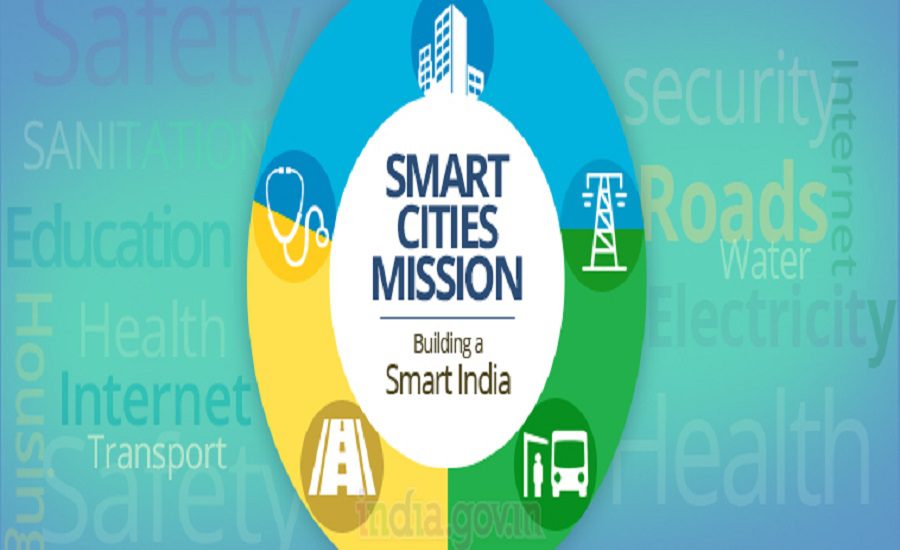
New Delhi: India’s ambitious Smart Cities Mission (SCM), launched in June 2015 to transform urban landscapes through technology, infrastructure, and citizen-centric governance, is now in its final stretch. In a detailed written reply to the Lok Sabha, Minister of State for Housing and Urban Affairs Tokhan Sahu revealed that 96 percent of the sanctioned projects have already been completed, with the remaining works expected to conclude by December 2025.
Mission Overview and City Selection
The Smart Cities Mission was designed to foster sustainable, technology-driven, and citizen-friendly urban development. A total of 100 cities were selected through the “Smart City Challenge”, a competitive evaluation process between 2016 and 2018 that assessed area-based development proposals and pan-city initiatives on criteria such as innovation, feasibility, and citizen participation.
The cities range from metropolitan hubs like Chennai, Ahmedabad, Pune, and Bengaluru to smaller urban centres such as Dharamshala, Namchi, Pasighat, and Bareilly, ensuring a diverse representation across India’s urban landscape.
Project Progress and State-Wise Performance
Out of 8,064 projects sanctioned under the Mission, 7,741 projects worth ₹1,55,386 crore have been completed, while 323 projects valued at ₹9,425 crore remain underway. States with the largest portfolios have shown notable progress –
- Uttar Pradesh: 887 of 893 projects completed
- Madhya Pradesh: 774 of 788 projects completed
- Tamil Nadu: 726 of 729 projects completed
- Karnataka: 899 of 917 projects completed
- Rajasthan: 575 of 579 projects completed
Several cities, including Patna, Chandigarh, Indore, Pune, Coimbatore, Agra, and New Town Kolkata, have achieved 100% project completion, emerging as role models for integrated urban planning.
Sectoral Achievements
The Mission’s sector-wise progress highlights its comprehensive scope –
- Integrated Command and Control Centres (ICCCs): 100 operational, ₹11,775 crore investment
- Smart Mobility Projects: 1,734 initiatives, 95% completion, including EV infrastructure, intelligent traffic systems, and road upgrades
- Water, Sanitation, and Hygiene (WASH): 1,547 projects, 96% completion
- Public Spaces Development: 96% completion of parks, plazas, and green corridors
- Smart Governance: 97% completion of digital service delivery and open-data initiatives
- Environment-Focused Interventions: 98% completion, covering urban forests, lake rejuvenation, and air quality projects
- Public-Private Partnerships (PPP): 98% completion across 197 projects
- Economic and Social Infrastructure: Nearly 1,800 projects, with 95–97% completion
Challenges and Implementation Insights
Despite strong overall performance, some cities faced administrative, legal, and technical hurdles, particularly in hilly or remote regions such as Himachal Pradesh, Meghalaya, and Mizoram. Additionally, certain ICCCs are underutilized, highlighting the need for greater operational efficiency.
The Ministry has directed Special Purpose Vehicles (SPVs) to fast-track pending projects, streamline vendor approvals, and coordinate with state departments to ensure completion by the December 2025 deadline.
Legacy and Future Prospects
The Smart Cities Mission has laid the foundation for India’s future urban development frameworks, including the anticipated “Urban 2.0” and National Urban Digital Mission. By integrating smart mobility, environmental management, governance, and citizen services, SCM has demonstrated how targeted area-based and pan-city interventions can transform urban living.
As the Mission approaches its closure, the focus will shift toward long-term maintenance, governance, and scaling successful models across India’s growing urban centres.