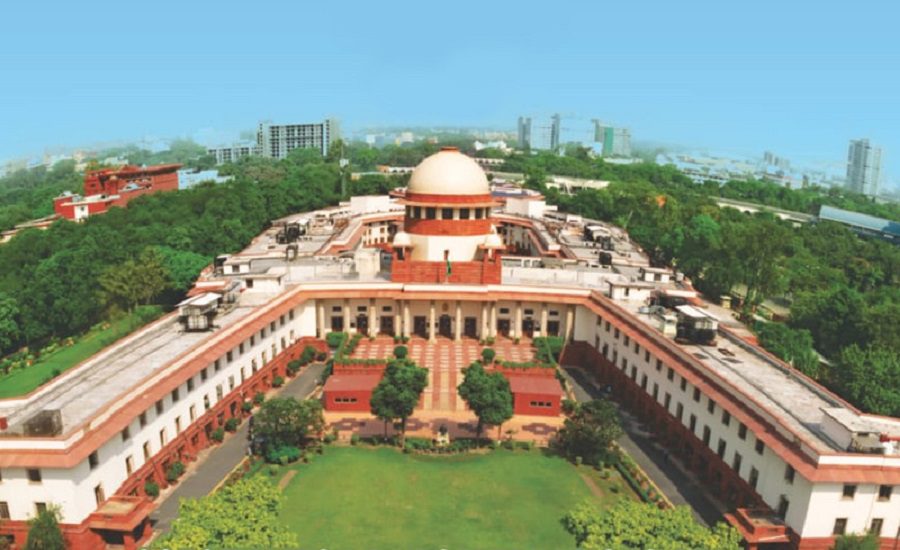
New Delhi: The Supreme Court of India has taken a decisive step to advance the use of artificial intelligence (AI) within the judicial ecosystem by reconstituting its AI Intelligence Committee, appointing Justice P.S. Narasimha as its new chairperson. This move, announced on December 11, 2025, underscores the judiciary’s intent to integrate cutting-edge technologies responsibly to enhance efficiency, transparency, and access to justice across India’s legal system.
Background of Supreme Court AI Intelligence Committee
Artificial intelligence has increasingly attracted attention in judicial contexts worldwide for its potential to streamline case management, optimize legal research, and automate administrative processes.
Within India, the Supreme Court’s eCommittee—an initiative dedicated to leveraging digital infrastructure—has already piloted several AI-based solutions aimed at simplifying legal workflows and improving public access to court services.
However, the adoption of AI in the judiciary has been marked by cautious deliberation.
The Supreme Court has repeatedly assured that AI will not supplant judicial decision-making but will serve as an assistive tool for judges and court staff. Judges have emphasized that human discretion, legal reasoning, and ethical considerations remain central to the judicial process.
Supreme Court AI Intelligence Committee Reconstitution: Leadership and Membership
Under the new structure, Justice P.S. Narasimha—a sitting judge of the Supreme Court known for his legal acumen and previous service as Additional Solicitor General of India—will chair the AI Intelligence Committee. His elevation to this role reflects confidence in his ability to navigate the complex intersection between law and technology.
The reconstituted committee includes:
- Justice Sanjeev Sachdeva, Chief Justice, Madhya Pradesh High Court
- Justice Raja Vijayaraghavan V, Judge, Kerala High Court
- Justice Anoop Chitkara, Judge, Punjab & Haryana High Court
- Justice Suraj Govindaraj, Judge, Karnataka High Court
These members bring diverse judicial experience across India’s regional courts, strengthening the committee’s capacity to consider varied legal perspectives and technological needs.
Supporting members of the Supreme Court AI Intelligence Committee
Anupam Patra, Registrar (Technology) at the Supreme Court, serving as Member-Secretary and Convenor
Ashish J. Shiradhonkar, Member (Systems), eCommittee, as a Special Invitee, offering technical expertise.
Mandate and Strategic Priorities of Supreme Court AI Intelligence Committee
The reconstituted AI Intelligence Committee has been entrusted with a comprehensive mandate that includes:
Guiding Adoption of AI Technologies
The committee will continue to oversee the implementation of AI tools tailored to judicial functions such as case scheduling, document management, and administrative workflows. Its mission is to ensure that these technologies are introduced in ways that support judicial efficiency without compromising the core values of fairness and due process.
Enhancing Efficiency and Reducing Backlogs
One of the judiciary’s longstanding challenges has been the management of case backlogs. AI-enabled systems have the potential to expedite tasks such as legal research, automated document summarization, and case categorization—thus freeing judicial time for substantive deliberation. The committee’s efforts aim to integrate such innovations to relieve systemic bottlenecks.
Improving Accessibility for Litigants
By streamlining digital processes and introducing user-friendly systems, the committee seeks to make court services more accessible to litigants nationwide.
Features such as AI-assisted multilingual support or intuitive case tracking can particularly benefit individuals with limited legal literacy.
Ensuring Transparency and Accountability
The committee will also set benchmarks and frameworks for the responsible use of AI within the judiciary, encouraging transparent system design and safeguarding accountability in technology-assisted processes.
Such transparency is critical to maintaining public trust and protecting against algorithmic bias or misuse.
Supreme Court AI Intelligence Committee: Judicial Caution and Future Challenges
Despite the push toward technological modernization, the judiciary remains cautious. Recent Supreme Court pronouncements have reiterated that AI will not influence judicial decisions or override human judgment. These statements reflect judicial wariness of risks like bias, hallucination in generative AI, and potential data privacy concerns.
Moreover, the judiciary has faced isolated challenges, such as instances of AI misuse in legal filings—the Supreme Court had to address fraudulent AI-generated content during a high-profile case, reinforcing the need for careful oversight.
About Justice P. S. Narasimha
Justice Pamidighantam Sri Narasimha is a distinguished judge of the Supreme Court of India, sworn in on 31 August 2021. Before his elevation to the Bench, he served as the Additional Solicitor General of India (2014–2018), where he represented the Union government in several important constitutional and legal matters.
Widely respected for his deep understanding of constitutional law, civil law, and arbitration, Justice Narasimha has played a prominent role in shaping modern legal discourse in India. He has argued significant cases before the Supreme Court, including those related to sports administration reforms, environmental matters, statutory interpretation, and civil liberties.
Justice Narasimha is also known for his scholarly approach to judgments, balanced legal reasoning, and strong emphasis on judicial ethics and transparency. His elevation followed the convention of appointing eminent advocates directly from the Bar to the Supreme Court.
With decades of experience in litigation and public service, Justice P. S. Narasimha today stands among India’s most respected judicial minds. His appointment as the Chair of the Supreme Court’s reconstituted AI Intelligence Committee reflects the Court’s confidence in his ability to guide technology-driven reforms responsibly within the judicial system.
Read also: Delhi High Court Rejects PIL for Dedicated Cybercrime Courts, Cites Lack of Statutory Mandate