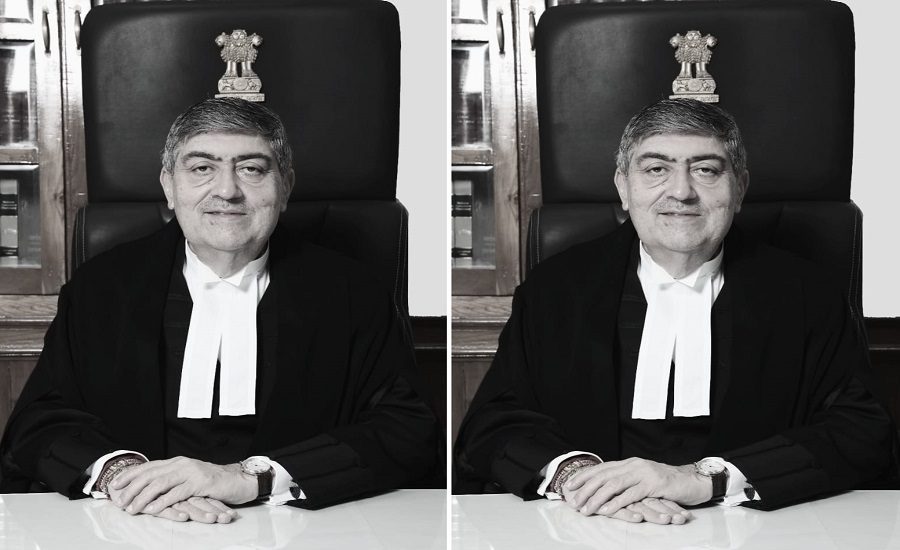
New Delhi: The Supreme Court appoints Justice Sanjay Kishan Kaul as mediator in Thengalai–Vadagalai temple dispute, marking an important step toward resolving a long-standing religious and administrative conflict.
The decision reflects the court’s preference for dialogue and peaceful settlement in sensitive faith-based matters. By choosing mediation over prolonged litigation, the top court has signaled that consensus and mutual respect should guide the resolution of disputes involving religious traditions and temple practices.
Background of the Thengalai–Vadagalai Dispute
The Thengalai–Vadagalai dispute is rooted in differences between two sects of the Sri Vaishnava tradition. Over the years, disagreements have arisen regarding rituals, customs, and the management of certain temples. These differences, though theological in origin, have often led to legal battles, administrative deadlocks, and tensions among devotees.
Several cases linked to this dispute have reached courts in the past. However, a final and lasting solution has remained elusive, mainly because such matters are deeply connected to belief systems and long-established customs.
Supreme Court’s Decision to Opt for Mediation
Recognizing the sensitive nature of the issue, the supreme court decided that mediation would be more effective than a purely adversarial legal process. The court observed that religious disputes are better resolved through dialogue, understanding, and compromise rather than strict judicial orders.
Mediation allows both sides to present their concerns freely and work toward a mutually acceptable outcome without the pressure of a binding judgment.
Who is Justice Sanjay Kishan Kaul and Why Supreme Court Chose Him as a Mediator
Justice Sanjay Kishan Kaul graduated in Economics (Hons.) from St. Stephen’s College, Delhi University and completed his LL.B. from Campus Law Centre, University of Delhi in 1982, thereafter enrolling as an advocate with the Bar Council of Delhi.
He practised mainly in commercial, civil, writ and company matters, becoming an Advocate-on-Record at the Supreme Court and later a Senior Advocate.
He was appointed as a judge of the Delhi High Court in 2001, served as Chief Justice of the Punjab and Haryana High Court, and later of the Madras High Court before elevation to the Supreme Court of India in 2017.
During his tenure on the Supreme Court, he authored over 160 judgments and was part of key constitutional rulings, including on right to privacy and significant views in cases on freedom of speech, artistic expression, and compensation jurisprudence.
The court appointed Justice Sanjay Kishan Kaul as the mediator due to his vast judicial experience and balanced approach to complex constitutional and social issues. Known for his calm demeanor and deep understanding of law and society, Justice Kaul is seen as well-suited to handle a dispute that blends legal, cultural, and religious dimensions.
His role will be to facilitate discussions between the Thengalai and Vadagalai representatives and guide them toward common ground.
Thengalai–Vadagalai Temple Dispute: Role and Expectations from the Mediation Process
As mediator, Justice Kaul will not impose a decision. Instead, he will encourage dialogue, clarify misunderstandings, and help both sides explore practical solutions. The focus will be on preserving religious harmony, respecting traditions, and ensuring smooth temple administration.
If successful, the mediation could reduce further litigation and set an example for resolving similar disputes across the country.
Thengalai–Vadagalai Temple Dispute: Significance of the Supreme Court’s Move
This decision highlights the Supreme Court’s broader approach toward dispute resolution in sensitive matters. By promoting mediation, the court reinforces the idea that consensus-based solutions can protect social harmony while respecting religious freedom.
Legal experts believe this move could strengthen alternative dispute resolution mechanisms in cases involving faith, culture, and community traditions.
What Lies Ahead
The success of the mediation will depend on the willingness of both sects to engage constructively. While challenges remain, the appointment of an experienced mediator offers hope for a peaceful and lasting resolution.
If an agreement is reached, it could bring long-awaited clarity and stability to temple practices and administration, benefiting devotees and authorities alike.
Read also: Delhi High Court Warns Government Over Delay in Filling Delhi PwD Reserved Posts, Threatens Contempt